

Wearing a white and pale blue striped button down shirt and grey slacks, Hector Saul Iraheta-Mercado waited for his verdict to be read out loud in his second jury trial for allegedly assaulting an ICE officer last summer in East Wenatchee.
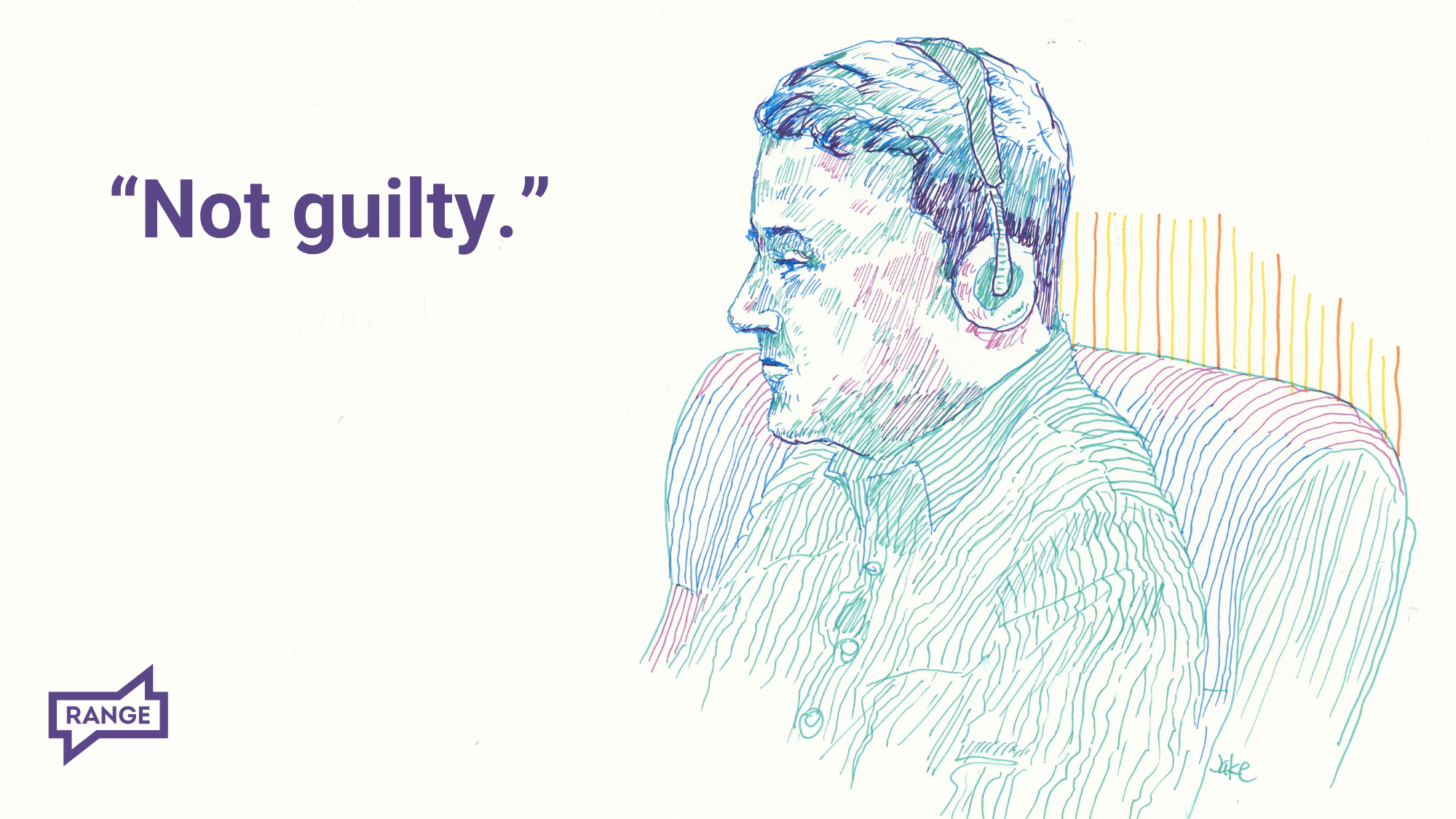
“Not guilty.”
A couple of gasps could be heard from some of the Spokane strangers who gathered to support him after seeing his story in the news. Iraheta-Mercado grabbed a tissue and began patting down tears from his eyes. His defense team then crowded around him, patting his back or his shoulder as Iraheta-Mercado gave them a small smile and thanked them in Spanish.
The unanimous verdict from the 12-member jury came after just a few hours of deliberation, a stark contrast to his first trial that ended after a jury deliberated for eleven hours and could not reach a conclusion.
The jury said that the government had failed to prove there had been forcible assault.
Minutes after the verdict was read, Iraheta-Mercado was placed back in handcuffs. He would be taken to be processed out of county jail, where he’s been held for the duration of the trial, and then likely, released to federal immigration custody for the order of removal issued against him. It was a grim outcome that his defense confirmed later that evening with RANGE. As of 7:52 pm, Iraheta-Mercado had been checked out of jail and into federal custody.
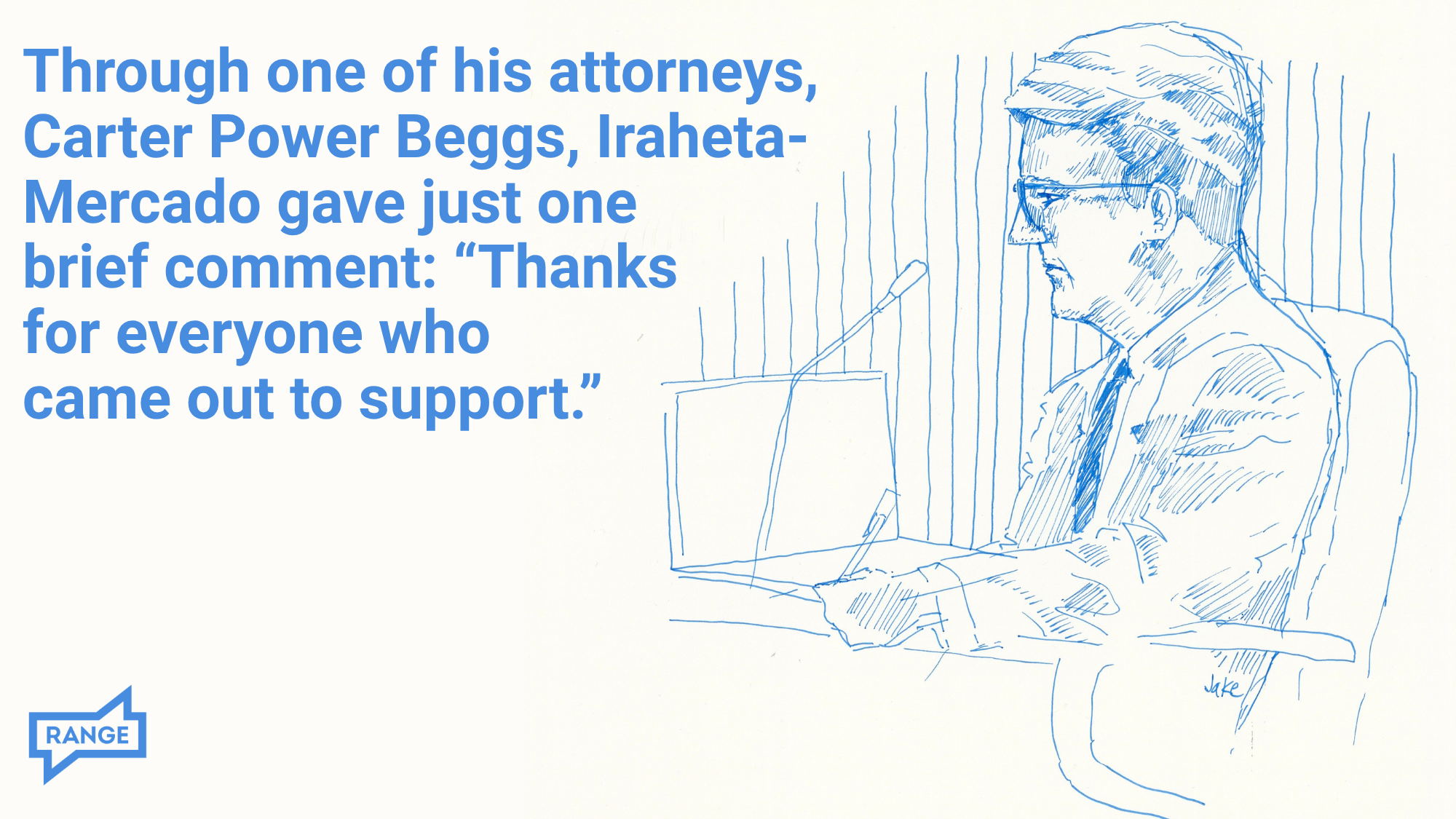
Through one of his attorneys, Carter Power Beggs, Iraheta-Mercado gave just one brief comment: “Thanks for everyone who came out to support.”
Closings, in brief
Closing arguments began Monday morning and ran through noon, after the government rested its case last Friday. The defense did not bring forward any witnesses and Iraheta-Mercado, who required an interpreter for the duration of the case, did not testify.
Ann Wick, the prosecutor, argued that the government had proved all the elements it needed (beyond a reasonable doubt) for the jury to convict Iraheta-Mercado of assaulting a federal officer when he rolled his car window up, trapping ICE officer Jaimie Waite’s arm: that Waite was engaged in his official duties as a law enforcement officer, that there was actual injury and that a forcible assault happened.
She also argued that Iraheta-Mercado’s actions weren’t justified under a self-defense claim.
“Your job as jurors is not to decide if you like any of the individuals in this case,” Wick said. “Your job is to determine if the defendant committed a crime … it’s not a popularity contest.”
Defense attorney Justin Lonergan argued that Iraheta-Mercado did not intend to harm Waite, but that he was pushed into a confusing situation that quickly turned volatile and one he couldn’t understand as a Spanish-speaker — with the added stress of his two teenage children being in the car with him.
Lonergan held that Iraheta-Mercado’s actions were in self-defense and that he rolled up the window when he perceived a threat from plain-clothes officers who were unidentifiable to him.
“If you can see how another person could see the situation differently, then you have reasonable doubt,” Lonergan told the jury. “It is not enough that government allegations could be true ... there’s still so much room for misinterpretation, for mistakes.’’
The prosecution and defense disagreed about many key points in the incident, like who caused the situation to escalate, whether Iraheta-Mercado could actually understand the officers, if they were identifiable and whether the assault was intentional or a reaction in self-defense.
‘He knew what he was doing’
Wick reminded the jury of the photos shown in court of the bruises Waite sustained from the window, testimony from Waite and Andrew Johnson, the other officer there that day, and other evidence she said showed the government had met its burden of proof.
She told the jury that to prove forcible assault, the government only needed to prove one of the three following things: there was an intentional hit, a willful attempt to inflict an injury or an intentional threat that also presented the possibility of injury causing a “reasonable apprehension” of immediate harm.
Here, she also argued that all three were present.
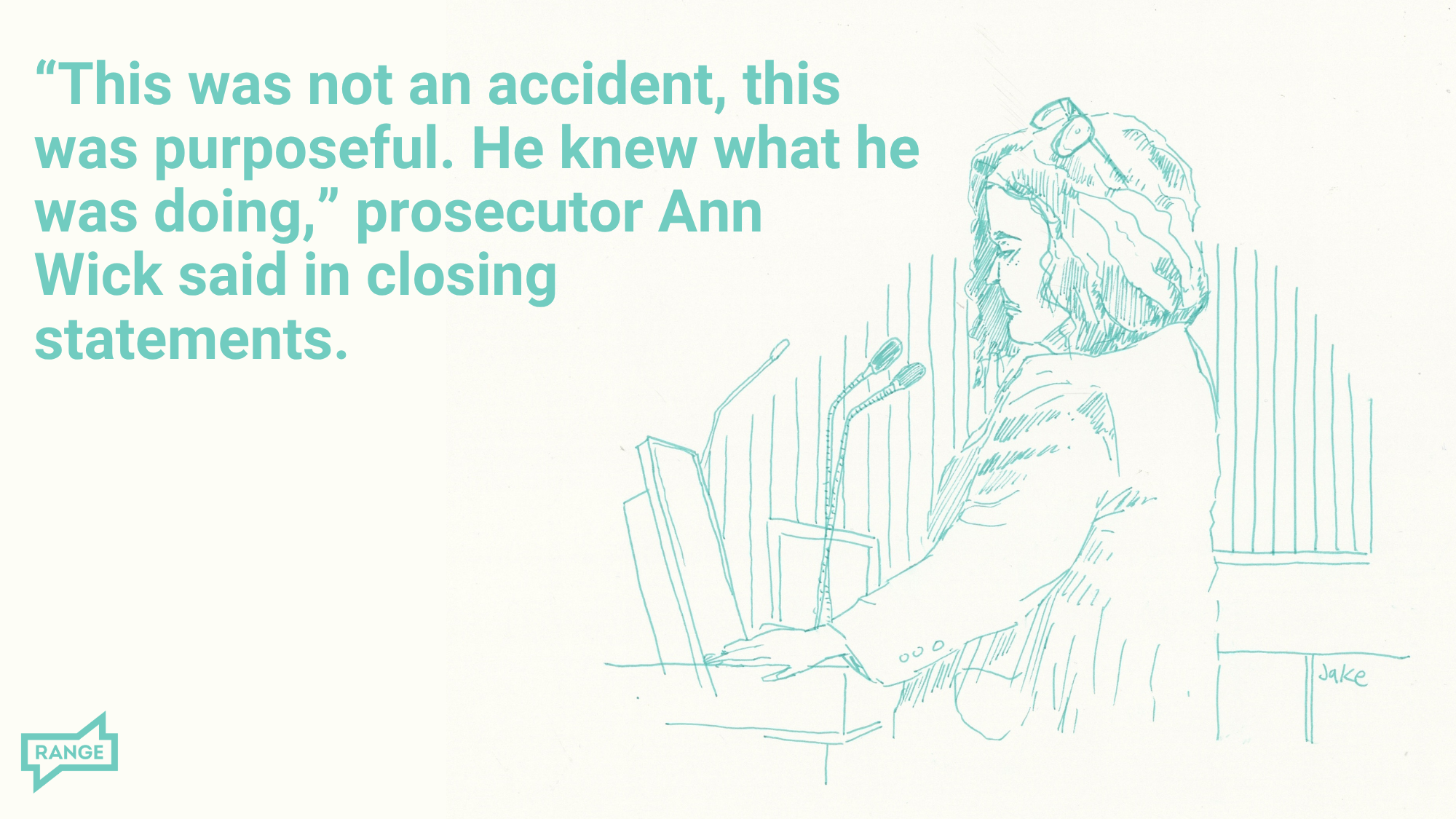
“This was not an accident, this was purposeful. He knew what he was doing,” Wick said, adding that Iraheta-Mercado chose to roll the window up and understood the officers’ commands. “The scene drastically escalated when Officer Waite’s arm was pinned.’’
She also argued that Iraheta-Mercado understood the officers’ directions because he shook his head several times and also said “no,” — a word that means the same thing in both English and Spanish. Wick questioned why his children weren’t translating for him if he really only knew Spanish.
To have successfully argued against self-defense, the government had to prove only one of the following: that Iraheta-Mercado knew Waite was a law enforcement officer, that he didn’t reasonably think he needed to use force against immediate unlawful force and lastly, that Iraheta-Mercado used more force that was appeared to be “reasonably necessary.”
Wick kicked off her argument against self-defense by saying that Waite used flashing lights to pull him over – which were small and attached to the car’s grille – and that Iraheta-Mercado gave him his driver’s license.
“If he didn't believe he were a law enforcement officer, he wouldn’t provide his drivers license,” she said.
Even his children knew the two officers were law enforcement, she said.
“Would they have asked a… carjacker, a kidnapper for a warrant? I submit to you, no,” Wick added.
She also argued that Iraheta-Mercado had to have known the men were law enforcement because he was aware of his legal status and what that meant considering he had been ordered deported in 2008 and later used false documentation in a job application in order to be able to work at an agriculture company in Wenatchee. In arguing that he understood English, Wick noted he had filled out the work application in that language. On Friday, though, the director of human services for his job testified some of his paperwork was completed in Spanish and the application was double-sided — one side was English, the other was Spanish.
When it came to Waite’s decision to reach in, she argued that choice was not an immediate use of unlawful force that Iraheta-Mercado needed to "reasonably" defend himself against. Wick also held that Iraheta-Mercado used more force that was reasonably necessary and that his actions signaled that he contemplated driving away with Waite’s arm pinned in the window.
Is the government misinterpreting the facts?
Lonergan argued that the prosecution had assumed the worst outcome and that the evidence presented in court brought forward a real question about whether the government had misinterpreted what happened that morning on July 8, 2025.
Though the government framed Iraheta-Mercado’s behavior as resistance and assault, Lonergan argued, his actions are more accurately explained by his lack of understanding about what was happening and concern over having his two children in the car with him.
He argued the arrest had been a “deliberate surprise” stop by an officer who was not clearly visibly identifiable and who only offered limited identification. The confusion was also rooted in the decision of the two officers to make assumptions and voice commands in English towards a man who didn’t understand them – despite Johnson's ability to speak Spanish.
“Most tellingly is that after the fact, Johnson reads him the warrant in Spanish,” Lonergan said.
There was a chain reaction of escalation, he continued, that began when Waite put his arm inside the car.
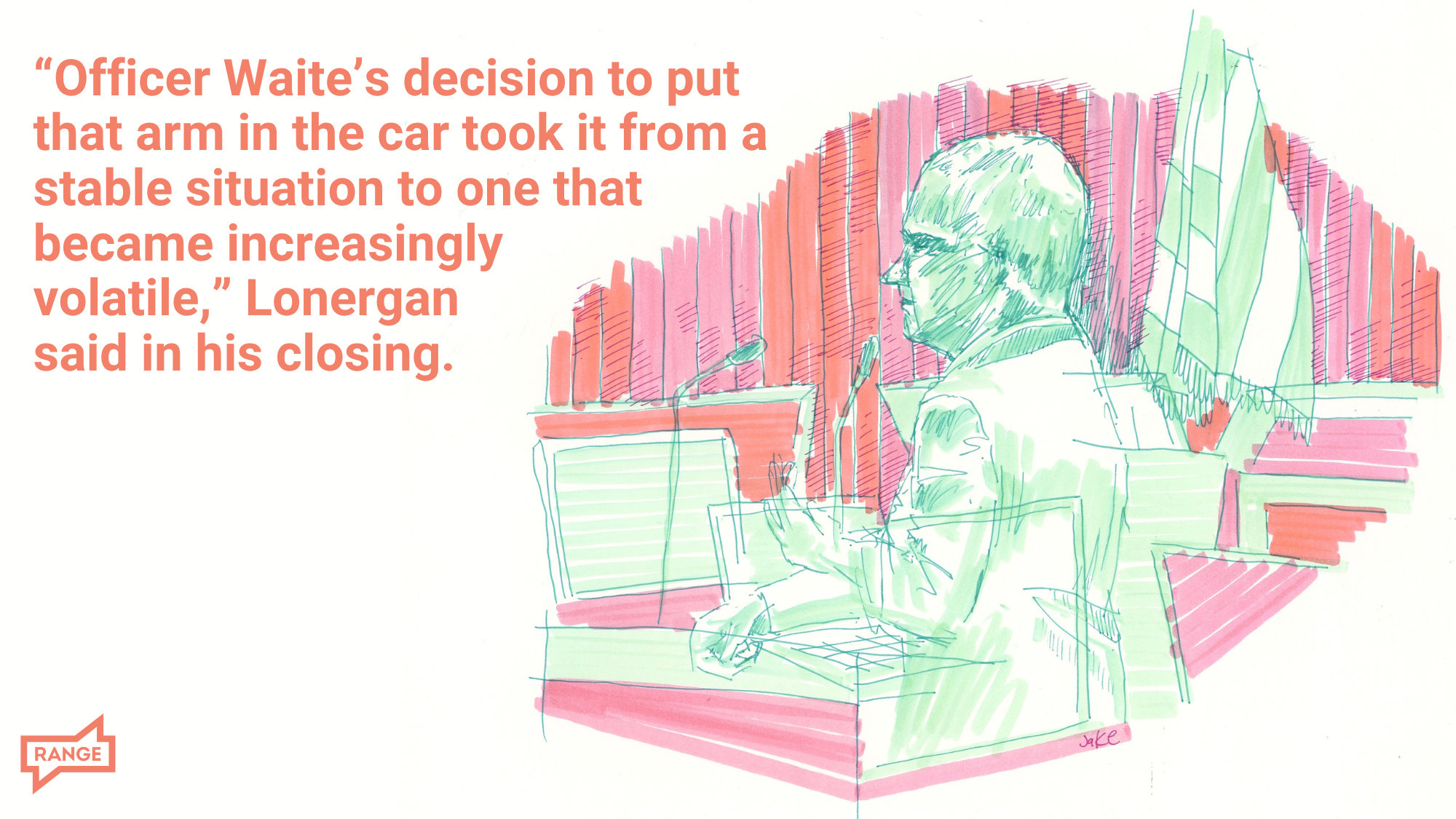
“Officer Waite’s decision to put that arm in the car took it from a stable situation to one that became increasingly volatile,” he said. “The bottom line is there are things … that underscore why we should have serious questions about what the government is inferring about intention.”
Pushing back on the government’s argument that the “why” of the alleged forcible assault didn’t matter, Lonergan told the jury that it simply wasn’t enough that either officer felt threatened or that Waite was injured if it wasn’t done on purpose.
In response to Wick’s argument that Iraheta-Mercado’s decision to pull over was telling, Lonergan noted that people are conditioned to stop when they see red and blue lights behind them. But that doesn’t mean the person stops assessing the situation.
“When something doesn't look right, you start wondering if it, in fact, is as it’s claimed,” he said.
Lonergan asked the jury to consider if the officers’ badges were actually visible to Iraheta-Mercado when the video of the interaction shows the situation had already escalated by the point in which a badge is visible.
“It is very plausible Iraheta-Mercado didn’t see a hat (with an ICE shield), a badge, anything,’’ Lonergan said.
He told the jury that Waite conceded that the first window roll up could have been accidental. Additionally, Lonergan pointed out that Waite was the first to initiate physical contact and not Iraheta-Mercado as the prosecution claimed in closing.
Lonergan also argued that the second time Waite’s arm was caught, it looked like he had enough time to pull back but instead, he stuck his hand even further inside the car.
Iraheta-Mercado never meant to harm Waite, Lonergan argued, whether the car was on and he had his hand on the shifter, adding that it appeared the Salvadoran man had actually shifted the car into park.
Everything happened so fast, he said. Showing a video still used by both sides, Lonergan told the jury it was unclear if Iraheta-Mercado’s hand was already on the window button as Waite reached in.
And one second after Waite’s arm became caught, Johnson pulled his gun out, Lonergan said. At that point, it was unclear if Iraheta-Mercado even realized Waite’s arm was stuck before his attention became focused on the gun pointed his way.
The defense argued that if Johnson, a trained officer, admitted to making a snap judgement based on information that was challenged once he saw footage, then it was likely Iraheta-Mercado also missed details during the chaos.
He also pushed back on the prosecution’s argument that Iraheta-Mercado should have known the officers were immigration enforcement.
Lonergan argued that Iraheta-Mercado had been living his life the same way he had since he arrived in the US in 2006: forgotten, overlooked, tolerated, not drawing attention to himself — but also not living in hiding. When he was apprehended by US Border Patrol decades ago, Iraheta-Mercado told the agent that he intended to live and reside in the US and admitted that he was a citizen of El Salvador.
“(Iraheta-Mercado) did not come with false papers trying to hide his identity,” Lonergan said. “If Iraheta-Mercado was really concealing his identity, he's doing a bad job.”
He asked the jury to be mindful about how they weighed information about the deportation order issued in 2008 without him being present, arguing there was no evidence he was even aware of it. He also noted that the work application that contained a copy of a false green card and Social Security card contained information that led right back to him.
“This is not someone who’s concealing their presence in the United States,” Lonergan said. “The intention of those documents were for work.”
Officer Johnson said he didn’t know how they got information about Iraheta-Mercado, Lonergan said. (Dimke ruled against evidence showing ICE obtained that information illegally from the Washington State Department of Licensing.)
But there are clues, he told the jury. It looks like Johnson identified him because his driver’s license had his name, date of birth and residence, Lonergan told the jury.
Waite’s credibility in question
The officers testified that Iraheta-Mercado had shook his head and said no to them, taking that to mean he understood them and was refusing to comply. But Lonergan told the jury that those actions could also mean Iraheta-Mercado didn’t understand them.
“We don’t know,” he said.
Lonergan asked the jury to consider if Waite’s testimony was credible considering a biased post he shared on Facebook. What the jury didn’t see were the other posts Waite made.
Lonergan argued that “when you're posting about blowing feces onto human beings,” it shows a difficulty in being able to maintain impartiality. He added that Waite’s comment during the arrest asking Iraheta-Mercado’s children if they wanted them to also do the same to them, showed a lack of restraint and a “me v. you” attitude.
During the rebuttal that the government is allowed, Wick said that questioning Waite’s judgement and credibility was a “false logic” suggestion.
She argued that there was no connection between a post about a “poop gun” lacking any suggestion it would be used on people, and Waite’s impartiality as an ICE officer. Waite didn’t say "I wish I could use these," she continued, he only used the hmm emoji.
Additional reporting was contributed by Erin Sellers. This story was updated after publication to add art and a GoFundMe page.


