

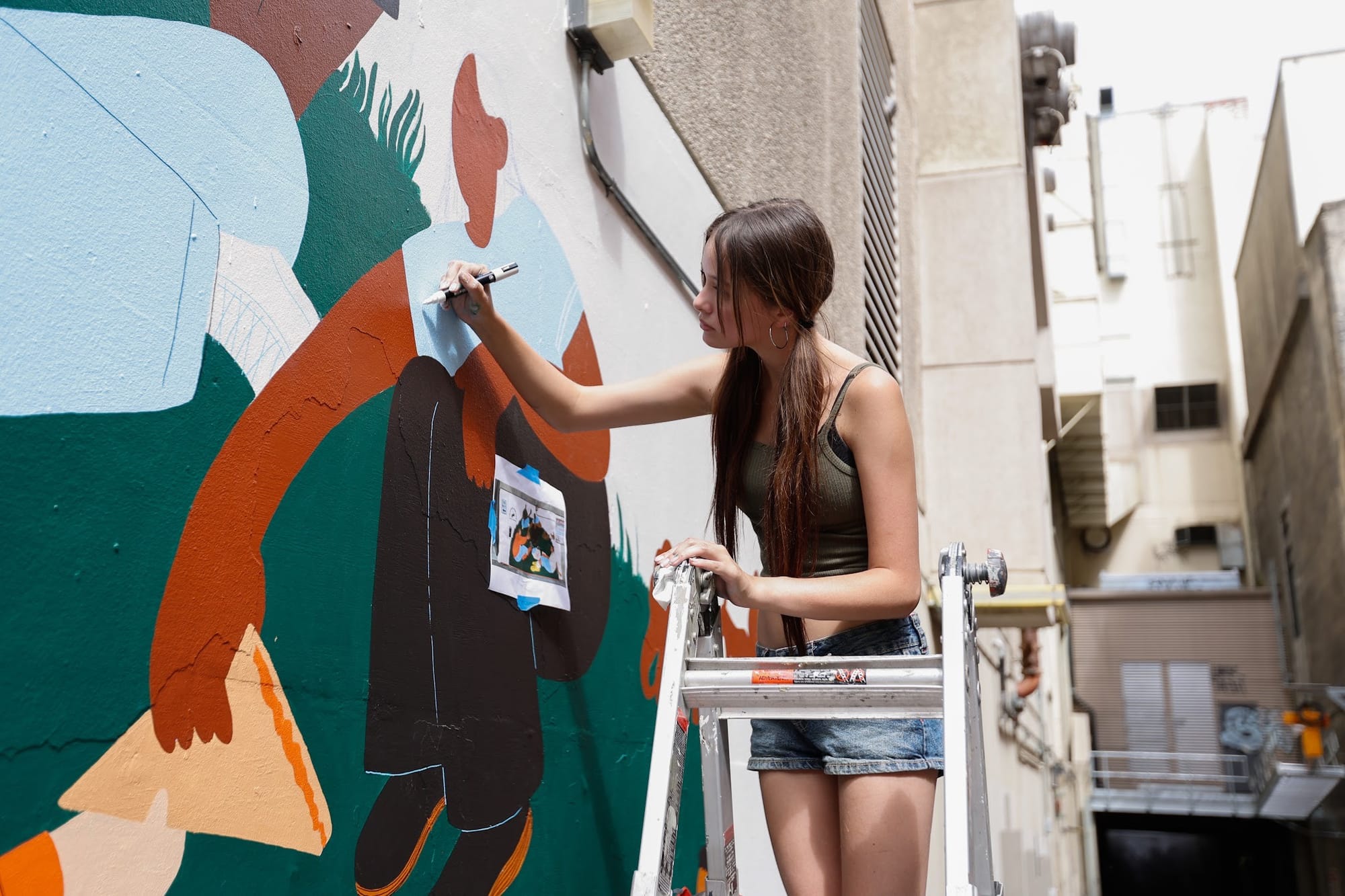
On Track Academy senior Dove Bradshay knows he wants to pursue art in college. Paintbrush in hand, Bradshay touched up the grass by a pair of bright yellow shoes on the wall of a Post Street alley in downtown Spokane.
He’s one of six students from West Valley High School and On Track spending the summer as part of the Hillyard Mural Apprenticeship. Run by the Hillyard Creative District, the apprenticeship pairs high schoolers with professional artists for hands-on training in public art.
On Tuesday, Bradshay and the other youth artists gathered to paint a mural spreading overdose prevention awareness.
Splashed across the back of the Crescent Building, the mural depicts friends sharing food and conversation, with a container of naloxone — the drug used to revive people actively overdosing — in the center. The drug is more often known by its brand name, Narcan. The setting, with its grass and squirrels, is meant to capture Spokane.
Visual artist and West Valley High School art teacher Rose Honey, who runs the program, led students as they painted a mural designed by Washington-based social impact agency DH.
“Our whole goal is to bridge a gap between student artists and public art,” Honey said. “How do we get into the entry level and learn these techniques and meet these muralists and learn these skills to not only paint, but to draw up the design, to meet with business owners, to pitch your art, to learn communication skills?”
The apprenticeship’s pilot model is supported by a $50,000 grant from the Washington State Arts Commission, with a $25,000 match from the American Rescue Plan Act.
While the program has largely been focused on the Hillyard neighborhood, this Downtown Spokane opportunity proved too perfect to ignore, Honey said.
This community aspect of the program has especially resonated with Bradshay.
“I get to work with people who feel like they don’t really have artistic ability to help them express themselves and to help them grow their businesses and get more traction,” Bradshay said. “I like the feeling of being able to get other people going.”
This particular mural is part of “Friends for Life,” an existing campaign from marketing agency DH in collaboration with the Washington State Healthcare Authority, that aims to combat opioid overdoses. The Healthcare Authority is funding the project.
DH art director Hannah Bottino serves as the creative director for the campaign and has been working on the mural since the beginning of the year before reaching out to the program to bring youth artists on board.
The design’s goal, Bottino said, is to normalize keeping naloxone on hand — because if you don’t have it, you can’t use it, she added.
“There is a stigma around Narcan and naloxone historically, and we’ve seen a trend as that’s improved,” Bottino said. “But the more we show it as a normal thing for people to have around with them, the more normal and less weird it feels for people to carry it.”
According to the Spokane Regional Health District, more than 80% of Spokane County overdose deaths were opioid-related in 2024.
Passersby walking near the alley throughout the day stopped to talk to the artists.
One such passerby was Brandon Diamond — who said he had just been released from American Behavioral Health Systems that morning. According to Diamond, he had been clean for seven years before relapsing last year.
He said he remembered hearing about at least five overdoses in the downtown area in a single day last year.
“I think it’s good that they're doing prevention and trying to do something to help it, because it's sad,” Diamond said.
Looking at the artists working on the mural, Diamond said he hopes to see the community come together and do more to prevent fentanyl usage — especially, he said, given what he’s recently heard about nitazenes, a group of synthetic opioids also called “Frankenstein.”
Reaching audiences like youth and people in vulnerable housing situations, DH creative director Linda Jones said, means turning to non-traditional methods.
Jones added that they wanted to avoid using “fear-based messaging,” having learned over the years that scare tactics often fail to work.
“We recognize that there's a lot of youth in the community that are being introduced to fentanyl,” Jones said. “They're being used to different types of illicit drugs or alcohol, and this is like the age where we can reach them as they're starting to be introduced to these types of things.”
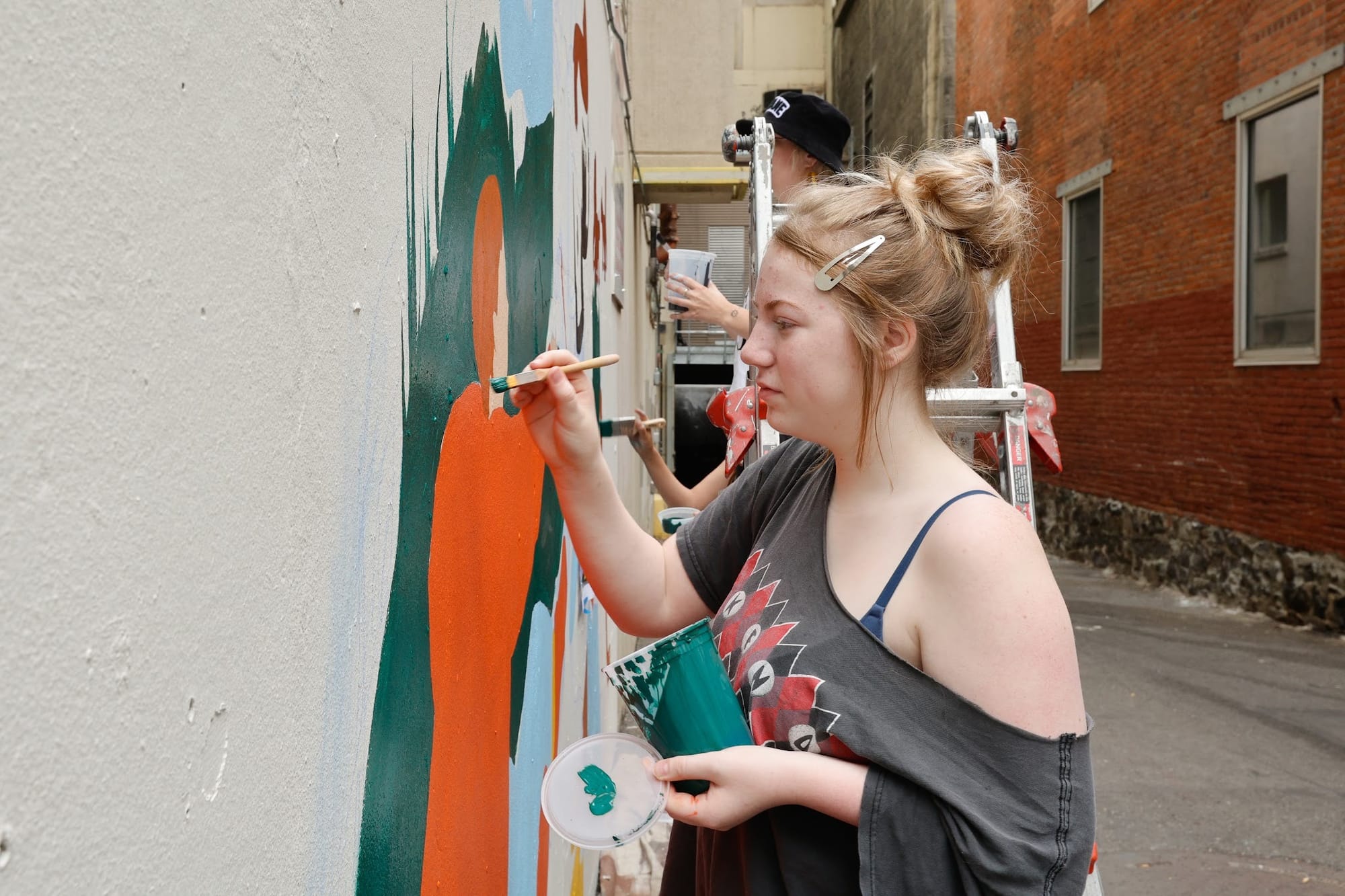
Bradshay said he appreciated the people who stopped by as the students worked. This program has allowed him to understand more about why people pursue art — and how it brings joy to different people.
Bradshay isn’t the only student finding personal meaning in the work. West Valley sophomore Kensley Hyde heard about this opportunity through Honey, who was her art teacher this past year.
Hyde said working on this mural has offered her time for reflection and allowed her to reconnect with art. She emphasized the importance of the mural’s message as part of how she can contribute to the community.
“I think that it’s great for people to know that they always have the help and support that they need, even if they don’t have anyone very close to them,” Hyde said.
The students started painting windows in June before moving to community murals in July, Honey said.
On Aug. 1, the group will lead a public mural in Hillyard and then close out the summer with individual capstone murals in the Hillyard neighborhood.
“It's really important that people see on a regular basis that there are people who care about our community, and there are people who are actively trying to make things better because it’s really easy to see all of the negative stuff and to latch onto that,” Bradshay said.


