

On June 11, 2025, the Spokane ICE office was under siege. Or at least — that’s what Homeland Security Investigation’s John LaForte told a federal court on Thursday.
During the fourth day of the trial of three protesters fighting federal conspiracy charges, attorneys for the federal government called six witnesses: three federal officers and three local law enforcement officers. The morning was devoted mostly to testimony from Greg McSullivan, a special agent with HSI and LaForte, testifying in large part about “The South Gate Incident.” The afternoon’s testimony from local law enforcement focused on what happened after the Spokane Police Department escorted a US Border Patrol van past protesters to the ICE office.
The day ended with testimony from Spokane County Sheriff’s Office Deputy Brittan Morgan, who was the subject of a pre-trial fight, as Justice Forral’s defense attorneys fought for the right to introduce body camera footage of Morgan saying, “God I hope they do some shit. I want to hit someone with a stick today. This is my only day off you fucking cunts,” among other inappropriate comments.
A few major themes emerged throughout Thursday, as federal agents and local law enforcement alike were pressed on the idea of deescalation techniques, who gets to express frustration and what kind of behavior justifies violent response.
‘Under Siege,’
Yesterday, we heard from three officers who were part of a plan to take three vehicles out from the south parking lot and rendezvous with a red Border Patrol van on June 11. McSullivan and LaForte were not in that original group, but instead in a different trio that walked into a crowd of protesters and began shoving people during “the South Gate Incident,” with LaForte serving as the agent in charge.
McSullivan can be seen in video clips as the larger man grabbing protesters by the neck, shoving people aggressively and knocking a notebook out of this reporter’s hand, while LaForte is the man who went out without any kind of law enforcement identification (he testified he was wearing his lanyard with his ID badge, but video footage subsequently revealed if he had a lanyard, it wasn’t visible). It was LaForte’s last day of work in Spokane and he had turned in his equipment, he said.
Both men admitted on the stand that they came into the interaction with protesters hot. They blamed a lack of support from the Spokane Police Department (SPD), who LaForte said they’d called for assistance earlier in the day, when the crowd of protesters numbered around just 20 or 30. They were told to wait it out, but they didn’t want to.
"Again you have to take this in context. We've called 911, when you call 911 you expect someone to show," McSullivan said. That perceived lack of support from SPD "colored the context of the situation where nobody was coming to help us, we have to figure this out ourselves."
McSullivan said he was under the impression that SPD wanted them to just buckle in for the night. That context, coupled with fear that the three officers trying to leave the parking lot were in danger after seeing a crowd of people run to block the gate, caused them to come out aggressive, which was consistent with their training, he said.
Agent Jared Tomaso, who testified yesterday, and LaForte got to the gate slightly before him, McSullivan said, and their first goal was to get to the other agents who were trying to exit in their cars. Then they formed their own wall against the protesters to push them back. He said they announced their presence and gave lawful commands, telling people "get out of the way,” though that announcement of presence can’t be heard on any of the video footage that has yet been shown.
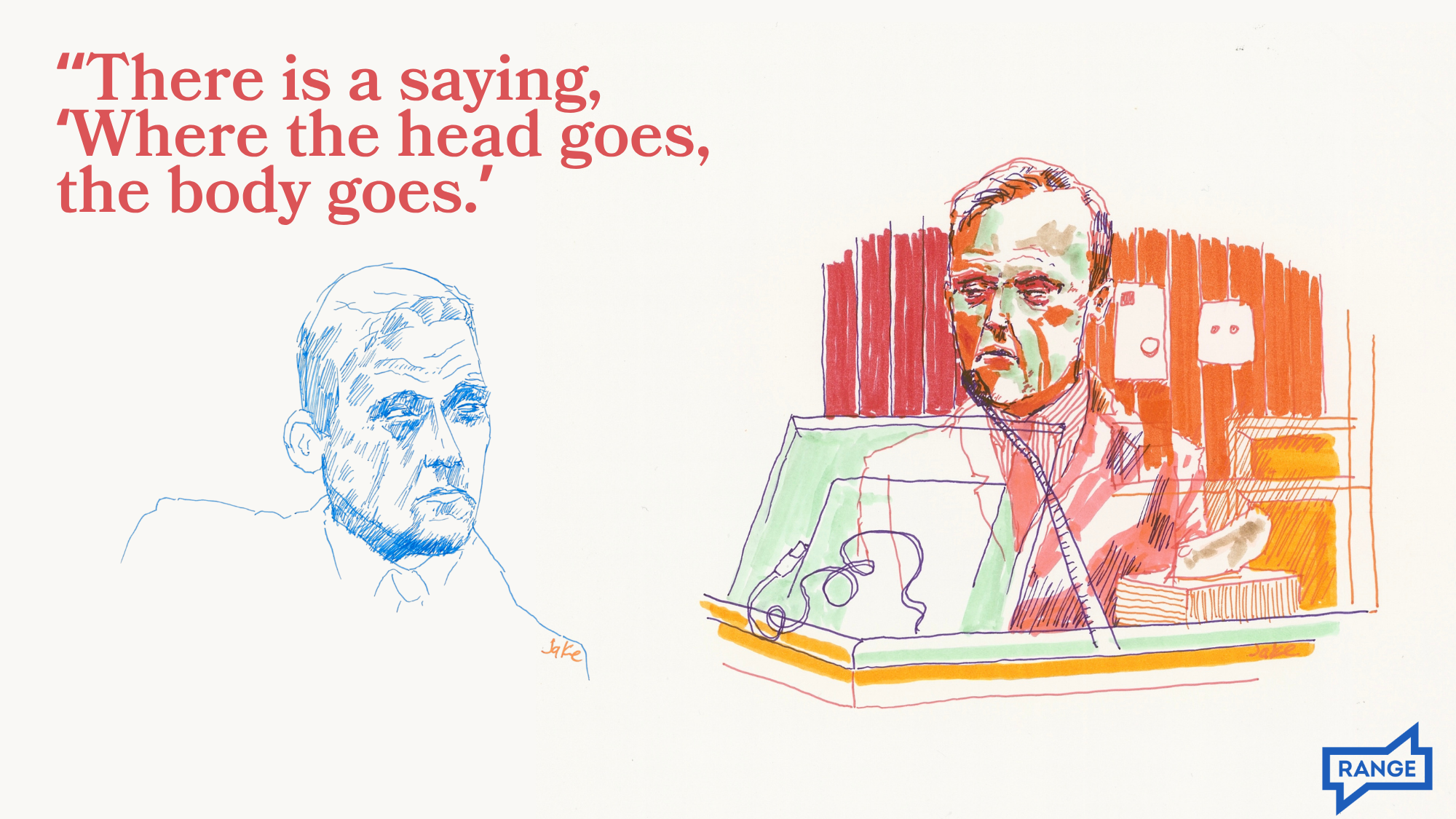
McSullivan said when he can be seen grabbing a protester by the head, it’s because "for one reason, it was what was available to grab ... there is a saying, ‘where the head goes, the body goes.’"
He said in some ways, they did what he would call deescalation: no closed fists or strikes were used, and they didn’t deploy tasers, chemical agents, batons or lethal weapons.
“We were doing everything we could do to deescalate, to keep the situation as calm as we could,” McSullivan said.
All of the officers repeatedly stressed that they didn’t feel safe, they felt like SPD let them down by not assisting earlier and that they were upset by the situation — especially when protesters cheered after the lower parking lot gate closed.
LaForte put it succinctly: "I was frustrated that there was not a response [from SPD] and also that our building was under siege."
Defense attorneys consistently pushed them on this characterization, asking if any officers were hurt (no), if protesters ever crawled over gates or tried to breach the building (no) and if officers could leave the building (yes, but they didn’t feel safe.)
Aine Ahmed, Bajun Mavalwalla II’s lawyer, asked LaForte to define “siege.” LaForte said it was “When you surround a place and keep people from getting in and out.”
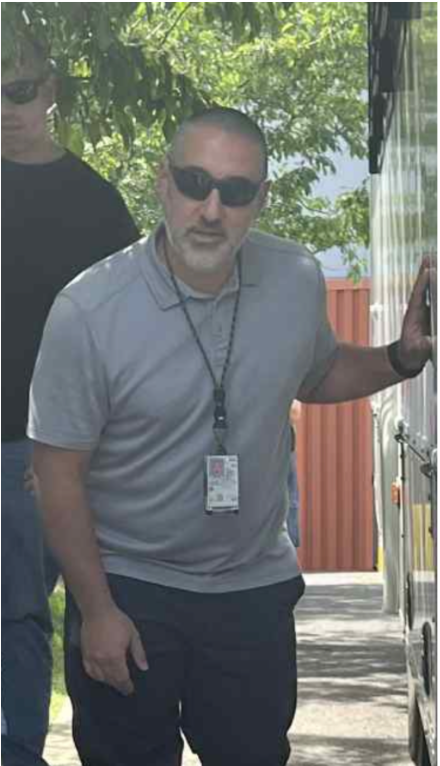
Yesterday, the jury watched hours of footage of the front door with no protesters outside of it, and people freely coming and going. LaForte said he “could walk outside, but not without threat.”
‘Flicked a cap’
After the confrontation at the gate, where the federal officers pushed protesters, throwing some of them to the ground and pointing a taser pointblank at one, all six officers left the parking lot after about 15 minutes. To get back to the ICE building, they passed through what they called “a man-gate” — a door for people to exit the parking lot by the north side of the lot — and then walked past a few protesters to get back inside.
Caught on security footage is a brief interaction between the six agents and a few protesters milling about by the “man-gate.” On the tape, you can see the agents walk by. Almost simultaneously, LaForte — seemingly unprompted — reaches up and knocks the baseball cap off of one of the protesters. Behind him, a second protester reaches out toward officer Kevin Wilks, and McSullivan shoves him back. You can’t hear it on the footage, but McSullivan says he said something like, “You don’t fucking touch us.”
LaForte had said that he feared for his and his fellow agents’ safety, which Ahmed brought up on cross examination.
“You certainly didn’t appear to be afraid when you went past and flipped someone’s hat off,” he said.
LaForte responded, “I don’t think that has anything to do with fear.”
Ahmed asked if LaForte was escalating the moment, and LaForte responded, “That wasn’t escalation, that was frustration.”
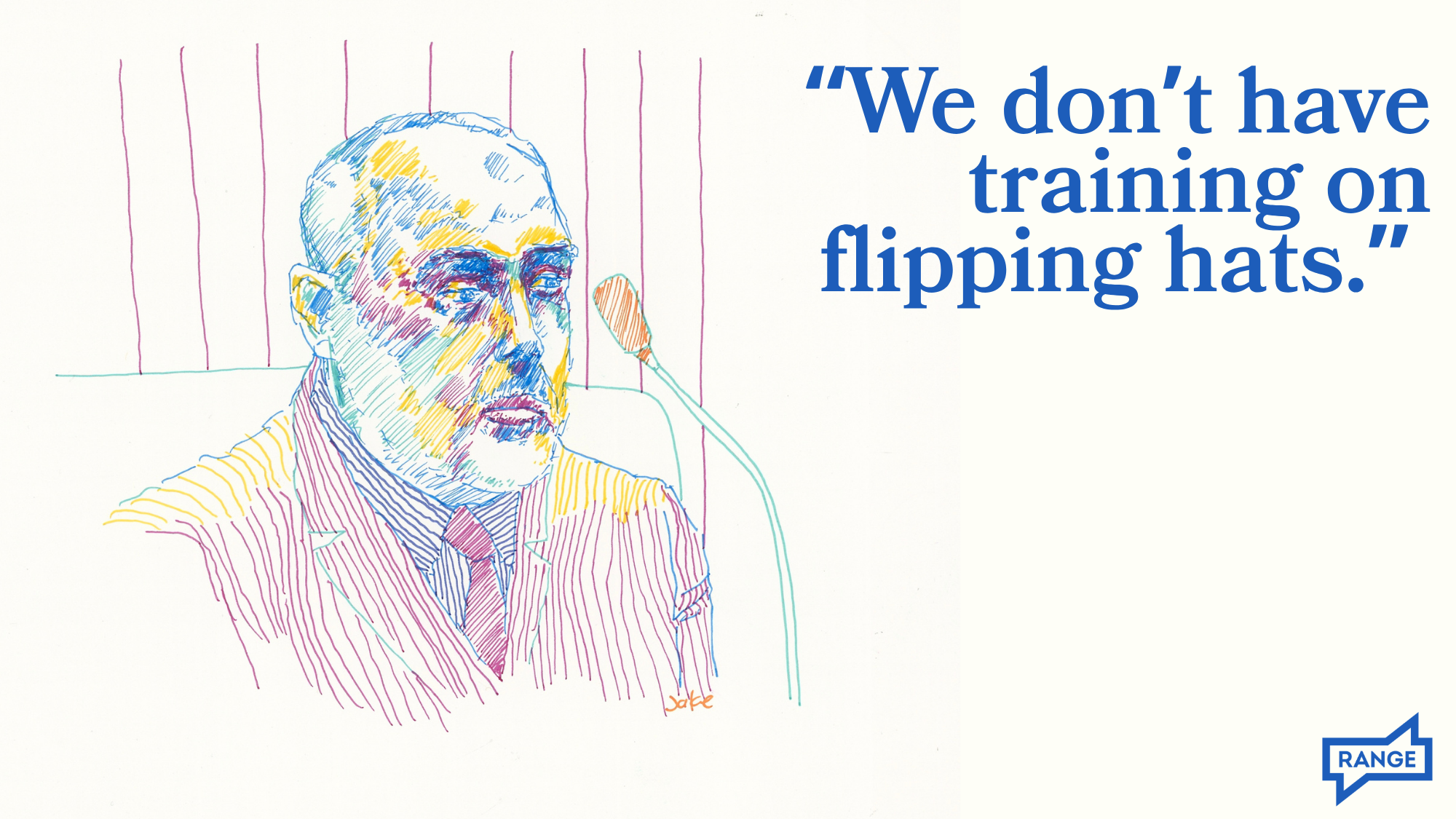
When pressed about whether that was allowed in his training, LaForte said, “We don’t have training on flipping hats.”
It was a particularly interesting exchange, especially in light of evidence the prosecution introduced later in the day, showing Forral taking the hat off of SCSO Deputy Morgan — which was characterized by Morgan as Forral hitting the top of his head. (Forral is still facing an assault charge in Spokane County for this incident.)
It’s a point the defense has been trying to highlight all week: when actions are taken by law enforcement officers, they’re characterized as “frustration” or necessary deescalation. When protesters take the same actions, they’re painted as scary, “preassault indicators” and evidence of conspiracy.
‘Act a fool’
The fourth day ended with the hotly anticipated testimony of Morgan, who had made headlines earlier in the week after defense attorneys filed a motion with material from his officer file, including references to body cam footage of him describing protesters as “fucking cunts” and saying how much he’d love to hit them with a stick.
Assistant US Attorney Rebecca Perez had originally fought to keep that evidence from being introduced, but after Judge Rebecca Pennell ruled it would be allowed, Perez made the decision to ask Morgan about it herself, before defense could bring it up on cross examination. She asked Morgan his state of mind on June 11, and he shared that he was tired and didn’t want to go in because his wife’s birthday was coming up — although not that day.
Most of her examination of Morgan seemed to be trying to preempt potential defense attacks, asking him about the moments he pulled protesters by the hair and when he appeared to point a less lethal gun that shoots blue foam rounds at Forral from a few feet away (though Morgan said that was an optical trick from the camera angle and the gun was pointed at the ground in front of Forral).
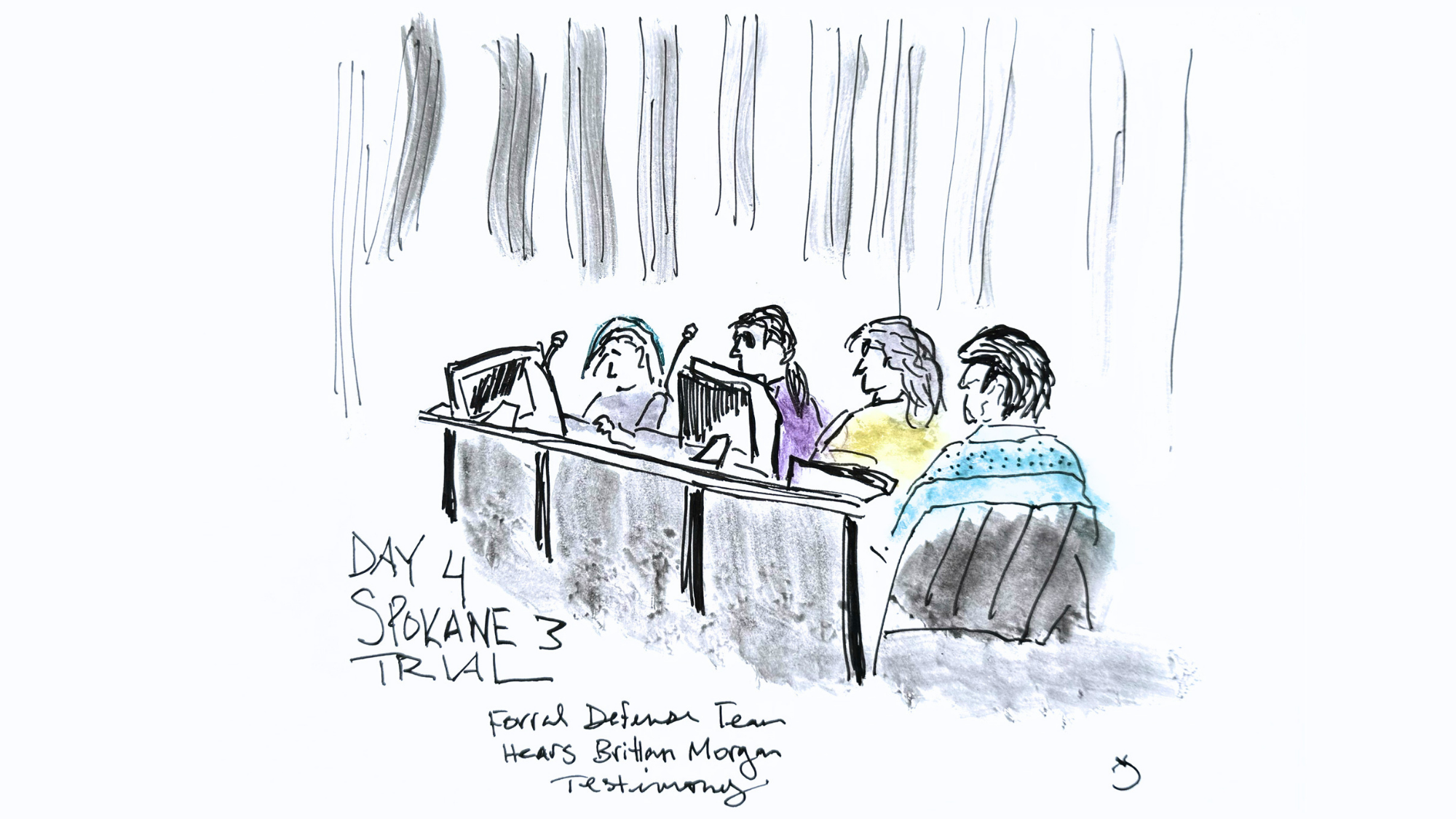
Morgan described all of those as effective moments of deescalation that allowed him to not use more force. He called the hair pulling “extremely effective.” He also continually characterized Forral as aggressive and displaying “pre-fight indicators” like clenching their jaw and flaring their nostrils.
"They would run up start chants, encourage people to just act a fool and then disappear into the crowd,” Morgan said. “They were all over the crowd."
This justified Morgan doing what he classified as bringing his less lethal weapon to the “low ready” position, and what defense called pointing it at Forral, he said.
Further testimony from Morgan also revealed something that hadn’t come out in earlier motions. He received two formal reprimands for his conduct on June 11: one for driving 97 miles an hour on his way to the Sheriff’s office to get geared up and head to the ICE building, and one for the language he used caught on the body camera he thought he’d turned off. He expressed regret and said those letters will follow him forever, though he later said they will stay in his file for just two years.
What the jury doesn’t know, and likely won’t, is that Morgan has prior policy violations. His file showed he was disciplined for failing to report an instance of using force in 2023 and in 2024 for telling someone to “eat a bag of dicks,” on top of the two policy violations from June 11, 2025. He was hired in 2023, he testified, so he’s had at least one policy violation every year he’s been with SCSO.
Morgan also misgendered Forral so persistently that Pennell had to call another recess, and even after the break, he continued to do it. A different agent on the witness stand on Wednesday did the same thing. Tomorrow will pick up with cross-examination of Morgan.
If this is your first time reading RANGE, you can get our trial coverage sent right to your email by signing up here. It’s also a great way to get reporting so obsessively thorough, it got an ICE agent called back to court to potentially be impeached.


