

On Tuesday afternoon, after what felt like an hour of attorneys for the government and defendants pushing papers back and forth, furiously checking their notes and taking turns striking potential jurors, those watching from the overflow room let out a collective sigh: the jury had been chosen. Jac Archer, Justice Forral and Bajun Mavalwalla II know which of their peers will decide their case.
Throughout the rest of the day, the jury heard opening statements from the prosecutors and defense attorneys, watched a bunch of drone and security camera footage and heard from an FBI agent called as witness for the prosecution. They also learned about things like a newfound tech issue in the courtroom that causes exhibit screens to frequently black out.
Read on for a debrief of the trial today, and click here for a live-posted thread on Bluesky capturing all the little details that might not make it into this story.
The Jury
All of Monday had been devoted to questioning the jury pool of at least 120 people on their backgrounds, interests and potential biases. Today, nine more jurors were struck for cause, which means either they or the judge felt they couldn’t give a fair and unbiased opinion of the case. Then, finally, just before lunch, after the attorneys finished the process to cut jurors they felt may be unfavorable to their case, Pennell announced the 12 people and three alternates that would be on the jury.
There’s a small quirk in the way Pennell runs her court: 15 people were chosen, and none of them will know if they’re one of the 12 people who will actually give a verdict on the case, or one of the three who are on standby in case an emergency renders someone unable to serve. This keeps all 15 people paying attention to everything the whole time, Pennell said.
Eight women and six men were chosen for the jury. One of the jurors is an ex-attorney. One is a veteran who served in the military for two years as a dental technician. Three people were from Clarkston, Washington, which is more than two hours away (the jury selection pool spans the region, stretching from Wenatchee to Spokane to Clarkston). One juror said he had some concerns about using nonbinary pronouns for people — like the two defendants Jac Archer and Justice Forral, who both use they/them pronouns — but felt he could ultimately be fair because he has some “very good friends,” who are nonbinary.
Pennell instructed them on their role and responsibilities as a jury, the basic stuff like not talking about the case with anyone else, only considering the evidence presented in court and their need to consider each defendant — and their innocence or guilt — individually. There were also more complex instructions, like what exactly a conspiracy is and what the government would have to prove in order to find any of the defendants guilty of it.
“The crime of conspiracy is the agreement itself to do something unlawful; it does not matter whether the crime agreed upon was actually committed,” Pennell read. “For a conspiracy to have existed, it is not necessary that the conspirators made a formal agreement or that they agreed on every detail of the conspiracy. It is not enough, however, that they simply met, discussed matters of common interest, acted in similar ways, or perhaps helped one another.”
Essentially, to conspire they must have made a specific plan to commit a crime, and in order to have committed federal conspiracy, that specific plan must have included intent to prevent federal officers from doing their job by using force, threat or intimidation.The jury will receive more specific instructions at the close of trial that include legal definitions of force, threat and intimidation.
The Opening Statements
The arguments made in each party’s opening statements hinged on that idea of an agreement.
Rebecca Perez, assistant attorney for the United States, began by describing a voice recording Archer made on their phone the day after the protest. Archer described the events of June 11 as “organized and beautiful,” Perez said. But instead what happened, she said, was that the Immigrations and Customs Enforcement (ICE) building on West Cataldo was “essentially held under siege for about seven hours.”
As the case unfolds, Perez said that the evidence will show that the protesters were organized, in large part by Archer, and that their shared goal was to stop federal officers from transporting the two young Venezuelan asylum seekers — and other detainees in the facility that day — to Tacoma, Washington.
“The crowd collectively indicated they would not be moving,” Perez said. She went on to describe acts that occurred at the protest: people sitting in front of the bus, Mavalwalla II sprinting to stand in front of the south gate that ICE agents were attempting to leave through, Forral letting air out of the tires of the white bus with the spraypainted windshield, Archer “organizing a human wall across the gate.”
“This evidence will show you, ladies and gentleman, that what Jac Archer indicated in their voice memo was correct,” Perez said. “They were organized, they worked together to block exits.”
They used force and intimidation against federal officers, and the Spokane Police Department had to come to the federal officers’ aid, she said.
Then came the defense, who had 20 minutes between the three defendants. On behalf of Forral, federal public defender Amy Rubin argued that the people who gathered outside the ICE facility on June 11 had different goals: Some came to protest, some came to show support for asylum-seekers, some just came to watch.
“People gathered to exercise their right to speak and assemble nonviolently. There was no command structure, no coordinated strategy, no organized plan among everyone present,” Rubin said. Forral was there because “Justice wanted justice.”
Rubin described the protest as peaceful until federal agents came out and pushed the crowd. Rather than deescalating, they “ignited” the situation, she said, ripping flags out of peoples’ hands and shoving people.
Amid rising tensions came an “increasingly chaotic environment,” and Forral made emotional and sometimes even criminal choices, like letting air out of tires and trying to help a protester escape from a Spokane County Sheriff’s Deputy who was dragging them by the hair.
“This was not the behavior of someone carrying out a coordinated plan,” Rubin argued. “Anger is not conspiracy. Reaction is not conspiracy. Chaos is not coordination … Conspiracy requires something very specific: an agreement. An agreement to use force, intimidation or threats.”
At the end of the trial, she will ask the jury to find Forral innocent because the government charged them with conspiracy and she argued that “one thing will remain missing from the government’s story: an agreement.”
For Mavalwalla II, attorney Matthew Duggan kept his initial argument simple: Mavalwalla is a veteran with a strong moral compass who wants to protect the weak. He didn’t know anyone else at the protest, including the other two defendants he sits next to. None of his conduct at the protest got him arrested at the time.
“One of the most important things in Mr. Mavalwalla’s life is to speak for those who cannot speak for themselves,” Duggan said. “He felt the urge that he’s felt so many times before – that it was time for him to go right a wrong, to stand up for people who could not stand up for themselves.”
Like Rubin, Duggan also argued that whatever evidence the jury sees from the government there is one piece of evidence they won’t see: anything that proves an agreement. Mavalwalla did not enter into a conspiracy and had no plans to commit any crimes, Duggan said.
“His only intent was to engage in a peaceful protest.”
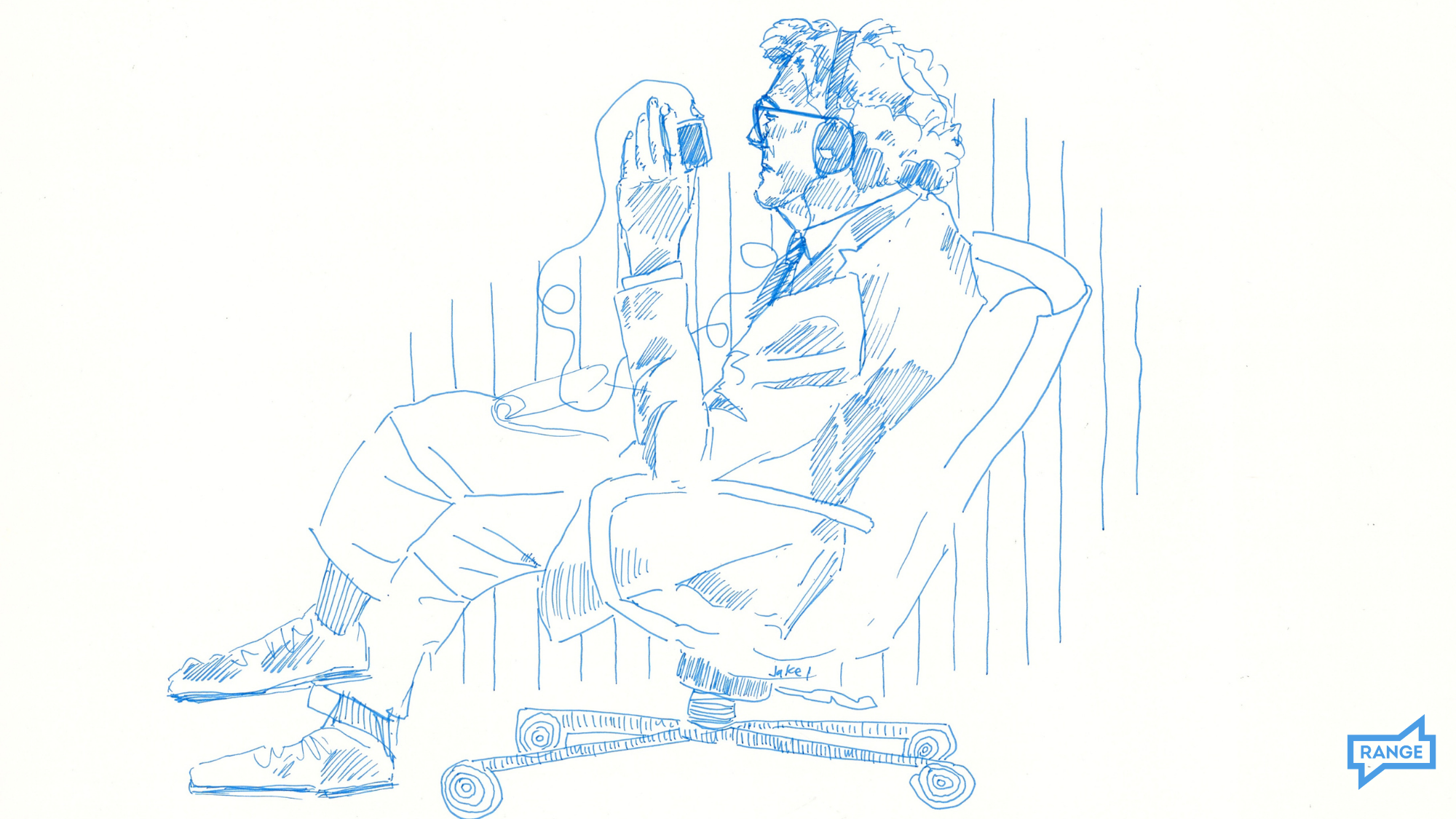
Caption: Archer’s attorney Carl Oreskovich watches and listens to the opening statements. Art by Jake Gillespie.
For Archer, attorney Carl Oreskovich argued that his client, a recent law school graduate, has been battling racism and prejudice their whole life, and takes their role in making the Spokane community a better place seriously.
Archer went to the demonstration intending to protest nonviolently, and they stuck to that all day, Oreskovich said. Even when Archer was shoved to the ground by an ICE agent, they responded nonviolently.
The government will introduce evidence showing Archer, and on all of it, they will be acting "peacefully, nonviolently and disobediently,” Oreskovich said. Archer sat in front of a bus, got on a megaphone to tell people to act peacefully and linked arms with their backs to ICE in front of a gate while ICE agents pushed them, he argued.
At the end of the trial, the jury will find Archer innocent, he said.
The First Witness
As is customary in trials, the prosecution presents their evidence first. Perez began by calling Ethan Hawks, an FBI agent and a “co-case investigator” for the government.
Hawks has been with the FBI for three years and was with Border Patrol in Arizona for three years before that. It was his job to review the “mass amount of video footage,” in the investigation, he said, primarily hundreds of hours of Spokane Police Department (SPD) drone footage, security camera footage and body camera footage from local and federal agents — but also news coverage and social media videos.
When considering footage, he said, he broke it into five major events: “The White Bus Incident,” “The South Gate Incident,” “The Barricade Incident,” “The Red Van Incident” and “The Law Enforcement Response.”
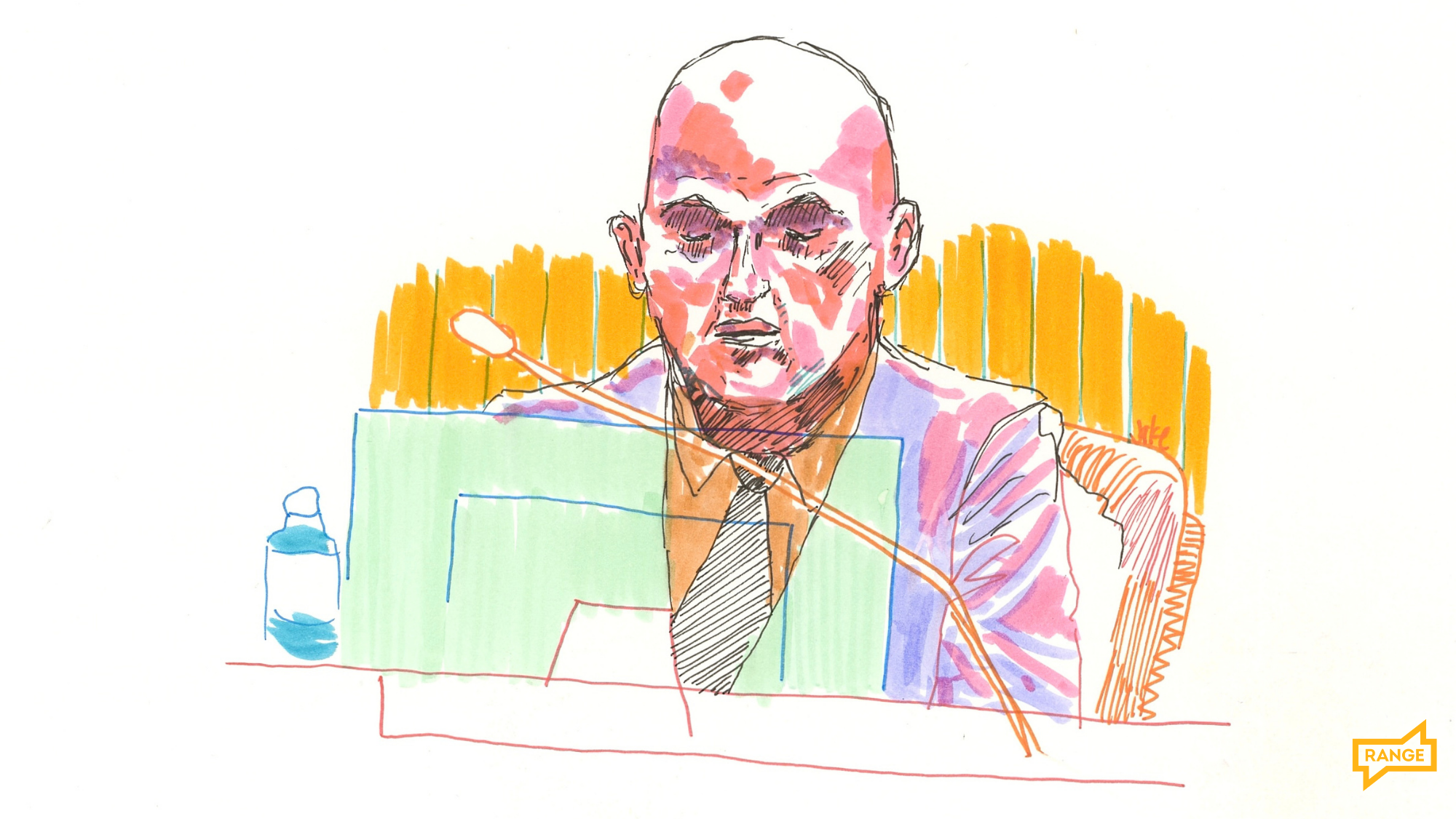
Caption: FBI Agent Ethan Hawks testifies. Art by Jake Gillespie.
Perez used Hawks to introduce a swathe of drone and surveillance camera footage from the course of the nine hour event as evidence. The jury watched soundless footage of a variety of events from that day. Much of it showed a few dozen people milling about, some sitting in front of the white bus. Other, more salacious, footage showed Mavalwalla — wearing a black t-shirt that read “Give a Damn,” — sprinting to be the first protester standing in front of south gate parking lot exit, blocking ICE agents as they tried to leave, and later, Forral piling a bench and cones in front of that same gate.
In the most heated moments, Forral is shown knocking the hat off a Spokane County Sheriff’s Office (SCSO) deputy and Mavalwalla kicking a smoke canister (Hawks said it was directed at law enforcement, while Mavalwalla’s lawyer Aine Ahmed characterized it as merely directing the canister away from Mavalwalla and not nearing officers who were at least 50 feet away.)
When Archer appears in the shown footage, it is mostly for Hawks to point out that Archer is talking to people while holding a clipboard, talking to people in a group, holding a megaphone or standing with their back to ICE agents. At one point, the government implied this footage showed Archer was leading or organizing the protest, which was stopped with an objection from the defense.
During cross examination, Hawks was pressed on his role in cell phone extractions by Ahmed, who asked if the extractions showed any evidence Mavalwalla colluded before attending the event. Hawks said Mavalwalla posted on Reddit and later discussed attending the protest on the app. Ahmed also pushed Hawks on the moment Mavalwalla kicked a smoke canister away from himself, asking how Hawks can prove Mavalwalla kicked it at officers when it got nowhere near them.
By both Ahmed, Rubin and Andrew Wagley (Archer’s other attorney), Hawks was quizzed on the violence done that day and who initiated it: was the first contact made by civilian protesters or federal agents? Hawks carefully described protesters as the aggressors, stating they made a human line and that officers tried to remove them.
“In the shoving, people fell to the ground,” Hawks said. “During the shoving and pushing, people were resisting against the officers and people were falling to the ground.”
Wagley also pushed Hawks after he said it didn’t appear Archer was shoved. Wagley pulled up a drone video edited by Hawks that highlights Archer, circled in green. It clearly shows Archer getting shoved to the ground by a federal officer.
“That is defendant Archer getting pushed down, correct?” Wagley asked.
Hawks responded, “It appears defendant Archer falls down.”
In one of the most dramatic moments of the day, a juror audibly gasped “Falls??”
Wagley again asked if Archer was pushed down, and then Hawks responded, “Yes.”
Rubin pushed him on the call logs extracted from phones. Was there any proof her client, Forral, called Stuckart before the protest? Hawks said no, but some phone numbers on the call log were unidentified. Calls they could identify on Stuckart’s phone included four completed calls with Spokane Mayor Lisa Brown and one with Washington State Attorney General Nick Brown.
In the last moments of the day, the federal government presented a redirect: a photo of signs on the south gate that read “authorized parking only, do not block gate," and "warning, moving gate can cause serious injury or death."
The trial will continue tomorrow morning at 9 am. The federal government plans to call two ICE agents to testify.
If this is your first time reading RANGE, you can get our trial coverage sent right to your email by signing up here. It’s also a great way to get reporting so obsessively thorough, it got an ICE agent called back to court to potentially be impeached.


