

The third day of the trial of the Spokane 3 was filled with federal agent testimony, contentious cross examinations and misgendering of a defendant that was so persistent the judge had to send the court into recess.
The day began with the questioning of Special Agent Jared Tomaso from ATF, who had previously worked as an Immigration and Customs Enforcement (ICE) agent for two years and a Border Patrol agent for eight years before that. Also called as witnesses today were Jeremy Burlingame, the supervisory detention officer for ICE, GEO group contractor Arianna Sanchez, ICE officer Jason McIntosh and ICE deportation officer Kevin Wilks.
Testimony and evidence today focused mainly on a confrontation at the south gate of the ICE facility and defendants Jac Archer, Justice Forral and Bajun Mavalwalla II’s roles in it and questions of safety throughout the day — who was safe and when? Who was creating unsafe situations?
What happened at the South Gate?
The question of what happened at that gate was the central theme of much of the testimony in the case so far. In one tense moment yesterday, a juror audibly gasped “falls??” after a government witness characterized Archer being pushed down by a federal agent as a “fall.”
The federal government has continually painted a picture of what happened there as protesters acting erratically and violently, not responding to orders from agents. Federal agents have said they saw people acting with “a mob mentality.”
Meanwhile, in cross examinations, defense attorneys have pushed federal agents on when the violence started and who started it, seemingly seeking to convince jurors that it was not protesters who escalated the situation but the federal agents.
On June 11, Tomaso said he attempted to “deescalate” protesters early in the day, telling the people sitting outside the white bus ICE intended to use to transport detainees to a facility in Tacoma to move or they’d be considered obstructing federal officers. He pointed himself out on a video, originally taken by RANGE, having what he described as a peaceful interaction.
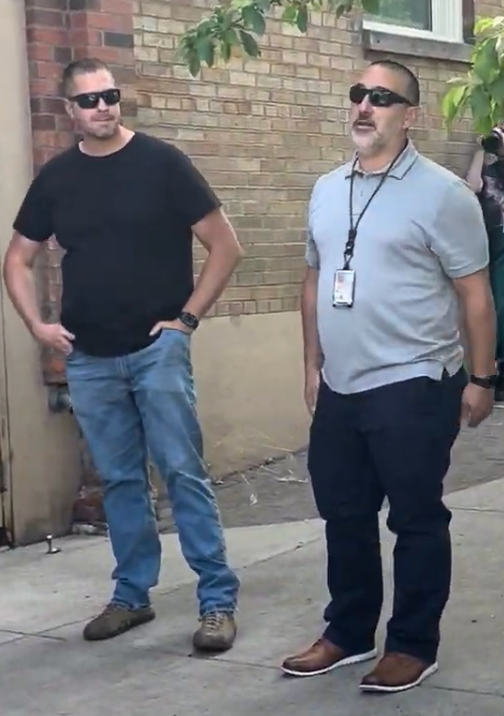
Tomaso characterized the rest of the day as escalating in tenor, with much of his testimony focused on what the government is calling “The South Gate Incident.” This references the moment when federal agents clashed with protesters who had linked arms and formed a human chain across the parking lot exit south of the ICE facility.
Three federal agents had formed a plan to exit that gate in their vehicles and rendezvous at a different location with a red Border Patrol van that they could then escort in and use to transport out the 12 people they had detained that day, testimony throughout the day revealed. Tomaso was not part of that plan, but one of a second trio of officers who responded once the crowd had formed outside the gate, pushing and shoving through protesters.
Burlingame described feeling frustrated that the Spokane Police Department did not come to help earlier in the day and said he was the decision maker on part one of their plan to leave through the south gate: the three officers who went to the parking lot to take their vehicles out of the fenced lot. The other group of agents, the ones who came to the south gate later and started pushing protesters, did not have a plan, Tomaso testified, and acted impulsively.
"At that point I was concerned for the safety of the officers because of the size of the crowd running towards them," Tomaso said during his testimony. "So I ran out the door."
Tomaso can be seen on the footage shoving protesters back from the gate. In response to a question from prosecutor Lisa Cartier-Giroux, Tomaso said he pushed the protesters “hard.”
"I was very stern and I came out aggressive," Tomaso said. "They weren't listening to us, they were intending on disrupting what we were trying to do ... so I came out aggressive."
Burlingame, described moments with Mavalwalla at the south gate. He pointed his Taser pointblank at Mavalwalla’s head (although he didn’t use it), and Mavalwalla “moving into an athletic stance,” which Burlingame found threatening. He called the crowd at the south gate a “moshpit” and a “mob.”
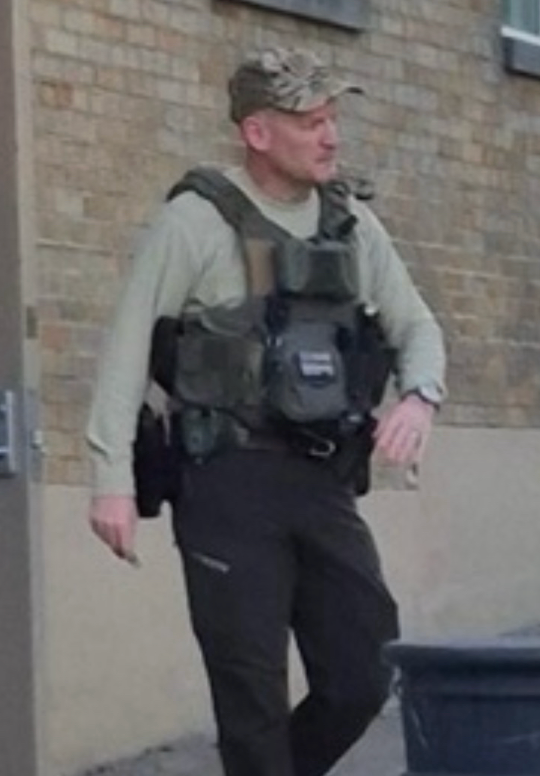
"The crowd was becoming more agitated,” he said. “They were locking arms. The volume was increasing. They weren't showing any willingness to comply with lawful orders."
Along with Wilks and McIntosh, both Burlingame and Tomaso described hearing protesters yell profanities at them, like “Fuck ICE,” and “Fucking Nazis.”
Who initiated contact — the protesters or the agents — was not something the agents agreed upon, though video footage appears to show federal agents making first contact, striding into the crowd and pushing protesters.
The courtroom was shown a few videos — some of which had already been shown yesterday — including Tomaso’s own body camera footage, security camera footage, drone footage, videos recorded by protesters and posted to social media and a video taken by RANGE’s reporter. Many of these videos were replayed frame-by-frame today as the lawyers made arguments about each instance of contact.
Who was safe?
Other testimony focused on the idea of safety.
GEO group contractor Sanchez’s testimony focused on her experience as one of a handful of civilians in the facility. She was scared, she said, and felt trapped in the building until late in the evening. Federal officers wanted to escort her out of the building but then felt it wasn’t safe. (The defense challenged this by showing a timelapse video of hours of security camera footage from the front of the building showing people coming and going freely. Only a few protesters were in the frame.)
Returning to the South Gate, one of the most interesting moments came as attorney Andrea George, who represented Forral, questioned Tomaso on his decision to, with two other officers, approach the protesters at the south gate on foot.
Here’s an exchange, paraphrased.
George: "You testified on direct examination that you had no plan when the three of you went out there."
Tomaso: That's fair to say. We responded to a rapidly evolving situation.
George: "You had no plan? You had no agreement as to what you were going to do … and just because you acted the same doesn't mean you had an agreement to act the same, it just happened?"
Tomaso: That's fair.
It seemed like George was trying to make the point that people can make joint in-the-moment decisions in stressful situations without having a plan. For example, protesters can make similar decisions at a protest and respond similarly to the chaos without there having been an agreed-upon plan or conspiracy to do so.
Federal agents also consistently argued they used the force they used that day because they felt threatened by the protesters. Multiple agents used the term “preassault indicators” and described behavior like athletic body stances and balling of fists.
When they see behavior like that, they are allowed to respond with more force, Tomaso said. He described a moment when he shoved a protester, seemingly out of nowhere. Tomaso claims he saw those “preassault indicators,” and pushed the protester “very aggressively.”
“We meet force with greater force,” he said. “It’s how we train.”
Other fiery moments
- During one moment of testimony, McIntosh misgendered Forral so many times in the span of a few moments that Pennell had to call a recess. The jury was in recess when she admonished the government about the importance of being respectful to everyone in her courtroom and reminded McIntosh of the correct pronouns to use.
- During one line of questioning on a cross-examination, Forral’s attorney Andrea George was asking questions of McIntosh, who booked asylum seekers Joswar Rodriguez Torres and Cesar Alvarez Perez into detention. She was asking him about their legal status — whether or not they were brought into custody because of a warrant, or had an immigration hold.
Rebecca Perez, federal attorney, shouted objections at nearly all of George’s questions, especially after McIntosh said he didn’t know if there was a warrant to detain the young men. He said he took them into custody because his supervisor told him too. The lawyers and Pennell conferred privately about which questions George could ask.
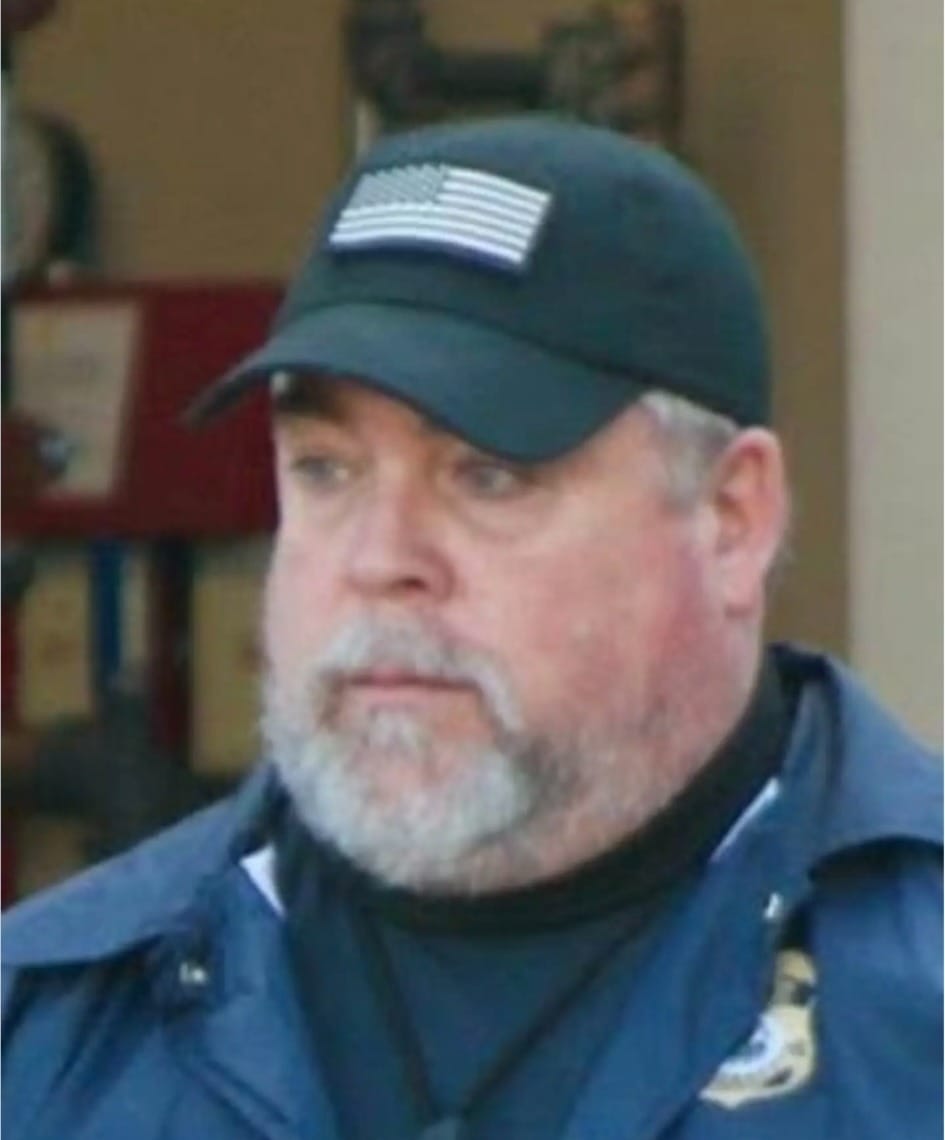
As soon as court resumed, George asked if the men ICE had detained were on asylum — apparently not an approved question because Perez objected to that question.
George, in her cross examination, pressed McIntosh on a comment he made about a protester having “a look of hatred in her eyes,” asking if the look could have been sadness about where the country is going. Perez stood and yelled, “Miss George is consistently putting on a show for the people behind us!”
Pennell and George discussed in open court, and George stopped questioning McIntosh. At the end of the day, Pennell brought the conflict between George and Perez up.
“Emotions went high today. I understand that this is a serious case and this happens,” Pennell said. “My ruling is and continues to be there should not be appeals to politics or broader policy issues. That could be perceived by the jury as an improper request for nullification.”
She said if any lawyer wants to ask questions or make comments about politics, they need to tell her before doing it.
To read our live thread of the trial, click here.
If this is your first time reading RANGE, you can get our trial coverage sent right to your email by signing up here. It’s also a great way to get reporting so obsessively thorough, it got an ICE agent called back to court to potentially be impeached.


