

Two years ago to the day, Mayor Lisa Brown signed an executive order in front of the intersection where cyclist and prominent community member Janet Mann had been killed in a crosswalk by a car to say: enough was enough. The city would be moving quickly and decisively to address traffic safety, “ so that we do not have to lose any more of our loved ones to unnecessary traffic related incidents,” Brown said.
There was a list of concrete promises, like creating “No Turn on Red” zones and installing adaptive design projects in each council district, but one of the first tangible changes the community could expect to see, she said, were new bike lockers at City Hall.
“Ultimately you will see the new bike infrastructure start to emerge that will create more protected bike lanes for people. All of that should be happening very quickly,” Brown said. “The bike lockers are already ordered, so hopefully substantial, visible change.”
In the two years since, some things have changed for the better, cyclists say, perhaps a result of a mayor and city council members who actively bike, walk and use the bus to get around Spokane.
But I, and other members of the public, still cannot use the bike lockers.
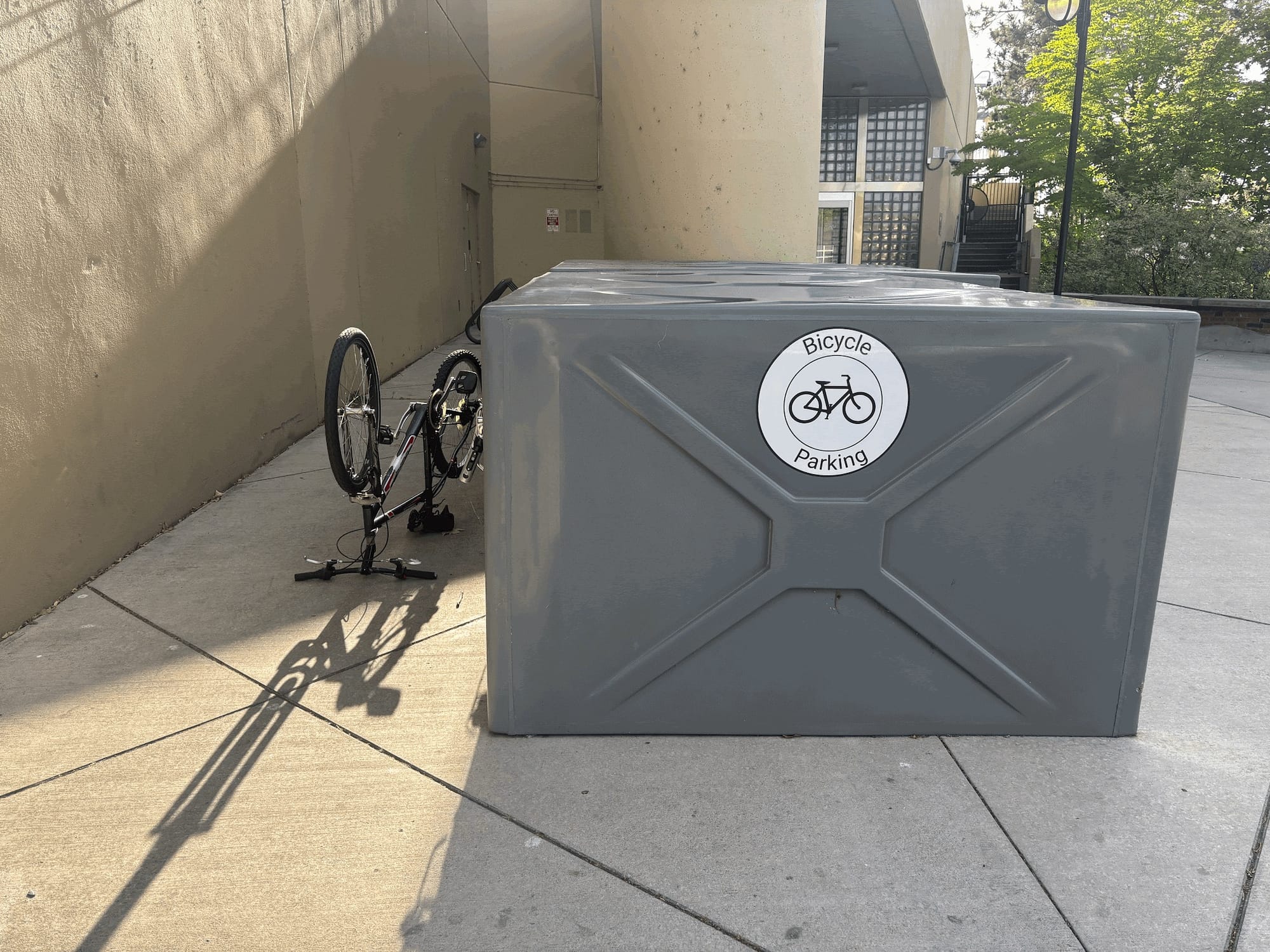
As a budding cyclist and City Hall journalist — perhaps the exact cross section of the community that would most enjoy using those lockers — I wanted to know why, and whether that failure was emblematic of the rest of the Brown administration’s approach to traffic calming.
A brief history of the bike lockers
On July 3, 2024, at that fateful press conference that Brown herself biked to, the mayor said the executive order she just signed would ensure that the city focused on creating pedestrian and cyclist infrastructure.
“City staff will evaluate options for expediting the implementation of leading pedestrian intervals … and will pilot strategies for providing secure public bike parking at high-demand locations through the installation of bike lockers at City Hall and other locations,” Brown said.
The bike lockers at City Hall were installed quickly, as promised, and the city announced their launch in September.
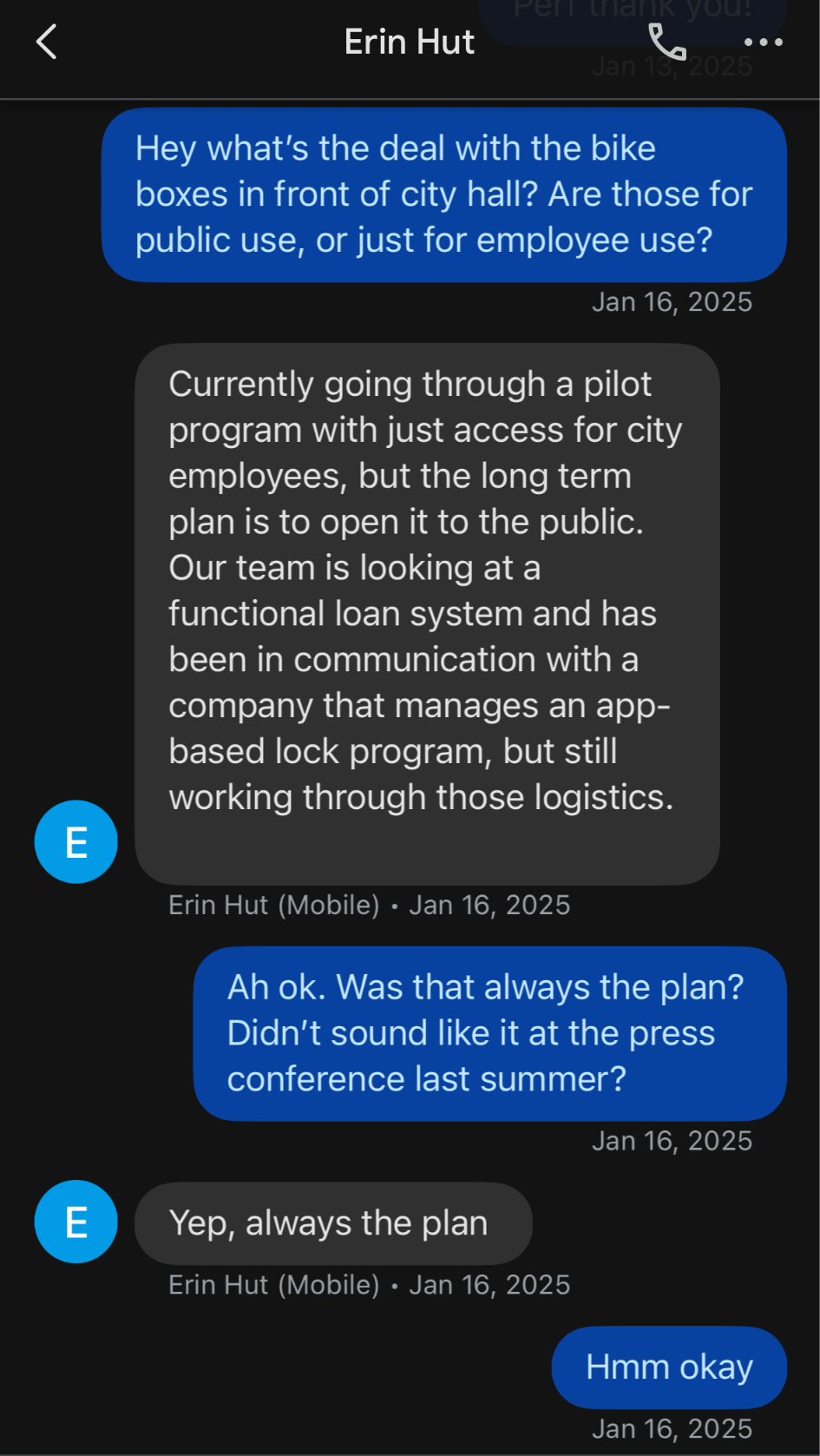
There was no publicly posted information about how to use them or whether they were usable at all, a fact that didn’t bother me personally — until I received a bicycle for Christmas at the end of 2024. As I spent my January imagining a bright future as a Spokane cyclist (once the snow cleared) who could bike to work and park safely without fear of bicycle theft, I remembered that July press conference and those very visible bike lockers and I fired off a quick text to city spokesperson Erin Hut:
Then, an interesting wrinkle.
When I asked if employee-only access was always the plan — because it didn’t sound like it when Brown said the lockers at City Hall were part of her plan to provide “secure public bike parking,” (emphasis mine) — Hut replied: “Yep, always the plan.”
She went on to explain that making the lockers accessible to the public was taking longer than expected. For one, they hadn’t found an easy way to make the boxes rentable. Asking the City Hall security team to handle it “wasn’t functional,” Hut said, and using an app to check them out, like Lime scooters, would require electricity provided to the boxes, which at that time, they didn’t have. As of January 16, 2025, they were looking into options to supply the boxes with power.
“We’re trying, I promise!” Hut assured me.
Four months later, Brown held another press conference, this time in front of Riverfront Park Square, where her team had just installed “No Right on Red” signs. In 2024, 20 people died in fatal crashes, and by April 18 of 2025, there were already six more deaths. She made more promises about how her administration would be making the city safer, like bringing back the Spokane Police Department’s previously-disbanded Traffic Safety Unit and revamping the Complete Streets policy to reflect modern best practices for pedestrian and bicyclist safety.
Annoying even in 2025, I once again asked about the bike lockers. Hut told RANGE they may have been overly optimistic about a quick rollout, and they were still working on finding a way to supply them with power. She promised if there was an update on the bike lockers, we’d be her first call.
Unfortunately, I was left waiting by a phone that never rang (or not about that, at least.)
The tragedy of the commons
I’m far from the first City Hall reporter to dread bike theft.
Long before he ever began covering city politics for The Inlander, Daniel Walters was just a young man with a crush on a girl who liked to read. It was 2004, and an 18-year-old Walters, who now writes for RANGE, rode a Blue Trek bike he received for his 16th birthday to her house under the guise of borrowing her copy of a Jess Walter novel. A few hours later, he left her house, book in hand, and his bike was gone. Along with it, his sense of innocence.
In 2012, four years after he began his career at The Inlander, another one of Walters’ bikes was stolen after he covered a Ron Paul rally. In 2013, an attempted theft left a third bike’s frame so bent he had to donate it to Cool Water Bikes, where it was likely Frankenstein-ed into a contraption that allowed users to get one step closer to Jesus and bike on water. In 2014, his Giant black bike was stolen.
It was an unfortunate pattern that would continue through 2023, leading Walters to make “guy who gets his bikes stolen” a core part of his internet persona.
“ I never liked driving, was never a very good driver, and there was just this joy to be had in the wind rushing through your hair — or lack thereof later on. But you know, it's just a wonderful thing,” Walters said. “ And so then having your bike taken away from you … I've had windows broken a couple times, but it's the only real, genuine crime that I've experienced, right? So it's this real sense of betrayal and outrage.”
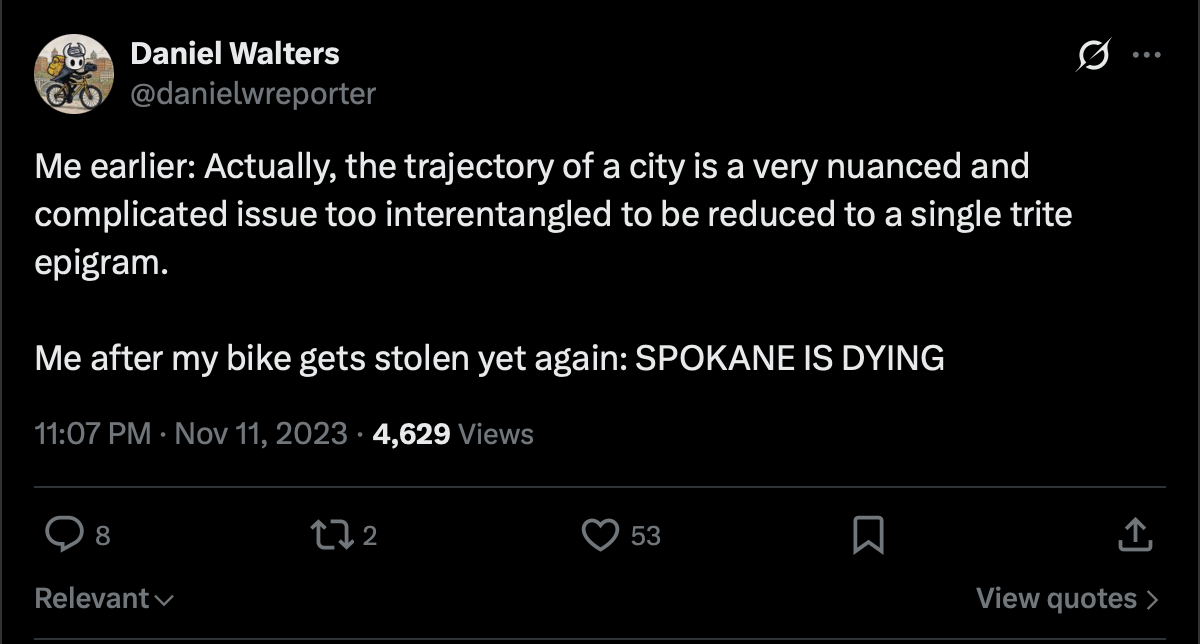
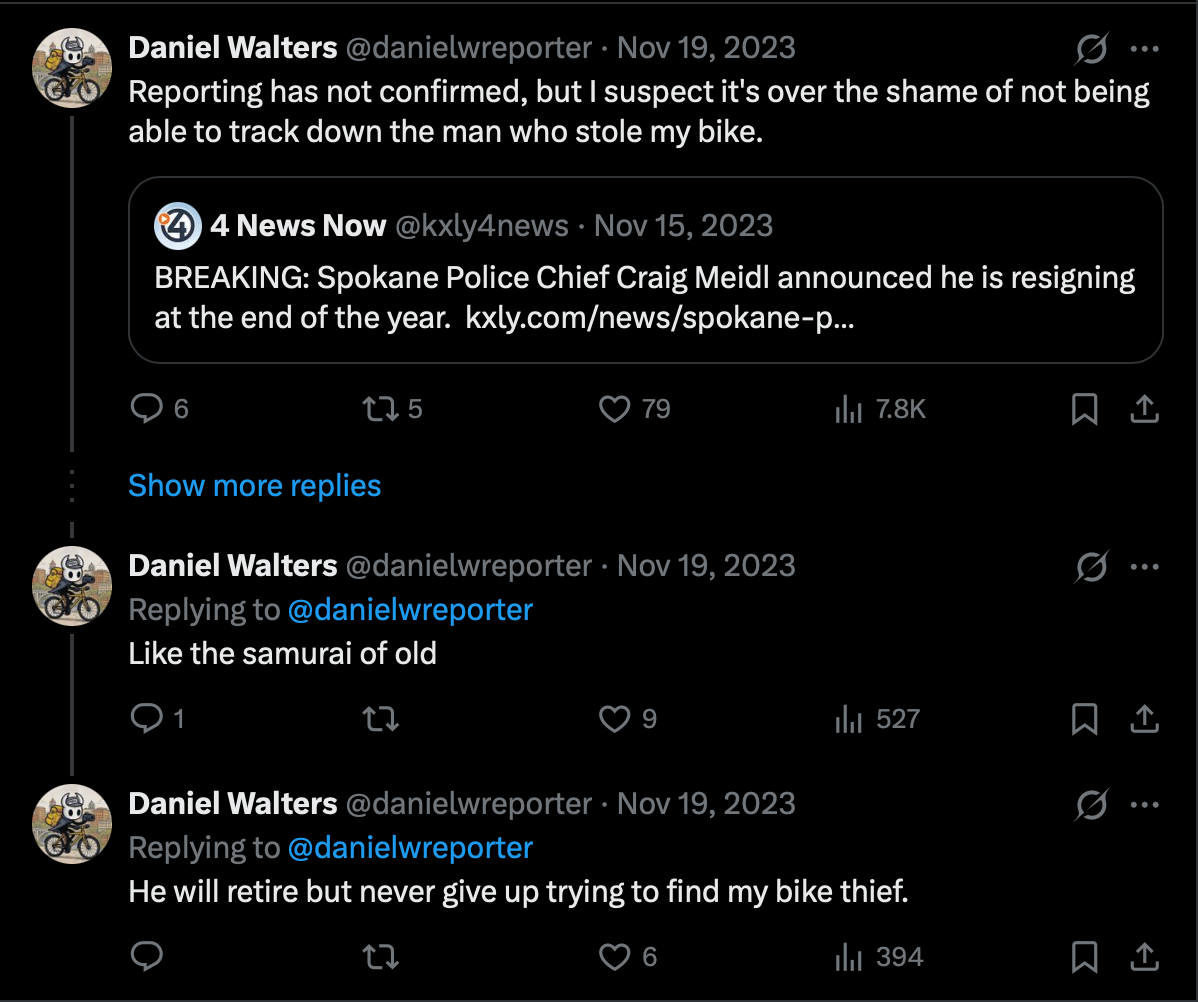
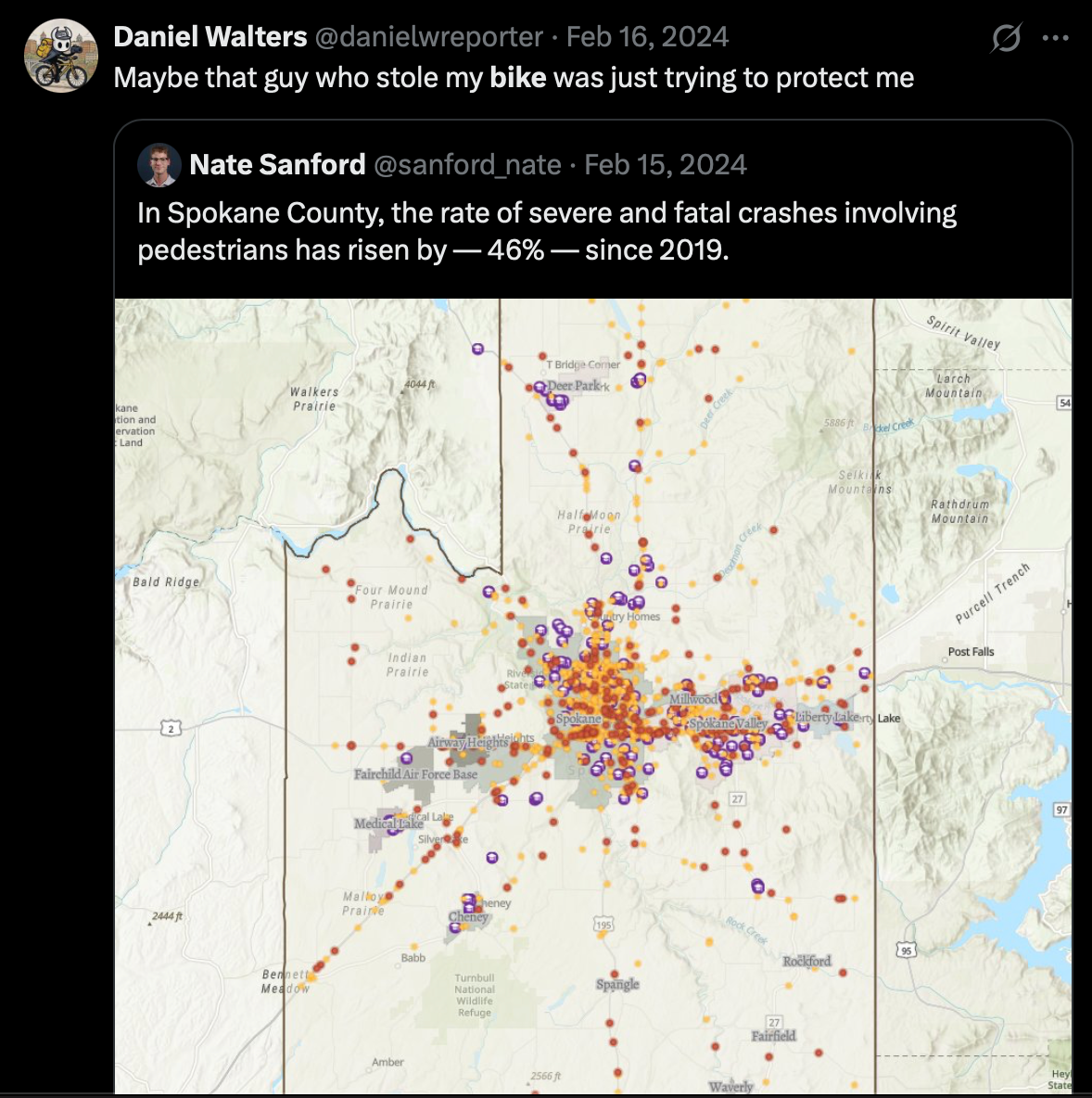
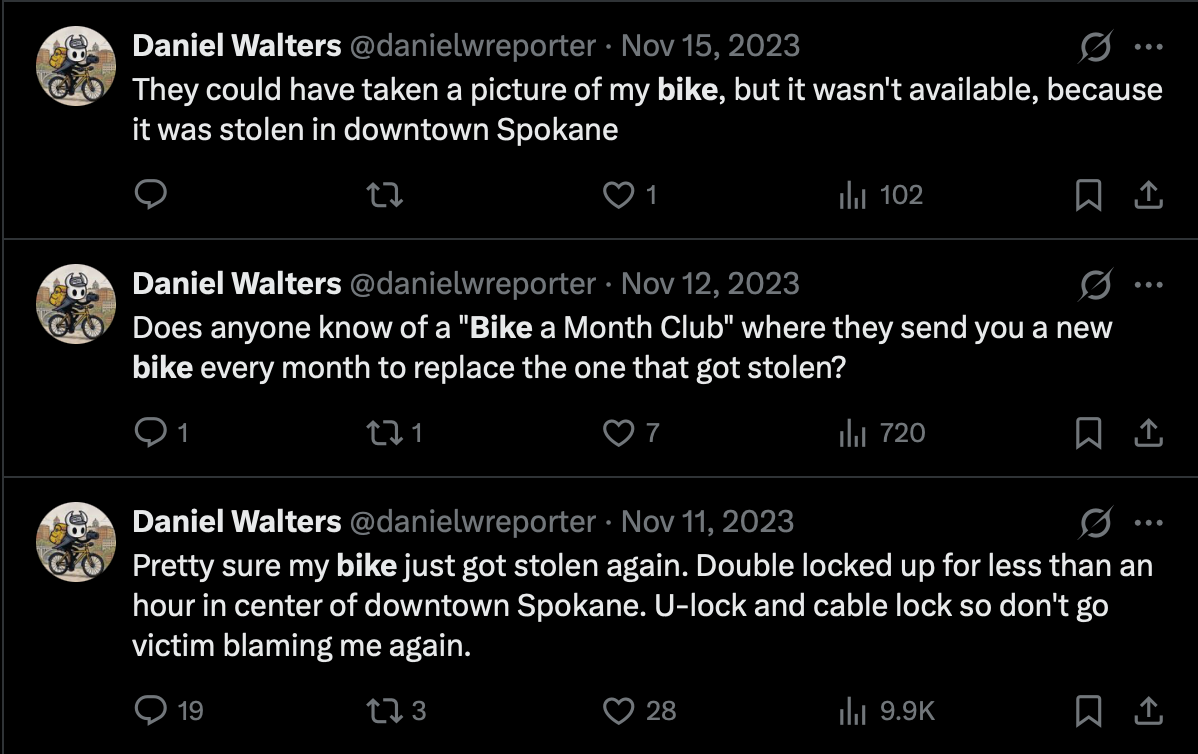
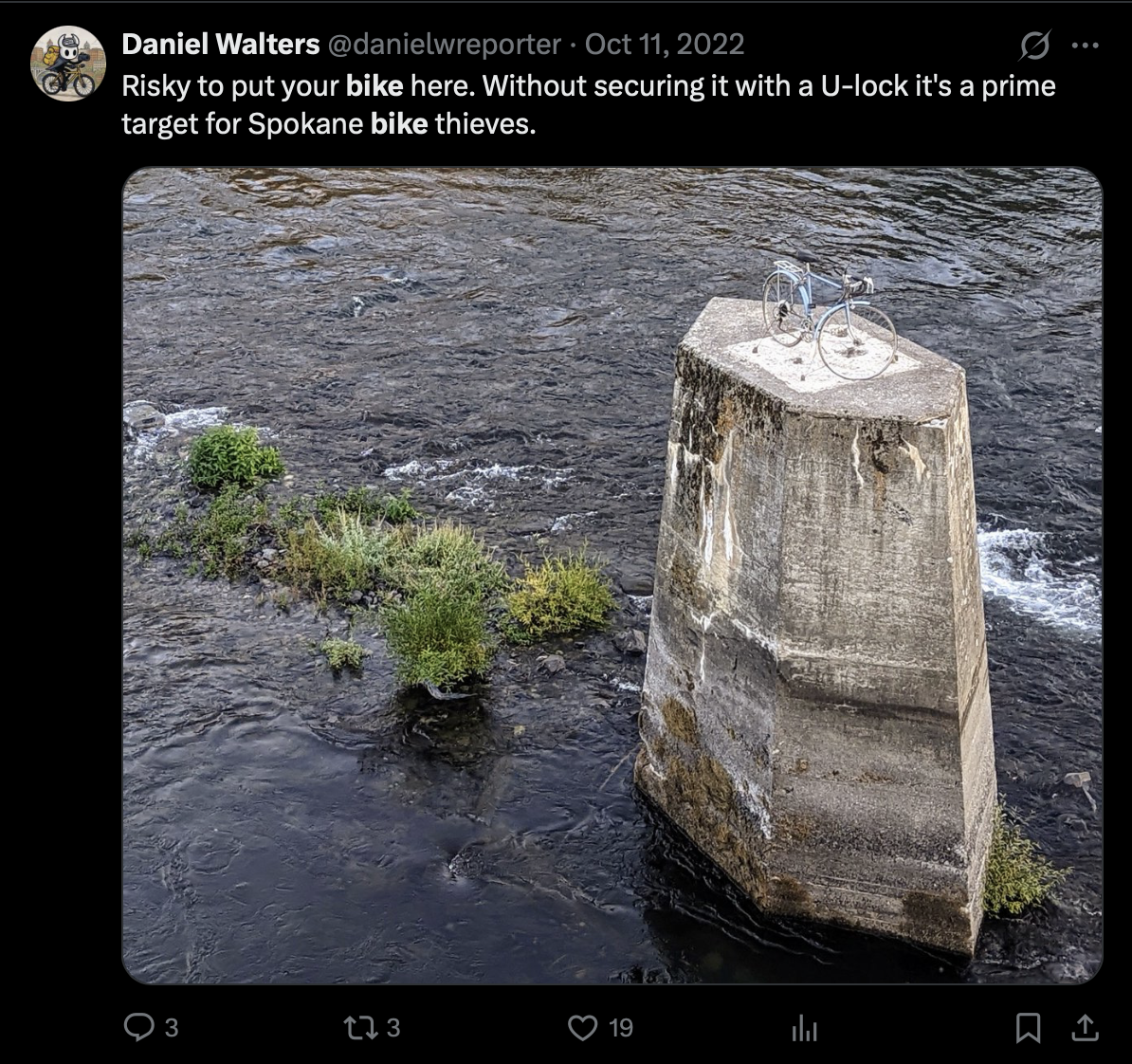
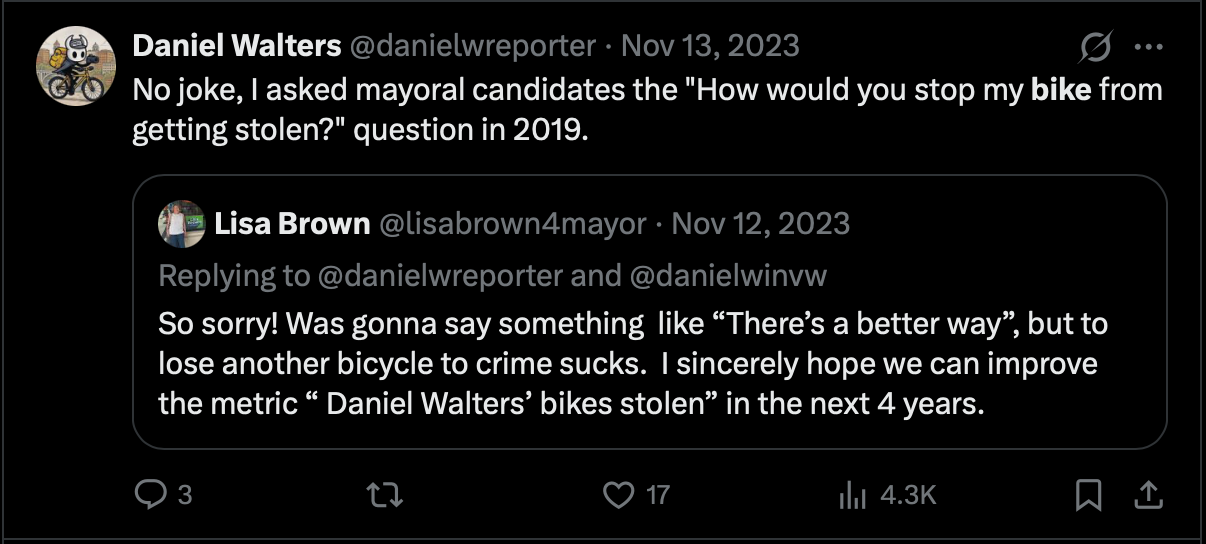
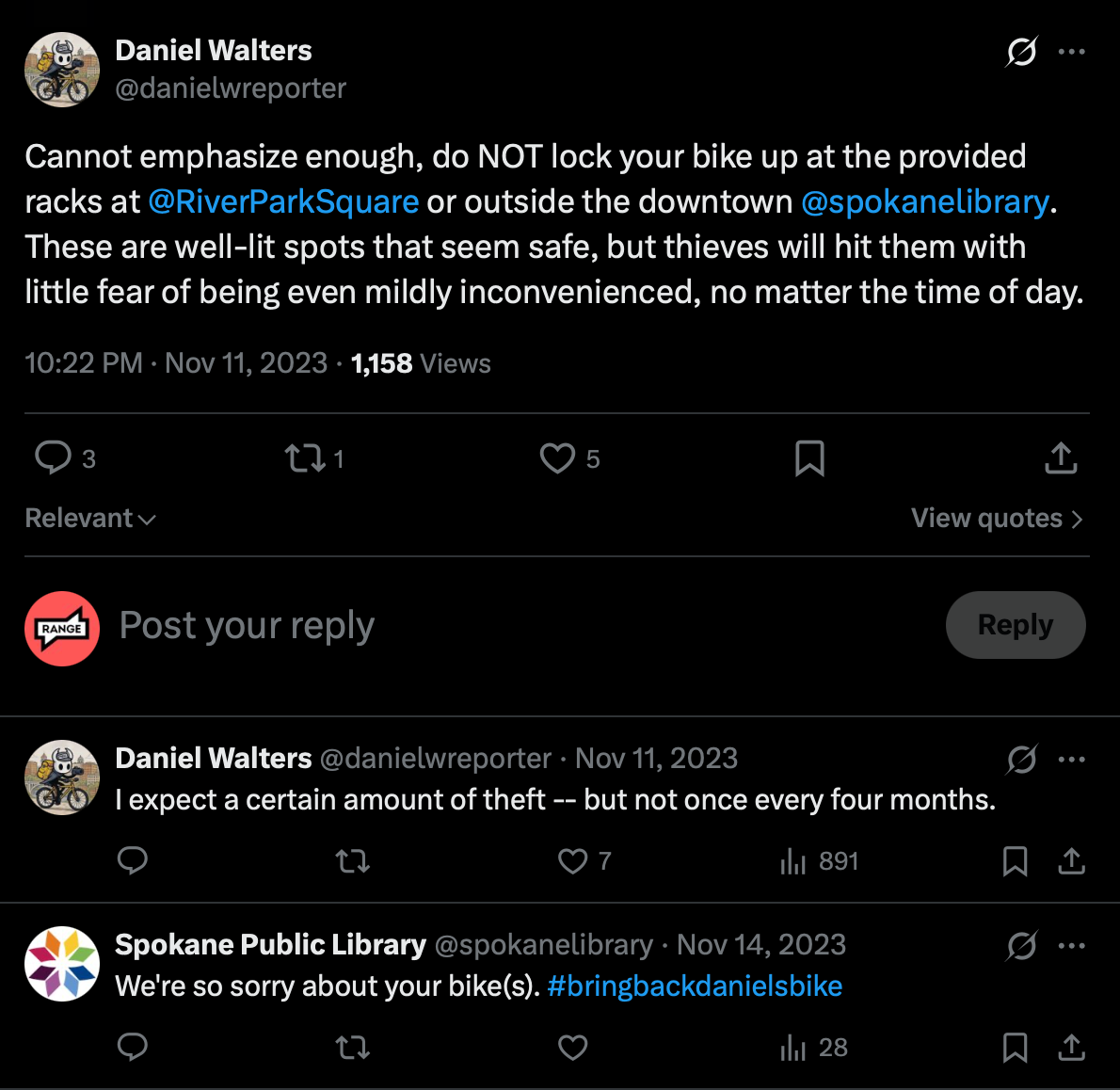
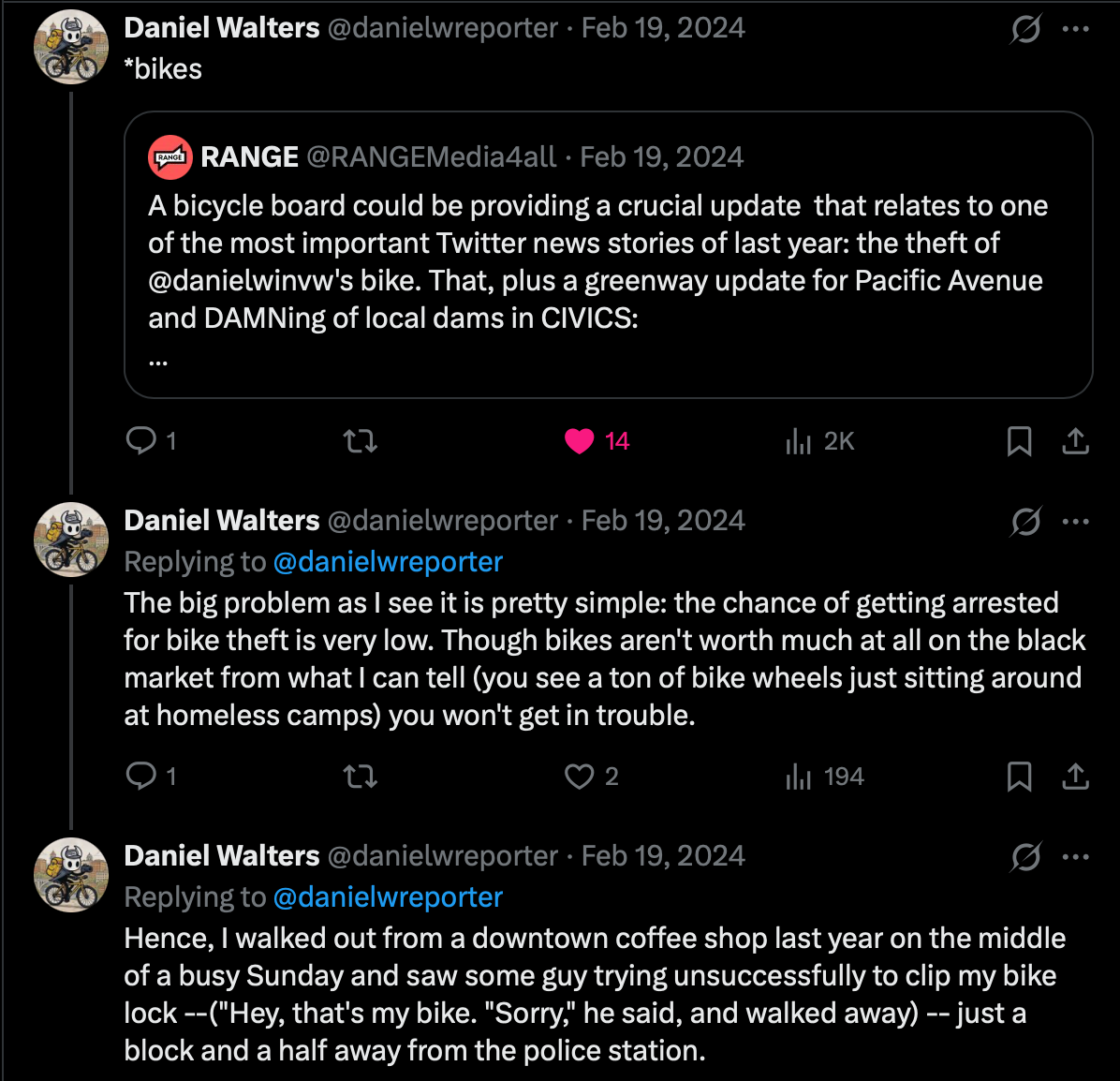
(Screenshots courtesy of Daniel Walters' Twitter.)
Having a safe place to park bicycles is crucial to increasing the number of people who use a bike to commute to downtown, said Lauren Pangborn, who chairs the Bicycle Advisory Board, sits on the Transportation Commission and occasionally writes columns for RANGE.
“There is definitely a need for secure bike parking downtown. Whether it's at City Hall or not I don't think particularly matters to me, but secure bike parking is critical to increase mode share of people riding downtown instead of driving specifically,” Pangborn said. “Because if they don't have a place to park, people are not gonna do it. If they have to be worried about their bike all day, they just won't — they'll just drive.”
As a volunteer board member, Pangborn briefly had a coveted key to the bike lockers, which she surrendered after staff discovered the U-locks approved by the company and purchased by the city could actually be rotated carefully around in a way that would allow a potential thief to open the bike boxes, locked or not. Now, she parks her bike in the back row of the council chambers when she cycles to meetings.
Bike theft may not be the most serious crime in the world, but to Walters, it represents the tragedy of the commons. Bike parking is a shared resource, and the more people that cycle, the better it is for both the environment and potentially commuter congestion. But when people steal bikes, and when cyclists lose their trust that they can leave their locked bike downtown for a day without having it stolen, that shared resource is spoiled — making Spokane a little bit worse for all of us.
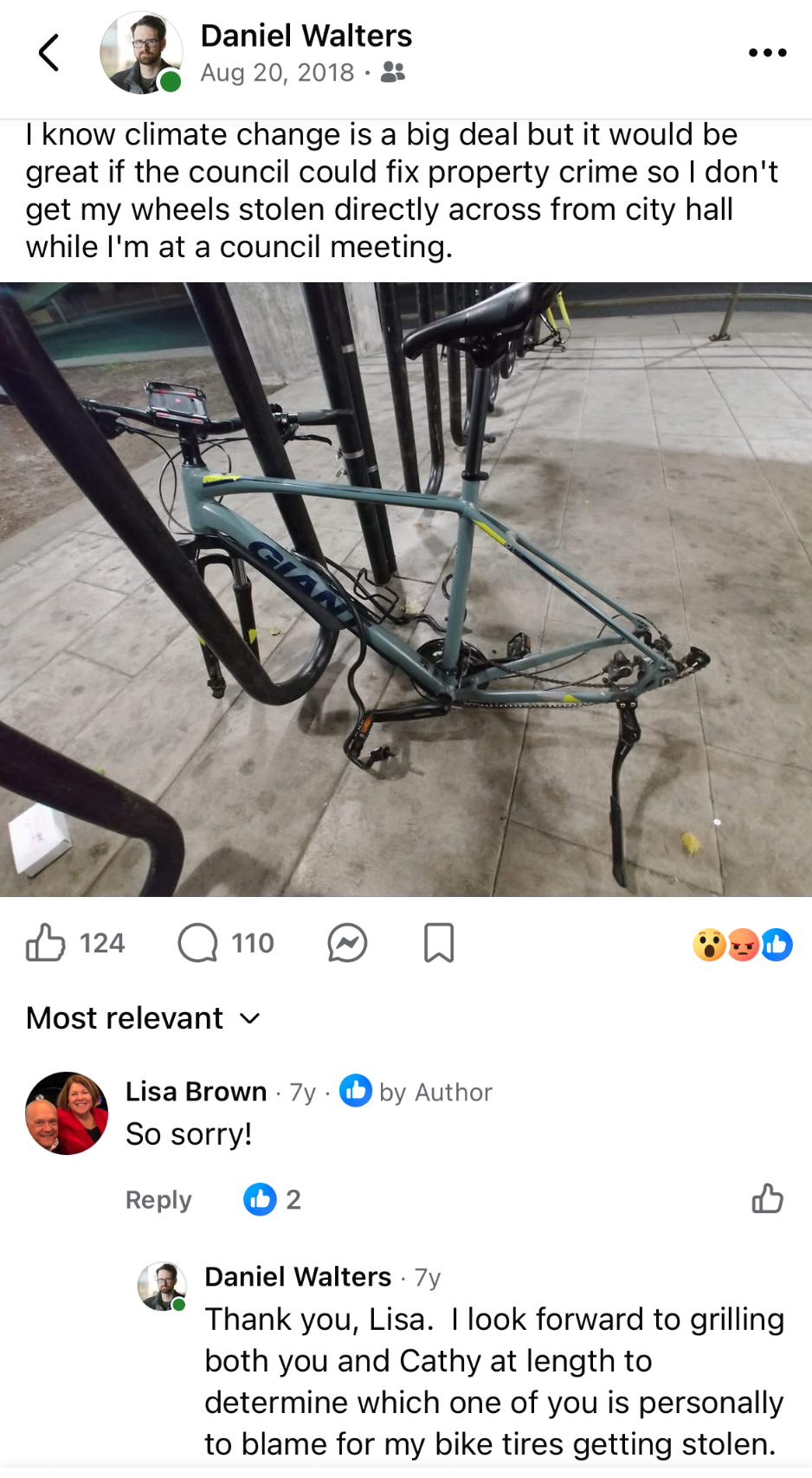
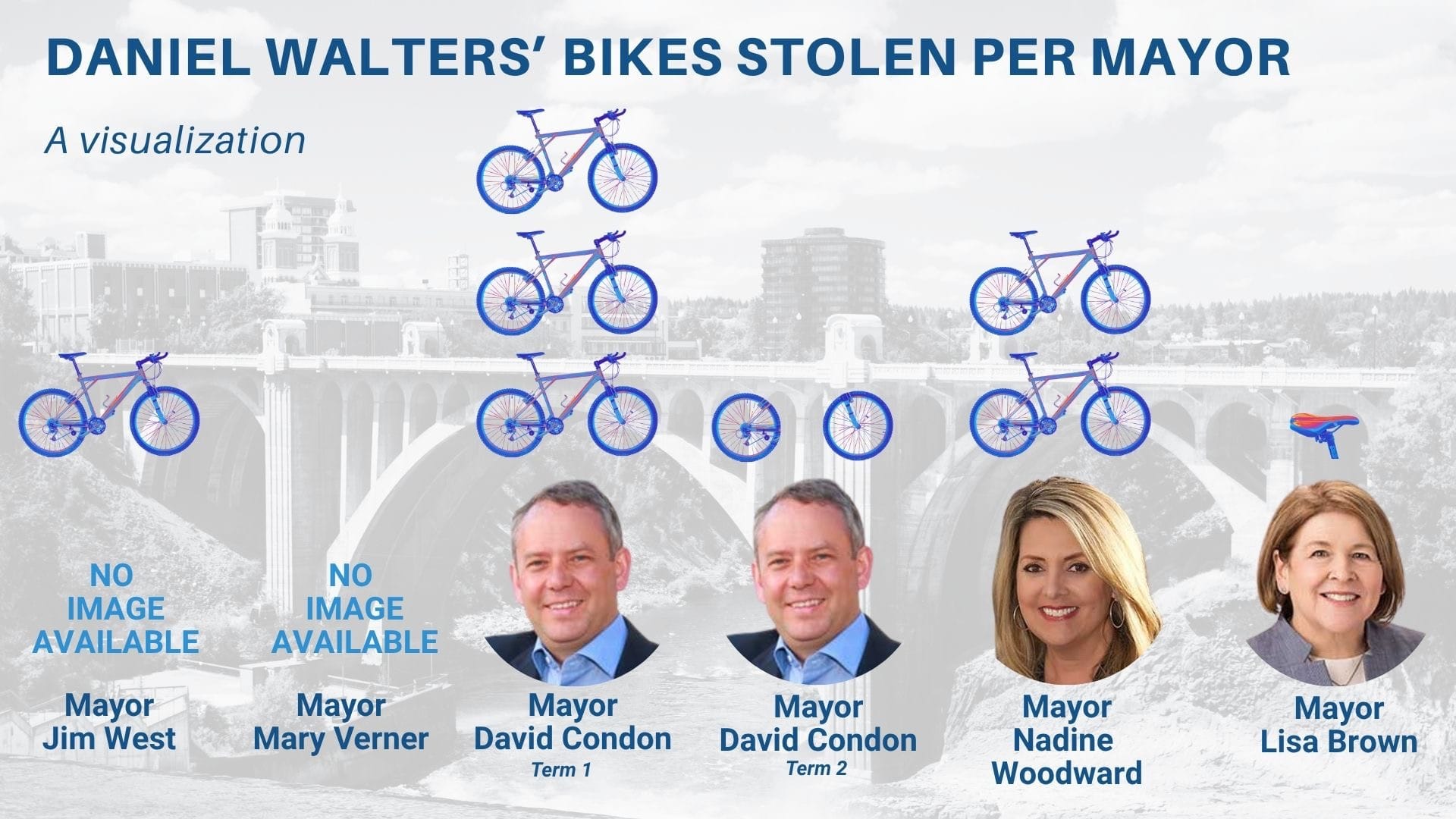
To her credit, Brown has been publicly consistent about wanting to create a city that’s safer for cyclists. In 2018, when Walters’ bike wheels were stolen as he attended a lengthy council meeting about climate change, ruining his reporting “praxis” and forcing him to seek a ride home with Council Member Michael Cathcart, Brown said on Facebook that she was “So sorry!”
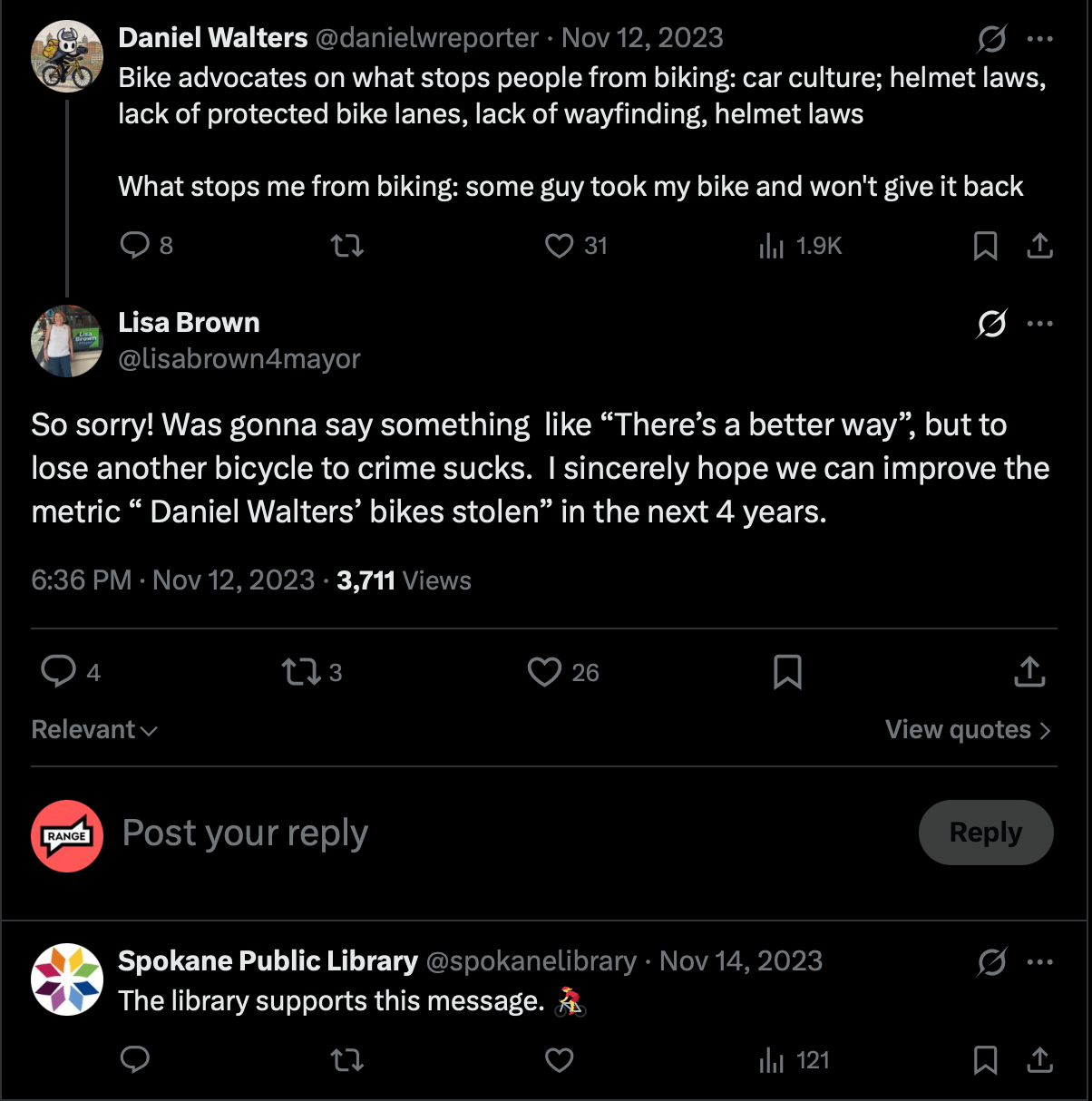
And in 2023, when she was campaigning for mayor, and Walters’ second bike in four months was stolen in downtown, Brown said that if she won the mayorship, she hoped to improve upon the metric of “Daniel Walters’ bikes stolen” during her term.
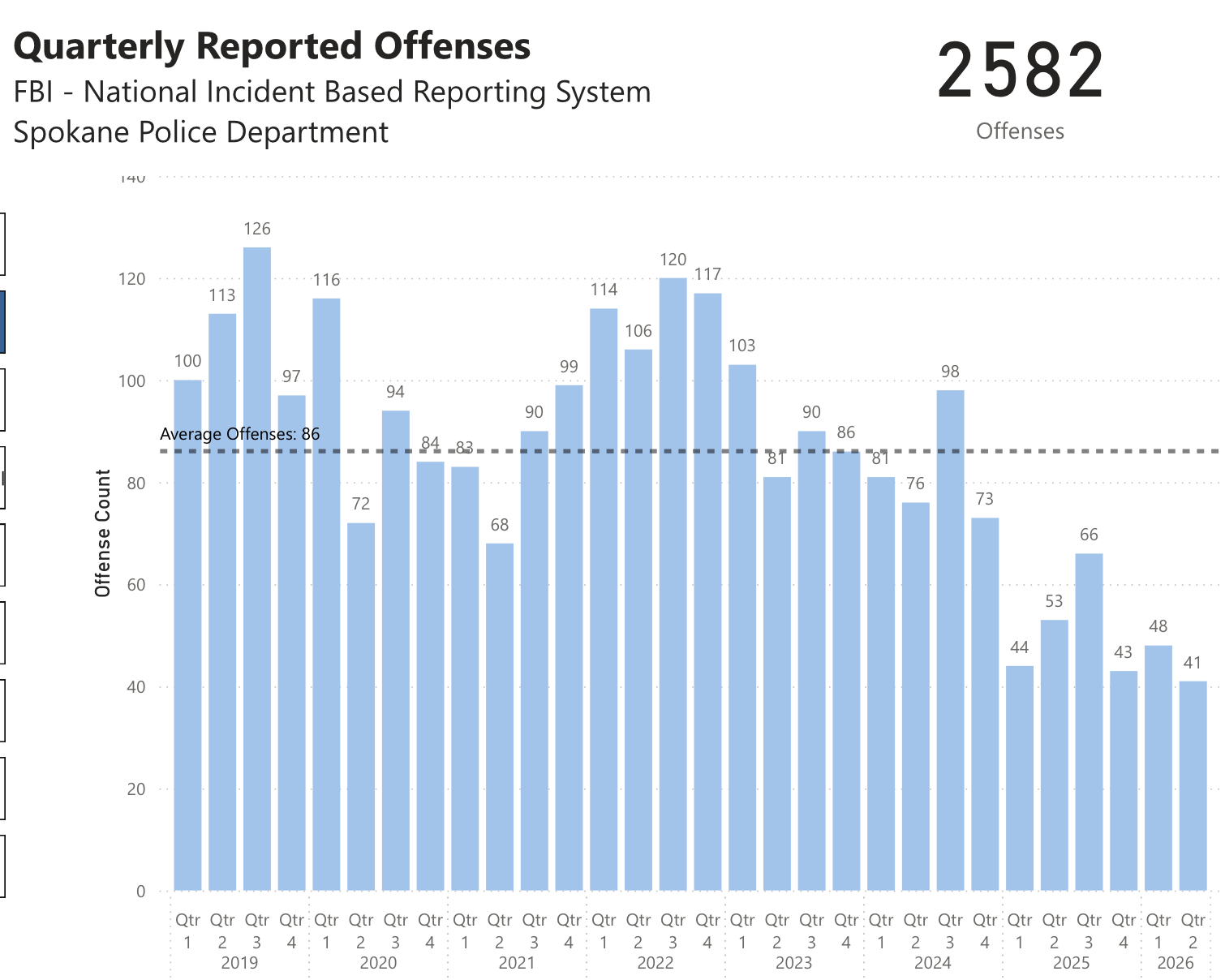
Though she has yet to open the bike lockers, under Brown, all reported property crime has decreased, down from a high of 23,985 offenses in 2022 to 17,329 reported offenses in 2025.
While SPD was unable to provide bike-theft specific crime statistics, they said these thefts would be captured under “stolen property offenses,” which fell from a reported high of 457 in 2022 under Brown’s predecessor Nadine Woodward, to 206 in 2025 under Brown. The police department said they may be able to provide bike-specific data next week when an analyst returns from vacation.
Despite her hopes expressed at the two press conferences, Brown wasn’t able to make a real dent in traffic fatalities from 2024 to 2025, with statistics from the Washington State Department of Transportation (WSDOT) showing that they actually increased from 20 to 22. However, 2026 is showing promising signs: there have been just 7 traffic deaths in the first six months, which could mark a significant drop if the trend continues.
And Brown did make progress on one crucial metric: “Daniel Walters’ bikes stolen.” So far, just 2% of a Walters’ bike — his seat — has been swiped during the Brown administration, a theft ironically realized as we were walking to the library, shortly after he remarked that he hadn’t had a bike stolen lately.
‘Night and Day’
Though the public still can’t use the bike lockers, they aren’t completely useless.
The city staff is flush with cyclists and bike parking options are “not ideal,” said Jon Snyder, who filled the new Director of Transportation and Sustainability position created by Brown to manage the city’s street safety efforts.
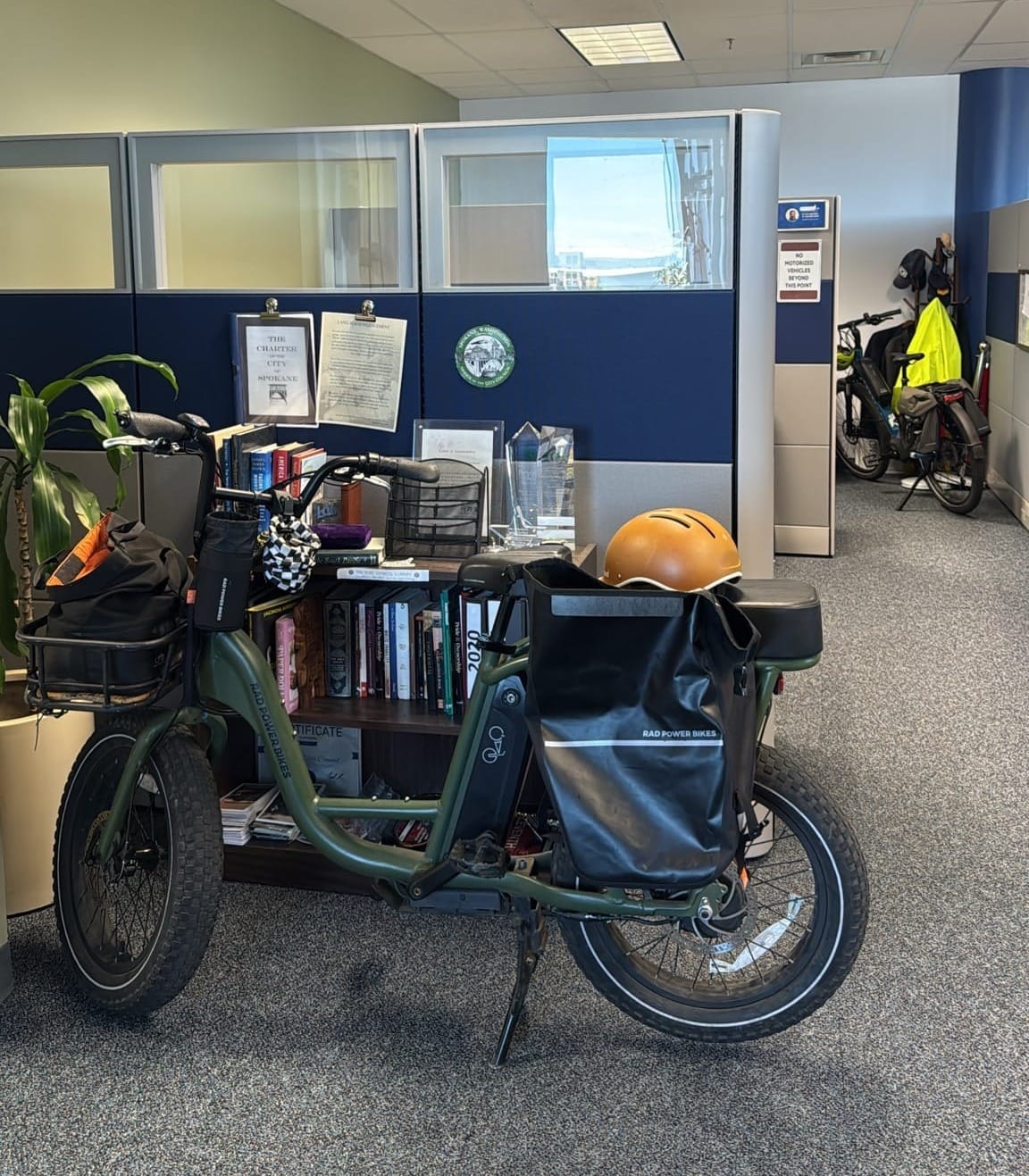
The lockers created an option for employees who don’t want to lug their bikes to a parking area on the second floor mezzanine or who had no room to store their bikes in their cubicles. For Sebastian Pedinielli, Council Member Sarah Dixit’s legislative assistant who has one of the new, more theft-resistant city-sanctioned bike locks, the box access helps him bike more.
“I’d say having secure bike storage has changed how much I cycle to work,” Pedinielli wrote in a text to RANGE. “Especially because I know if I go somewhere else after work I can leave my bike overnight.”
There’s a heightened urgency around pushing urbanist policy, too, Snyder said, describing it as “night and day,” from previous administrations’ approaches to creating pedestrian infrastructure
“We have a mayor that basically bikes all the time — bikes or walks to work — and you'll see her at all these different types of events,” Snyder said. “I can't tell you how important that is because just like being an engineer or a planner, getting out and using the facilities and understanding what they're like on the street level informs how we approach it. So she understands the needs in a way that previous mayors did not, and she's hired folks that have that same philosophical bent.”
Under Brown, staff have installed 50 new bike racks across the city. The Spokane City Council unanimously approved the 27 by 2027 Urban Mobility Network, the plan to create 27 new miles of low-stress walking and cycling routes by 2027 (although that may get extended to 2028). The city council also spent $150,000 of traffic calming funds to test adaptive design methods to create more inexpensive protected bike lines, like adding bump dividers to Riverside bike lanes, and vertical posts to lanes on Belt, according to Pangborn’s unofficial bike infrastructure tracker.
There’s council support too, from fellow cyclists like Dixit, who often stores her bike in her seventh floor council cubical, and Zack Zappone, who has been a reliable champion of urbanist policy.
There’s an ambitious list of projects slated for 2026 completion, too, that could add to Brown’s resume as an urbanist mayor, like adding new crosswalks and bumpouts through all three city council districts and putting in higher visibility crosswalks, including four that have flashing beacons.
“In general, I think the administration is doing a good job or doing maybe the best job they can on a lot of things. Like, they are running faster. They are doing more things. They are showing more urgency than previous administrations, frankly,” Pangborn said. “I definitely give them props for that. There are people that genuinely care, and there are people genuinely doing things.”
Snyder said the public is hungry for even more movement on street safety and pedestrian/cyclist friendly design.
“I think there was a time when maybe some folks, maybe even myself, when I was back at City Hall, were kind of ahead of the public a little bit on some of the policies,” he said. “Now the public is pushing us a lot of times to do more.”
So where can *you* park your bike?
As long as the City Hall lockers stay inaccessible to the public, secure bike parking is in sparse supply.
They’re not as theft-proof as the boxes, but the city has been installing free bike racks across the city, funded by Spokane’s contract with Lime. You can even submit requests to have them placed near your favorite businesses that currently lack bike parking.
There’s also a crowd-sourced bike parking map that seeks to list all the parking across all of Spokane, though few of them are as secure as the lockers.
Some of the only actual bike lockers in town belong to Spokane Transit Agency, which has lockers placed at the Valley Transit Center and three of the Park-and-Rides in the region: Liberty Lake, South Hill and Hastings Park. These can be reserved by calling STA Customer Service for a bike locker rental, which costs $5 a month, for a minimum of three months. It’s a relatively popular service; according to STA spokesperson Carly Cortright, all 16 boxes at Liberty Lake are currently rented, as are all 12 at the Valley Transit Center. Three of the six lockers are available for rent on the South Hill, and just one of the six at Hastings isn’t spoken for.
Hut still doesn’t know when the bike lockers at City Hall might be able to be added to the stock. Federal grant cuts and state revenue uncertainties have thrown a new wrench into the process.
“My understanding is that it would require a new lock mechanism that would have a code system … to be able to pay for that we’d have to take money from elsewhere and I don’t think people would want us to take that money from elsewhere,” she told RANGE. “It’s constantly a shuffling of where we do we invest the money and what’s most important — is it a traffic calming project in East Central or is it bike lockers?”
They haven’t given up on it, though, Snyder said. He’s been looking into different software systems that would allow people to use their phones to check out or rent the boxes, studying New York City as an example.
So for now, I’ll keep parking my bike on the street and hoping for the best, while the mayor, Hut said, stows hers safely in her seventh floor office.


