

The last day of the first week of the trial of the Spokane 3 started with a bang, and ended with a whimper. The day began with a testy bit of testimony from Spokane County Sheriff’s Office (SCSO) Deputy Brittan Morgan, who was cross-examined by attorneys for the defendants.
Morgan’s cross-examination was expected to be spicy — he was caught on his own body camera footage calling protesters “fucking cunts” and saying he wanted to beat them with a stick. But what wasn’t expected was the reappearance of one Jeremy Burlingame, the ICE agent who testified on Wednesday that protesters were threatening law enforcement and forming “a mob.” At the close of court May 21, defense attorney Andrea George asked Judge Rebecca Pennell to introduce new evidence: tweets Burlingame made on a previously undisclosed Twitter account that defense had been unaware of until RANGE published an article about the posts.
Pennell declined to rule that day, but at a pre-trial conference this morning, when even federal prosecutor Lisa Cartier-Giroux called Burlingame’s tweets “horrendous,” she called him back to the stand again so the defense could question his credibility.
In the afternoon, prosecutors called three more witnesses: SCSO resource officer Jared Wolf, Spokane Police Department (SPD) Officer Daniel Valencia, SPD Officer Robert Riggles and FBI special investigator Ian Burns. The first two mostly answered questions about the end of the protest and protesters’ actions before and after local law enforcement deployed smoke, pepper balls and pepper spray. The latter, Burns, touched more on extractions of protesters’ phones, including voice memos on Jac Archer’s phone, and government-made flowcharts that outlined who they saw as “conspirators” and their actions on June 11.
In one weird deviation, former city council president Ben Stuckart’s call log was brought up, with calls placed to Spokane Mayor Lisa Brown and Washington State General Attorney Nick Brown. Burns had claimed this was relevant to conspiracy because he thinks Mayor Brown decides when to deploy local law enforcement.
Here’s what you need to know from today’s proceedings.
‘Cunt’-gate
As expected, Morgan’s testimony was confrontational. If the week has been so long and eventful, you forgot who Morgan is. He’s the sheriff’s deputy who was caught on video expressing his desire to hurt protesters. Here’s a reminder from Monday’s story:
“God I hope they do some shit. I want to hit someone with a stick today. This is my only day off you fucking cunts … I cannot tell you how pissed off that I’m here right now. Not that I don’t want to be here, I’d love to hit someone with a stick, but this is my only day off you fucking cunts.”
While assistant US attorney Rebecca Perez beat the defense to the punch, asking about the body camera footage before defense could, today the defense got their turn to push Morgan.
He would not answer directly when defense lawyers asked if he was describing protesters as “fucking cunts,” stating multiple times “I was just venting to my friends.”
Morgan was also pushed on choosing to drive his vehicle at speeds of up to 97 miles per hour down the streets of Spokane while listening to screamo music, a decision he received a formal reprimand from SCSO. George asked if he was told what “code” level at which he should have responded to the protests with. The code level determines how fast SCSO deputies can go and what traffic laws they can break. Morgan said he was told to respond “at code,” and what level was up to him to determine.
In one of the most contentious moments, after watching Morgan on his own body cam speed through Spokane, listening to screamo music , belching loudly and calling protesters “fucking cunts,” George asked if what we were seeing was the “real.”
He responded, “You saw me venting to my friends, ma’am.”
On a redirect, Perez asked him about who the real him was, which Pennell said opened the door for defense to ask him about prior uses of language or things relevant to his character.
Before defense lawyers could do it, Perez asked Morgan whether he told a civilian at the gym to “eat a bag of dicks,” prior to 2025. She also asked whether he once told someone he was arresting to “don't fucking move, show me your fucking hands or I'll shoot you in the fucking face.”He admitted he had in both cases.
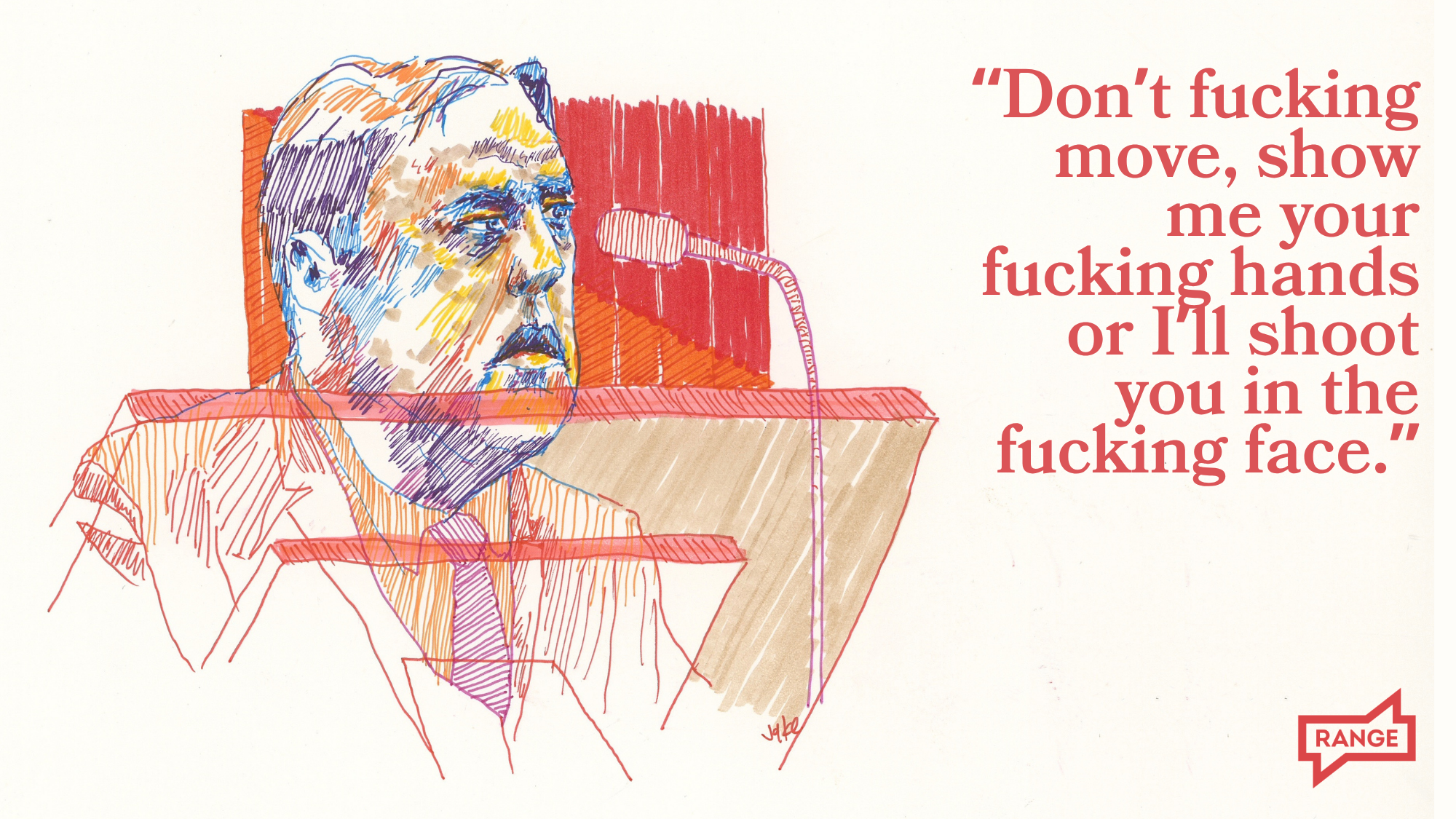
Morgan has had at least one recorded policy violation every year since 2023, when he was hired by SCSO.
‘Your an idiot’
The most explosive moments on Friday came when Burlingame was called again as a witness. The federal government questioned him first, and assistant US attorney Lisa Cartier-Giroux came out swinging.
She asked Burlingame why he hadn’t notified the government about his Twitter account when they’d asked about it. He said he had “forgotten about it.” She also wondered why he deleted the account.
"I was deeply embarrassed and regretful, and I didn't want to cause any more trouble,” Burlingame said.
Cartier-Giroux recited his racist, transphobic, sexist and inappropriate tweets back to him, asking after each if he posted it. In each instance, he said he did.
"These posts, there's a lot of them,” Cartier-Giroux said, pointing out that all of the tweets she’d read, at least 10, were made in 2025. She said she had notified ICE of his conduct, and Burlingame acknowledged ICE had opened an investigation into his conduct.
Still, Burlingame claimed his testimony was truthful and that his tweets didn’t reflect on him or the agency.
“Well I know they don't reflect the agency, but you posted these for over a year, this went on for over a year,” Cartier-Giroux said, before turning the floor over to the defense.
During cross-examination, Burlingame claimed he made the comments during “a hard time in my life, both personal and professional.”
Carl Oreskovich, Jac Archer’s lawyer, dug into Burlingame’s credibility and honesty. During Cartier-Giroux’s questioning, Burlingame had admitted he had been asked for potential bias material but didn’t turn it over because he didn’t remember the account existed. Under Oreskovich’s questioning, Burlingame then claimed he didn’t provide the information because the government didn’t ask.
Oreskovich seized on this.
Then, Oreskovich pressed Burlingame on his biases, asking if the agent was aware Archer was Black and nonbinary. Oreskovich read post after post of Burlingame calling Black people “ghetto,” and other racialized insults, and posts calling queer people “mentally ill.”
Burlingame claimed he never called Black people “ghetto garbage” and was solely describing behaviors he thought were “ghetto garbage.” Oreskovich then showed a tweet in which Burlingame responded to a picture of Jasmine Crockett with the comment, “She is ghetto garbage.” Then another post about Black politicians in which Burlingame wrote, “These people are the lying ghetto garbage that stokes of fear and hate and creating division.” [sic.]
In yet another post shown by both prosecution and Oreskovich, in response to a video of a cop violently arresting a Black woman, Burlingame had responded to a commenter questioning the necessity of the violent arrest with the reply, “Your [sic] an idiot. You thinking [sic] biting cops is good? You like jungle behavior?”
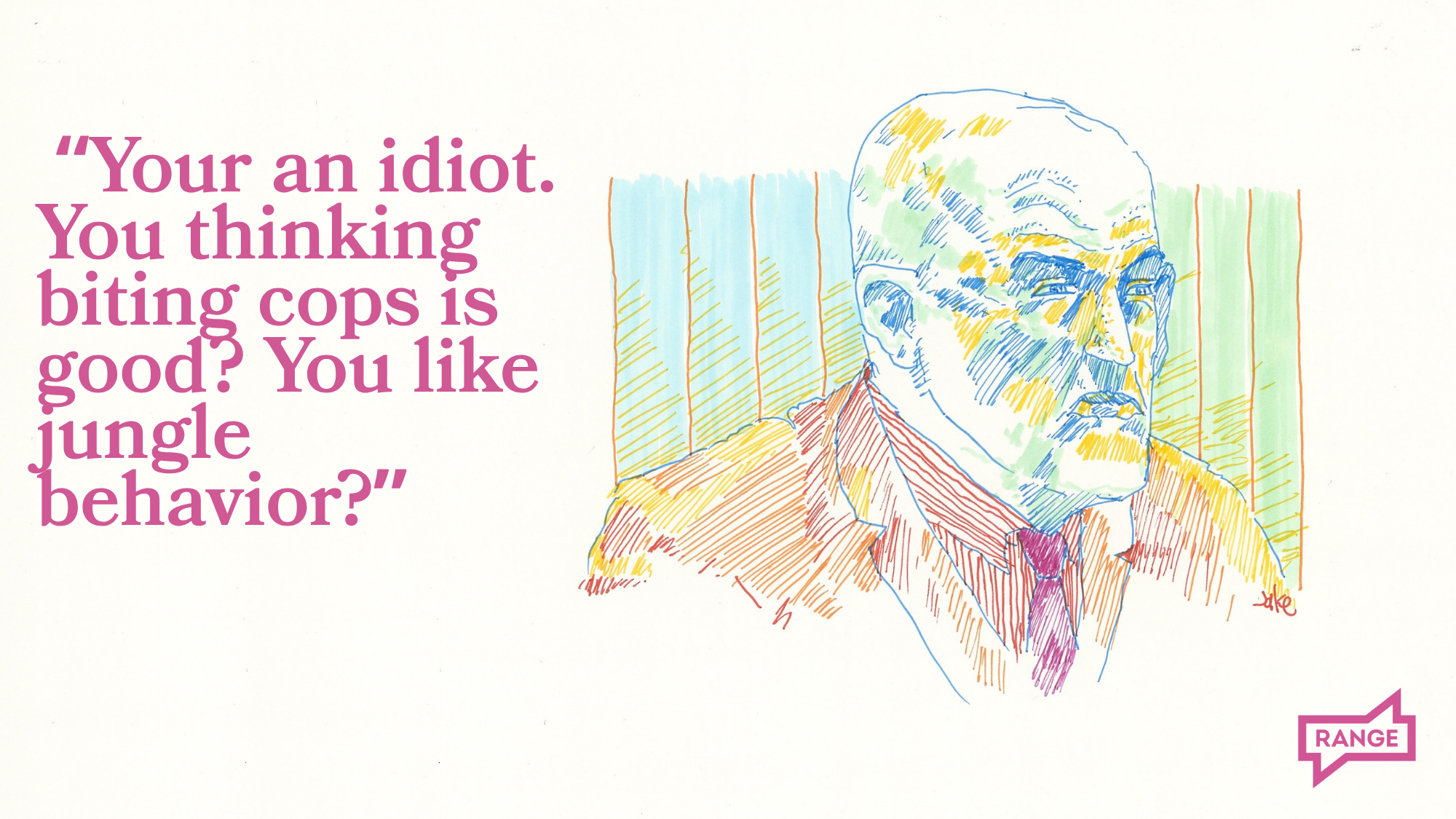
Oreskovich asked if Burlingame had a bias against Black people. Burlingame said “No.” Oreskovich asked if he had a bias against LGBTQ+ people. He didn’t answer.
When pressed again, he said, “I agree that the statements are biased but they're not my true opinion.”
Oreskovich responded, “They’re not your true opinion but you posted them time and time again?”
Then, the lawyer rested his cross examination. (Sidebar: he also made Burlingame define the term “soy boy,” which Burlingame used to describe a gay politician. Wild to hear “soy boy” in court.)
Notably, Burlingame was not questioned by either prosecution or defense on his tweets calling for the arrest of Stuckart, likely because it could open the door for the prosecutors to bring up the outcome of Stuckart’s case — a plea deal — which defense attorneys petitioned to avoid.
The rest of the case
The rest of the day was significantly less dramatic. Jurors were mostly shown evidence they’d seen before — stills of various protesters at the protest, sometimes doing things like throwing gas canisters back at police or carrying objects like umbrellas or clipboards.
Local law enforcement officers were questioned about whether or not they felt threatened. (They said they did). They called the crowd angry and discussed their choices to use less lethal force like smoke, pepper balls, pepper spray, blue nose foam rounds and bean bag rounds.
Wolf said Forral was “agitating the crowd.” Valencia and Riggles both expressed concern about Bajun Mavalwalla II’s behavior, who can be seen holding an umbrella in front of the crowd while smoke is being deployed by SPD. In footage, he can be seen after this punting a deployed canister away from himself.
Most of the evidence shown was footage everyone had already seen, but late in the afternoon, the prosecution called Burns, the FBI special investigator who had been sitting at the government’s table throughout the trial. Burns was asked by Cartier-Giroux about a slideshow he worked on, which placed both defendants and a few other “persons of investigatorial interest” identified by the government at various locations and events during the protest.
He was also asked about recordings and texts found on Archer’s phone. Burns highlighted that Archer had seen Stuckart’s initial Facebook post and then sent it to other people in various Signal chats. In one message, Archer had written, “There are multiple exits that about 90-100 people are struggling to cover could use more folks willing to thoughtfully risk arrest."
Burns argued this was proof that Archer was coordinating the effort to block the exits and implying this was Archer leading what the government sees as the conspiracy. Burns also brought up a photo of a bail list on Archer’s phone and tied that to drone footage of Archer with a clipboard, again implying that Archer’s role the day of the protest was to lead efforts.
The government then played three voice memos taken on Archer’s phone. In the first, recorded the day of the protest, they talked about how someone spray painted the windows of the white bus and then left, while Archer and others were doing other things. Burns found it significant that Archer said "we" in the video, as in "we're just going to sit in front of the bus." Cartier-Giroux harped on the use of “we,” using it to get at the idea of Archer being part of a group with shared goals.
In the third memo, recorded the day after the protest, and played in court, Archer began “yesterday was unexpected in a lot of ways.” They described seeing Stuckart’s post and his invitation for folks to join him.
“And we did,” Archer said. “We all, in various ways, showed up and it was beautiful. It was organized.”
They proceeded to describe making sure people had emergency contacts and other ways they organized to keep people safe, calm and out of unnecessary harm.
In the recording, Archer described being on the south exit of the ICE building.
“Our job was to link arms and man that gate and keep anything from going in or out. They were not going to kidnap anybody by getting out of that gate,” they said. “We held the gate ... and the last protester did not leave until everybody had a safe way home."
They continued, stating they developed imperfect plans in the moment, but that community showed up to care for each other. They stated that they intended to commit acts of civil disobedience and risk arrest, but also that they would not fight or resist arrest.
Near the end of the recording, Archer said they had complex feelings: they were devastated that the asylum-seeker under Stuckart’s care had ultimately been taken to Tacoma, but proud that Spokane showed up to fight it.
"It was a rough, rough day but I'm so proud of Spokane right now." Archer said.
After the recordings, Cartier-Giroux then asked Burns about call logs from Stuckart, who posted the initial Facebook post. It was a weird digression, coming seemingly out of nowhere and lasting just a few minutes. Burns highlighted calls between Stuckart and both Spokane Mayor Lisa Brown and Washington Attorney General Nick Brown.
Burns said these calls were relevant in regards to the investigation because they showed Stuckart called Mayor Brown multiple times, and SPD did not arrive until after Stuckart’s last call with Brown. Burns said his understanding of local law enforcement response was that SPD Chief Kevin Hall reports to Mayor Brown and that Hall wouldn’t send officers without the mayor’s permission. It seemed for a second like he was implying Mayor Brown was part of the conspiracy at the heart of the case and kept law enforcement from responding to ICE’s calls, which first came when there were only a couple dozen protesters milling about around the white bus.
City spokesperson Erin Hut wrote in a response to RANGE, “The federal government has not contacted the mayor in regard to this case. The timing and nature of police response is made by the police chief.”
Mavalwalla’s attorney Aine Ahmed briefly cross-examined Burns on the government’s failure to find phone evidence linking his client to any of the other protesters. Then, at 5:03 pm, the United States government rested their case.
Rule 29
Remember Rule 29? We defined it in our trial primer, but here’s a refresher: it’s a type of request that the defense can make during the trial after the government rests its case asking for the judge to acquit the defendants based on insufficient evidence for a conviction.
The second the federal government rested their case, all three defendants’ lawyers filed Rule 29 motions, asking Pennell to throw the case out for lack of evidence.
George read the definition of conspiracy and said the government had failed to offer any evidence that Forral had knowingly agreed to impede or injure federal officers or their property, which is necessary to prove conspiracy. Ahmed argued the same thing, stating “There's no conspiracy, no evidence of a conspiracy."
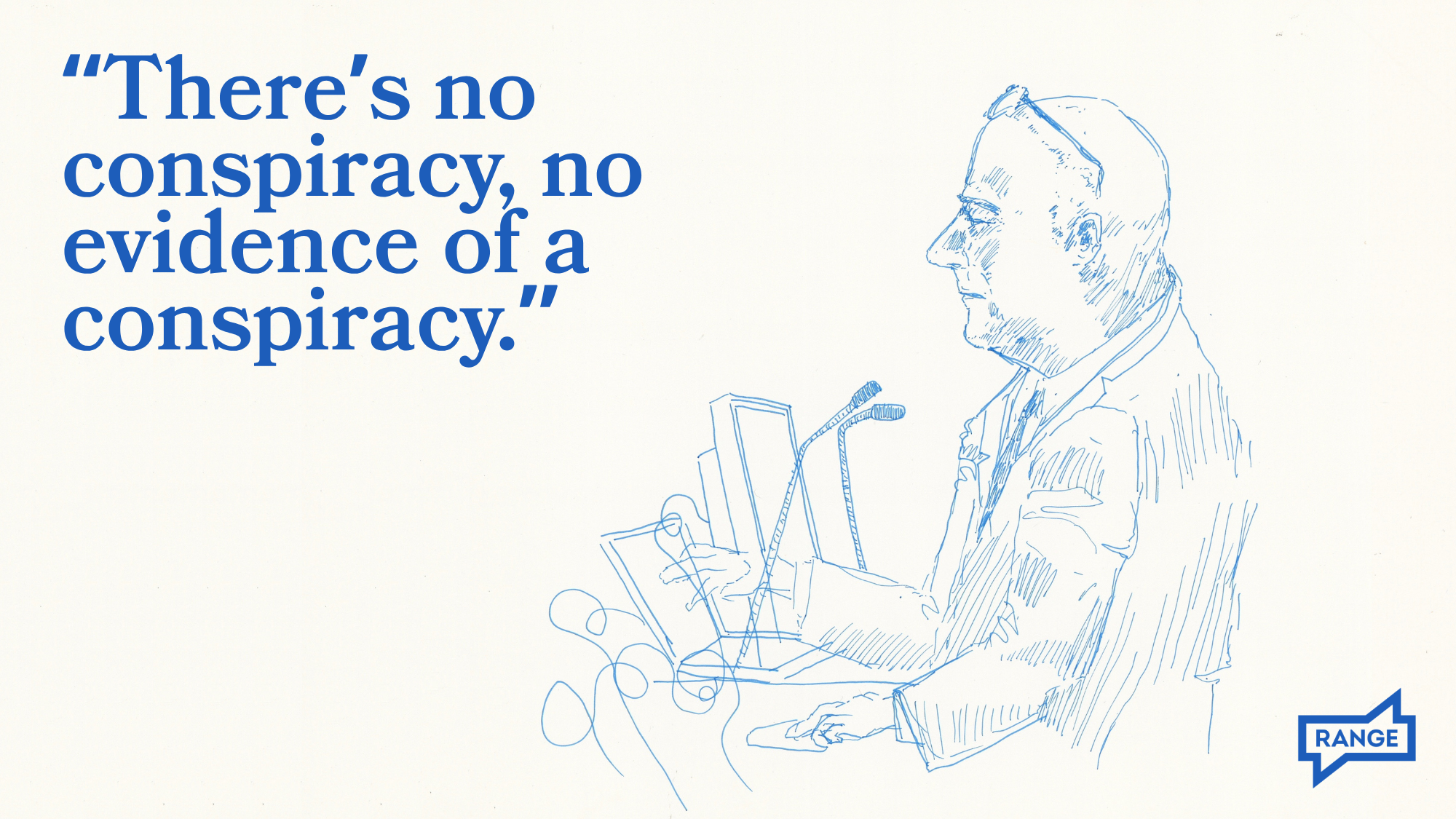
Oreskovich made a longer, more impassioned plea. Hand on his hip, he implored Pennell to consider the lack of evidence of conspiracy presented by the government. He said Archer’s voice memos showed their real intent: to protest nonviolently, with civil disobedience, a time-honored tradition going back to sit-ins — even to the point of being willing to risk arrest.
Any crimes Archer talked about being willing to commit were not conspiracy, the crime for which they are currently on trial, Oreskovich argued.
“Stuckart invites people to come sit in front of a bus,” Oreskovich said. “Jac Archer arrives and Jac Archer does what's in the post … All Jac Archer did is [they] went to a protest with the intent to sit in front of the bus or the intent to lock arms.”
He said Archer didn’t participate in any vandalism, in any property destruction or in anything in the skirmish with smoke deployments. Archer protested nonviolently and made that intent clear during the day and after.
“If there’s a case for a Rule 29 dismissal or acquittal,” Oreskovich said, “It’s this one.”
Perez disagreed, arguing officers felt scared and threatened and like protesters used force against them by locking arms and resisting, among other things. She said there was “obvious cooperation,” and that the protesters’ actions amounted to conspiracy.
Pennell did not rule on the motions today, instead reserving her right to rule after the rest of the evidence is presented, when defense rests.
The trial will resume next Tuesday, when Ahmed has indicated he will start with Mavalwalla II’s defense.


