

Spokane County Sheriff deputies have only been wearing body cameras since 2022, but in that short time hundreds of public records requests for the footage have flooded into the Spokane County records’ offices.
Spokane County records logs, obtained by RANGE, show a WIRED reporter asked for body camera footage of deputies responding to a school shooting hoax. A Spokesman reporter wanted the footage from a deputy who beat a man for refusing to give his name in a Spokane park.
Other requesters hoped that body camera footage could shed answers on what happened to their loved ones.
One man, worried about his sister’s “mental health, accidental discharge of a firearm and suicide attempts,” wanted footage of deputies interacting with her. Body camera footage requests have come from a woman who said her boyfriend had been “brutally assaulted” by law enforcement, from the mom of a vehicle prowling suspect and from a daughter investigating her mother’s death.
For nearly four years, all that video footage was free to anyone who requested it.
That changed on March 24, when the Spokane County Board of Commissioners unanimously voted to start charging requesters for the staff time needed to process and redact these records. State law requires certain elements of audio or video footage body camera footage to be blacked out before it’s released to the public.
Under the new rule, anyone directly involved in an incident recorded by body cams will still be able to get the footage for free. So would their attorneys.
But for most of the rest — journalists, family members of victims or local police reform activists scrutinizing a police shooting video — will have to pay for the redactions. Redacting a 10-minute video, the county estimated, would likely run them nearly $47. An hour of video would cost $280.
The problem, county records officers explained, was another growing category of requester: YouTube body camera channels. Body camera footage requests by these for-profit operations, often turned into tabloid-style gawking at the grisly and the perverse, have overwhelmed records departments of law enforcement agencies across the country.
On the same day as the Board of County Commissioners passed the new fees, a requester calling herself Ava Westbrook made 14 records requests for body camera footage in 14 separate cases — including cases involving murder and child rape.
“This request is on behalf of my educational YouTube channel where we educate viewers on real-life cases,” Westbrook wrote. “The [body camera] footage will be used only for educational reporting on our monetized YouTube channel.”
Westbrook’s were just one piece of the swarm of requests from body camera YouTubers that showed up in the Spokane County records logs.
Verda Studios made a request too, identifying themselves as a producer of “responsible, fact-
based crime documentaries” on YouTube.” Those documentaries include such responsible fact-based classics like "When Mother of 2 Realizes She Killed Her Own Husband," "When Racist Teens Think Laws Don't Apply to Them" and "When Stupid People Get Arrested at Walmart."
A company named EWU Media — “a global community 10 million strong with over 2.5 billion views since 2015” and with no relation to Eastern Washington University — wanted bodycam footage involving the arrest of a female teacher who’d groomed and had sex with an underage high school student. Vee Body Cams requested footage of an arrest for indecent exposure near the North Spokane Park and Ride. Midwest Safety requested body camera videos of Spokane County of deputies responding to a carjacking, a car crash, a hit and run and a police shooting.
The deluge of requests had become so intense, Spokane County records officer Tony Dinaro said, that it was hard to keep the sheriff’s records office staffed.
“Just as a way to try to mitigate some amount of stress for that office, I recommended that we take another look at charging fees for anything that is legally allowed,” Dinaro said.
But as a consequence, public records have become that much more difficult to obtain for those who truly need them.
Every man a Cops producer
The notion that raw police footage could captivate viewers is hardly a new epiphany: For 37 seasons, the documentary TV show Cops had turned ride-alongs with officers and deputies of departments across the country — including the Spokane County Sheriff’s Department — into reality TV content.
But in the years since, more and more departments have adopted body cameras. It was something both the police and the police reformers could get behind: activists hoped they would expose abusive cops; cops hoped they would expose false accusations from criminals. Both were right.
But the proliferation of body cameras had another, unintended impact. Combined with the state laws allowing the public to get almost any government-created records, those cameras suddenly let everyone be their own Cops TV producer.
With little more than an email to a records officer, they could summon first-person point-of-view footage from police and sheriff’s departments throughout the country. No need for contracts with the law enforcement agency. No need for signed video releases. No need to blur faces of those who don’t want to be on TV. No need to pay videographers — the cops were their cameramen.
While Cops will blur faces unless they get a signed video release from those portrayed, these channels generally don’t take that step.
Unlike many public records, which often arrive shrouded in bureaucratese, body camera footage comes clickbait-ready. With enough footage and a bit of editing, and a YouTube channel operator can play any emotional note they desire:
Heartbreaking. (“Mom Realizes Grandma Ran Over Her Baby.”
Scary (“Cops Have No Idea this Man is about to be Murdered.”
Gruesome. (“Killer Realizes She's Been Caught After Cutting Baby Out of Victim's Stomach.”)
Gross. ("Taco Bell Worker CAUGHT doing This DISGUSTING thing to food.”
Lurid. (“When Suspects Try to Seduce Cops.” “Mom’s Bra Secret Gets Exposed.”)
Bizarre. (“Drunk Driver’s Situation Is So Crazy That He Almost Kill Kamala Harris” )
There are recurring archetypes. The Dumbass Criminal. The Monster Mom. The Neighbor From Hell. The Hero Cop. The Bastard Cop.
And, of course, the most ubiquitous star of them all: The “Karen.” An entitled woman, typically white, upper middle class, middle aged, Karen appears in many incarnations: Vee Body Cams alone features cameos by Gas Station Karen, Concert Karen, Notorious Karen, Ex-Cop Karen, Airport Karen, and — of course — Intoxicated Karen.
And naturally, some of the most popular videos combine one or more or all of these themes. (“Karen Strips Naked and Goes Berserk After Traffic Stop.”)
Alex Smith, co-founder of Midwest Safety — one of the channels that has turned records requests in Spokane County into viral YouTube clips — said there’s a reason some of these themes are so compelling.
There’s something to be said for seeing karma catch up to “someone who is an enormous jerk,” he told RANGE. It’s the sense that, “maybe there’s justice in this world.”
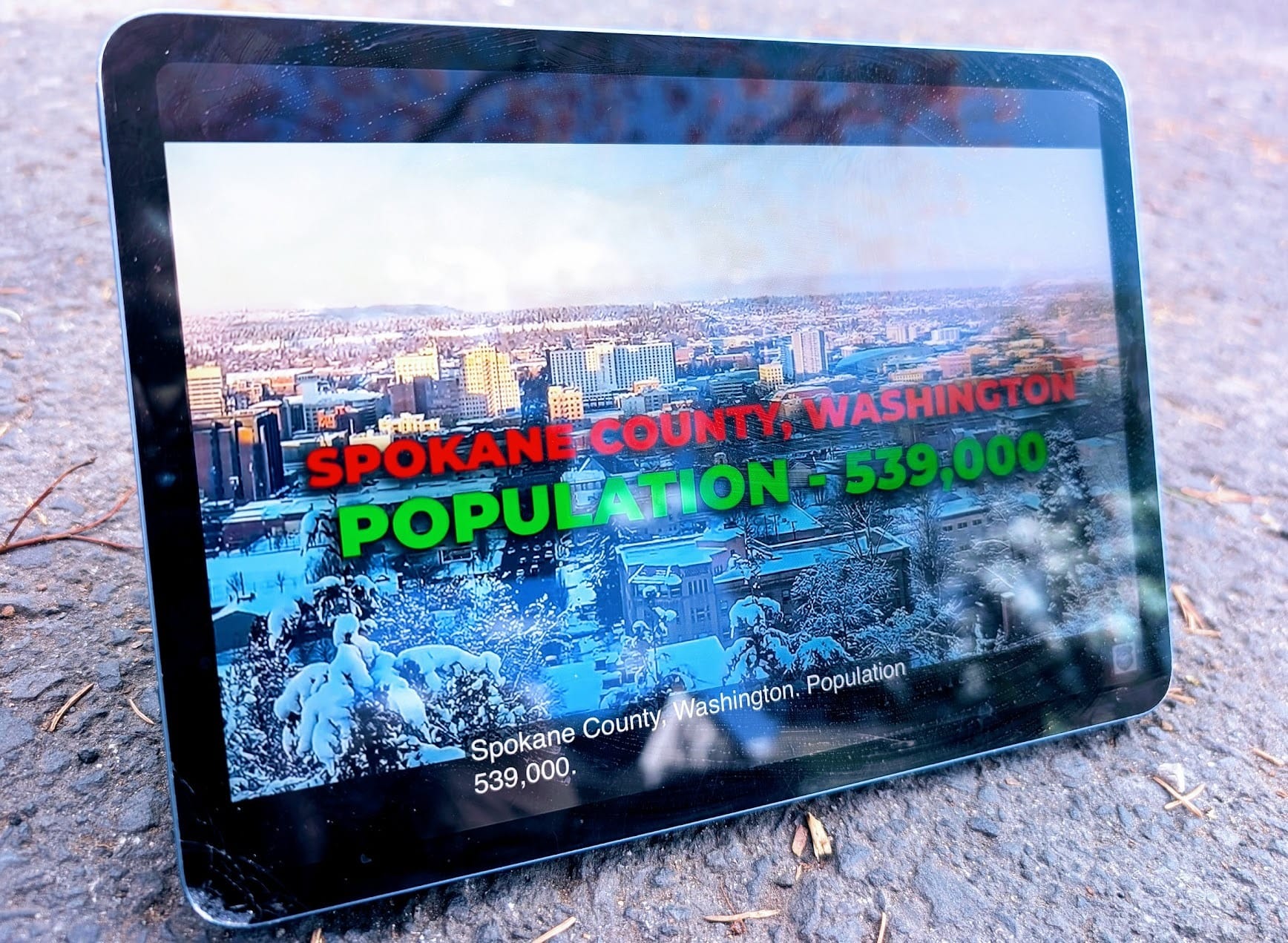
Nine months ago, his YouTube channel published a video that began with footage of the Spokane County skyline.
"Spokane County, Washington, population 539,000,” a narrator with a deep viewer-discretion-is-advised voice intones over Spokane County body camera footage, “and out of those half million people, we found the single worst neighbor."
The 13-minute selection of bodycam footage, obtained for Smith’s channel, features an angry woman living in a Spokane Valley apartment calling the cops on her neighbor, only to get arrested for disorderly conduct herself.
The resulting YouTube video, “Neighbor Looking for Revenge Gets Karma Instead,” got more than 1.1 million views.
“As someone born and raised in Spokane, there has got to be an untapped gold mine for Spokane bodycam videos,” one commenter wrote on a video from Midwest Safety.
Smith politely declines to say how much a million-hit video like the Spokane Valley footage gets — but reporting from Business Insider in 2020 suggests such videos at that level of success could generate anywhere from $2,000 to $40,000, depending on topic, length and ad options. That kind of money helps pay the bills for Midwest’s team of 45 staffers.
Like all Midwest Safety videos, the video description emphasizes to viewers that the figures in the videos may be suffering from behavioral health issues, and that “everyone deserves to be treated with respect.”
But plenty of the more than 7,000 comments on the video paid little attention to that maxim, eagerly mocking the Spokane woman’s appearance, voice, fashion sense, word choice and worthiness as a parent.
Smith said they try to strictly filter the YouTube comments and ban abusive users. He said he’s familiar with the longstanding criticism of Cops — that shows like that take the worst day of someone’s life and immortalize it for the entire world. He says that the site has a “right to be forgotten” policy. If someone depicted in one of his videos fills out a form, they’ll remove the video.
Today, he said, their internal system flags videos involving mental health crises, drug abuse and homeless people and either displays them less prominently or declines to publish them at all.
“We really don’t do ‘the drunk girl at the bar that fought with the cop,’” Smith said. “We have done that in the past. We’re moving away from it.”
Smith portrays a nobler vision for Midwest Safety than those kinds of videos. He lives in Minneapolis, where George Floyd was killed in 2020. The channel emerged in the wake of the protests that followed. Its innovation was figuring out how to efficiently tap into public traffic cameras to provide another lens to observe the demonstrations on the freeways.
But in 2021 Midwest Safety shifted focus, expanding its operation to focus on publishing body camera footage on YouTube.
Smith said his channel adds governmental transparency in an age where traditional media outlets are struggling.
“Journalism by and large has been decimated over the last several decades,” Smith said. “No one is sending journalists out to Podunk County with population: 500.”
While Midwest Safety doesn’t have a physical presence in small communities, he says the channel can use bodycam footage to show, say, the arrest of a local pastor for shoplifting.
Similarly, he sees publishing videos of drunk drivers and serious collisions as a kind of social responsibility: After all, car crashes are a leading cause of death for young kids.
Smith compares his site’s more sensational content to prestigious newspapers boosting their subscriber base by writing about, say, Taylor Swift’s boyfriend — it’s a click generator to help pay for more important coverage.
It’s not like traditional news outlets — from the New York Post to local TV news channels — don’t dabble in deceptive headlines and lurid storylines.
Smith says the site also produces some of the best behind-the-scenes police reporting in the country, relying on their own internal use-of-force database. The database isn’t public yet, Smith says, as they’re trying to figure out how to handle all the extremely graphic content that often hasn’t been redacted in the footage.
Other body camera channels make their own claims to high-minded professionalism too, though not always convincingly.
A request from "Blue Line Cam," for example, emphasizes its focus “on law-enforcement transparency” and “citizens' rights under open-records law.” But it must also be noted: Of the Top 50 most popular body camera videos on their YouTube page, 21 feature screen caps of women being arrested in bras or low cut shirts.
THE HIGH COST OF FREE BODY CAMS
Today, Smith says, videos with sensationalist titles are less likely to garner hits on YouTube than they once were.
“Eventually, you and I can recognize a spam email,” Smith said. “It’s the same with clickbait, people get resistant to it.”
But that has done little to stop the flood of records requests. It’s just a lot easier to turn body camera footage into a content farm than it once was.
Digital platforms like GovQA and records request services like MuckRock have made it far easier to send and receive mass records requests.
The rise of generative AI programs can make every stage of the process quicker: identifying the crime, requesting the record and editing down the video footage.
Records logs show one requester using ChatGPT to find an incident of a Spokane man getting arrested for shining a laser at an aircraft. The requester explains that the channel uses generative AI programs like TubeMagic for "creating storylines and condensing hours of footage into a few minutes.”
And for the tasks that do require the human touch, there’s an entire global employee market ready to be tapped into.
LinkedIn shows 100 people applied for a $25-35 an hour "True Crime Script Writer" position at EWU Media, vying for jobs turning "raw law-enforcement footage into compelling, cinematic documentary narration.” But there are cheaper sources of labor.
A search on Upwork reveals a number of workers on the global market touting their ability to source police body camera footage. “Muhammad M,” from Pakistan, a “True Crime Footage Researcher,” offers to source body camera footage for $8 an hour — only to be undercut by “Muhammad A,” a “FOIA & Public Records Specialist,” also from Pakistan, willing to perform the same service for $6 an hour.
Sometimes the pages themselves are operated out of foreign countries — Vee Body Cams, according to its YouTube profile page, is based in Moldova.
Hit body camera footage often sparks more copycats to request the same videos. Just two days after Midwest Safety published “Neighbor Looking for Revenge Gets Karma,” a competing channel requested the footage from the same incident. A few months after that, a third channel also requested the footage of the arrest.
Other channels steal their way to large numbers of views: An Instagram channel, midwest.safety.clips, ripped the Midwest Safety video from YouTube and ran the video in pieces on their own page.
“There are a lot of pages like this that slavishly steal our stuff and post our content,” Smith said.
Smith said he’s heard from communities that say they were receiving hundreds of records requests from Midwest Safety in 24 hours. But it wasn’t from them, he said — someone was using their name to get their own footage.
“This is the shift: spammy, huge-volume requests, taking advantage of the fact that you can be an anonymous [records] requester,” Smith said.
It’s why MuckRock, the open records organization, recently banned users from using the platform to obtain body camera footage.
“We recently found that some users were using the platform to obtain bodycam footage primarily for social media content,” MuckRock said in a statement to RANGE, “which placed an undue burden on our systems without serving the public interest.”
Who can afford records these days, anyway?
Of course, Spokane County is not the first to start charging higher fees for body cameras. County Commissioner Josh Kerns pointed out to RANGE that the city of Spokane has had similar fees for years.
Midwest Safety is used to it. A piece of its budget is dedicated to paying for records requests, so it’s unlikely Spokane County’s new charge will affect them.
But others struggle to get records to begin with.
"I don't want impacted families to have additional barriers to go through,” Debbie Novak, mother of a man killed by police, said at a Spokane County Commission meeting.
She’s been through the wringer. After her son David was shot by Spokane police officers in January 2019, it took nine months for her to get the records she wanted. After the evidence was in and Novak sued, the city settled with her family for $4 million.
"There's money and resources for records when it comes to a television show or some kind of footage for public relations purposes," Novak said. “But when families or others are trying to get answers, suddenly there are added costs and more barriers.”
It’s why local activist Jim Leighty launched a non-profit called Citizen 926. Named after the date his best friend was killed by Bonner County sheriff’s deputies, the organization seeks to help suffering families find all sorts of answers about what has happened to their loved ones by going through police records. When families are grieving, the last thing they want to do is try to leap through legal hoops.
“Sometimes families just need it to find out, you know, can they locate a person or what happened during the car accident?” Leighty said.
Other times, a loved one may have been killed by police. In those moments, a low-income family member may need to first have a body camera footage in hand to show that there had been a miscarriage of justice to convince an attorney to take them as a client.
The non-profit covers the cost of records. But the higher fees get, the harder it is.
“Every time we get charged another fee, we might not be able to help another person,” Leighty said.
Spokane County’s fees may be relatively low now, but Leighty worries that charging any kind of fee can lead to a slippery slope.
“In Stevens County, I was charged over $700 for body cam video, and that wasn't for all of it,” Leighty said. “I had to go and pick which ones I felt I needed to help a family whose loved one was killed by police.”
Smith prefers the solution that Wisconsin uses — charging for footage, but making the first 10 requests free. He also suggested barring people from requesting footage from outside the United States.
The trouble is, the gulf between the big bodycam channels and the people depicted on them isn’t only one of resources, it’s one about experience and know-how. The low-income struggling person often doesn’t have experience filing records requests — the right way to word them, the intricacies of interdepartmental record-keeping — much less know how to use AI tools or outsource international labor to file hundreds in a day.
Spokane County prosecutors ultimately dropped the disorderly charges against the woman in “Neighbor Looking for Revenge Gets Karma Instead.” A judge ruled that a subsequent warrantless search of her apartment had been illegal. But when she unsuccessfully tried to sue the City of Spokane Valley over her arrest, she failed. Among other problems with her case, she’d failed to get the body camera video of her arrest.
The same records logs that listed the requests from dozens of true-crime YouTube body footage channels showed her struggles to get the video she needed.
“Please stop hiding my body cam footage and produce it in a timely fashion, ” she wrote in a July 14 records request last year.
By then, however, the footage had been viewed by hundreds of thousands of YouTube viewers across the world.


