

On the dais of the Spokane Valley City Council, Al Merkel — brash and boisterous — is something of a pariah. He’s been sued for defying records laws, investigated for disrespectful behavior toward city staff and called an “asshole” at a meeting by a fellow councilmember.
But at the Spokane County Republican Party convention on Saturday morning, Merkel was steering the course of the dominant political party of a county of over a half million.
As the head of the resolutions committee, he’d help hammer out a sprawling packet of declarations on policy: 20 resolutions stretched across 53 pages and more than 180 “be it resolved” clauses, weighing in on everything from “geoengineering” to freezing legal immigration.
But taken as a whole, the resolutions went beyond declaring positions: they set out tight new standards for denying future Republican candidates the party’s endorsement.
And before lunchtime hit, the majority of the crowd of over 170 convention delegates had approved the whole thick packet.
“I think we are more united than we ever have been," Merkel told RANGE. “Today, we fought the issues on the floor and that brought unity to the party.”
And yet, there’s little doubt: on the question of unity, the party is deeply divided.
Eating their own
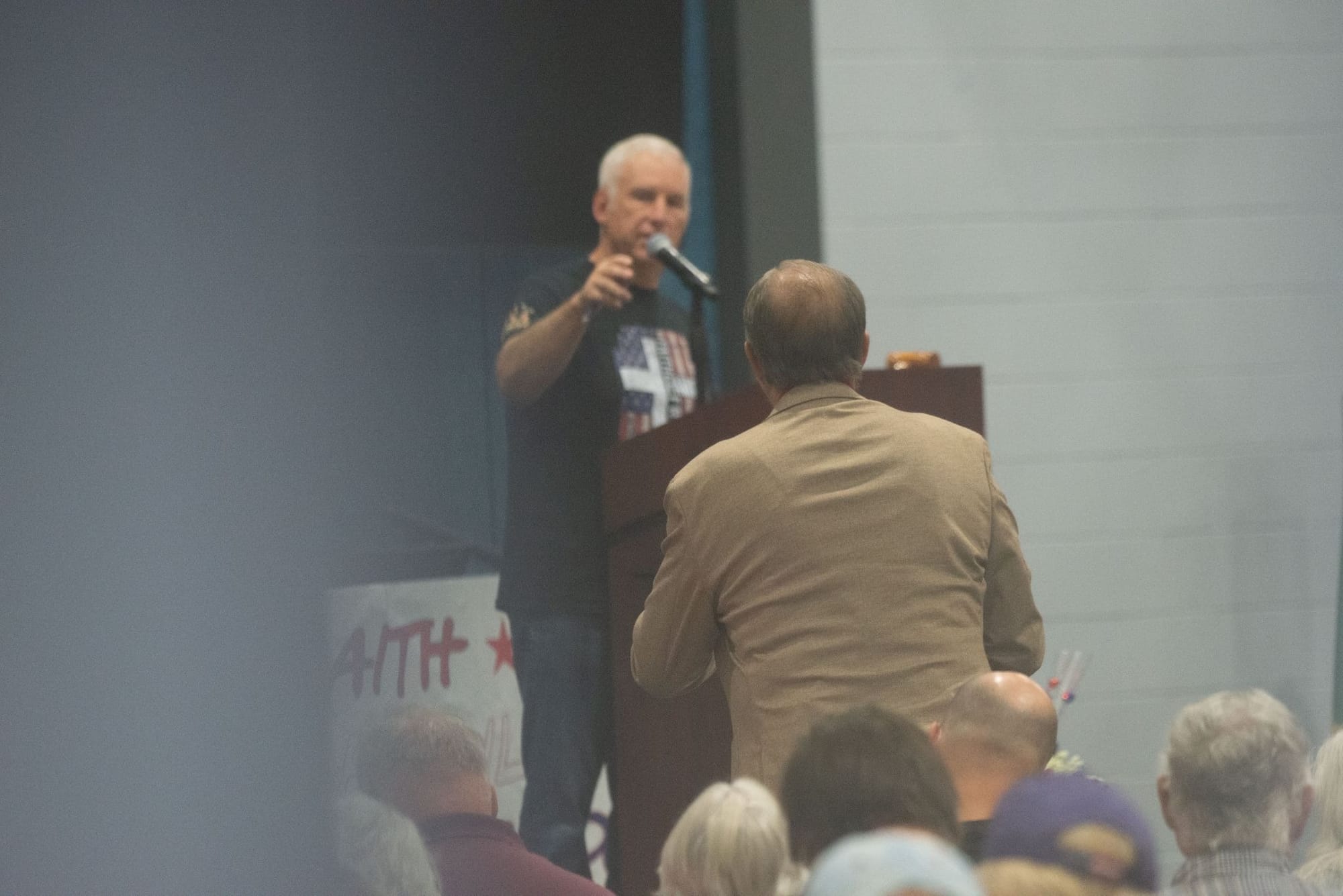
Throughout the convention, phones of delegates were buzzing with text messages sent en masse from an anonymous number. The target: Republican county auditor candidate Michael Cathcart.
“Don’t be fooled,” one message said. “Republicans deserve better than a wolf in sheep’s clothing.”
During the primary, Cathcart had been accused of all sorts of heresies against Republican orthodoxy, including wearing COVID masks, supporting mail-in voting and getting endorsed by Democrats. Even as many of the county’s elected Republicans lined up to support Cathcart, most of the leadership of the party’s central committee had aligned behind Cathcart’s rival, Dale Whitaker.
The primary was over. Cathcart beat Whitaker and was the sole Republican remaining. Yet on August 12, the party’s candidate committee was still refusing to back him.
“We’ve always had a split in this county, but this one has gotten worse,” Cecily Wright, former board chair, told RANGE.
Former state committeeman Matt Hawkins shared similar concerns about polarization in the party.
“They're being consumed in power politics internally, and the reality of it is, if you get consumed by power politics, you actually start cannibalizing yourself,” Hawkins said.
In fact, just three days before the convention, the leadership of the Spokane County Republicans released a fiery open letter acknowledging “division within the Republican Party,” and blaming Tony Kiepe, the Republican candidate for the 3rd Legislative District, and their own state committeeman, for “doing nothing to heal those divisions” or reduce “infighting.”
Kiepe’s crime? He had gone rogue by recommending that the state party endorse Cathcart.
Party leadership accused Kiepe of forfeiting trust, asked for his resignation as state committeeman and removed Kiepe from the slate of recommended endorsements.
“It was his last opportunity to be at the state committee meeting … and yet he elected to spend his last meeting trying to divide Spokane County,” delegate Morna Gilbert said of Kiepe during the convention.
But Gretchen McDevitt, a longtime Republican activist, countered that Kiepe "has been a faithful Republican" but that because he "did something people don't like … now they want to banish him."
Ultimately, the convention delegates defied the party leadership recommendations: they added both Kiepe and Cathcart to the party’s endorsement slate.
“In the future, they won't even be able to do that," lamented Brian Steele, another former party chair.
Embedded within the packet of resolutions touted by Merkel were new endorsement standards that could cause the party to more easily deny even long-time members of the party endorsements.
Who’s the purest of them all?
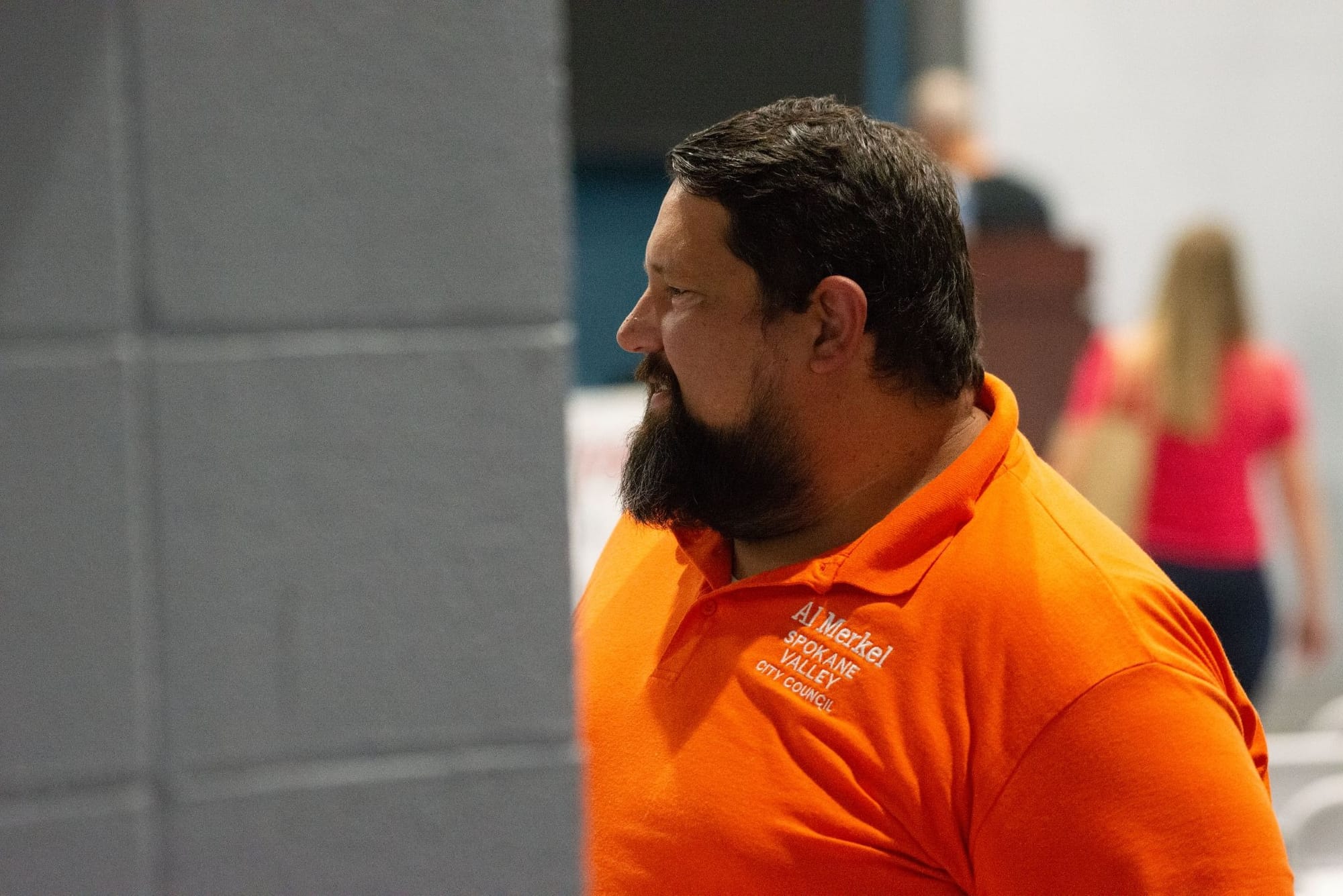
From the convention floor, Merkel acknowledged that the Republican Party was in conflict. But his solution was simple: more tightly define who could call themselves “Republican.”
“That infighting exists in large part because we have allowed the meaning of the word ‘Republican’ to grow weak and unclear,” Merkel said. “We gave up our power to define our own party.”
And so one resolution — “affirming American Exceptionalism, Patriotism and Civic Education” — goes far beyond simply asserting that America is great and patriotism is cool. It demands that candidates endorsed by the party not accept endorsements from Democratic officials or candidates until the Democratic Party officially condemns the Democratic Socialists of America (DSA), a movement that, the resolution claims, hates America and wishes to see its downfall.
The threat of the radicalism of the DSA was so profound, Merkel argued, that accepting support from even mainstream Democratic officials was taboo.
“We can't associate with them as long as they're willing to associate with that evil,” Merkel argued. “We can't stand with them, and we can't accept their endorsements.”
To allies of Michael Cathcart, the resolution’s intent seemed clear. Cathcart had been condemned for accepting the endorsements of Democratic officials like the current county auditor and the Spokane City Council president. This resolution would give the party official grounds to punish this kind of bipartisan appeal in the future.
There were other new standards too. Another resolution stated that candidates who’d voted to increase the tax burden without “extraordinary justification” might be denied the party’s endorsement.
Much of the opposition came from officials who were currently serving in office. Spokane County Prosecutor Preston McCollam expressed concern that the tax restriction could penalize officials who voted for a new jail, fire bond or school bond. But he had broader objections as well.
“I very much have conservative and Republican values and ideals, but taking a loyalty oath towards a party is something that I have an issue with,” McCollam told RANGE. “We’re not beholden to the GOP board. We’re beholden to the people who elect us.”
Jessica Yaeger, who serves with Merkel on the Spokane Valley City Council, argued that the “purity tests” in the resolution were “actually quite divisive.”
“We need to bring people into the party rather than drive them away,” said Spokane Valley Mayor Laura Padden. “Ronald Reagan and President Trump all had Democrat support, and that's how they got into office.”
In fact, in many ways, Trump rose to power a decade ago in part by defying the Republican purity tests at the time — he attacked the Iraq war, promised not to cut Medicaid or Social Security, and bucked the party’s commitment to free trade.
It’s not entirely clear that Trump would pass the new tests posed by the Spokane GOP’s standards. As RANGE pressed Merkel on whether Trump’s passionate support of tariffs — a tax on imports — would conform to the party’s resolution on taxes, a woman listening nearby couldn’t stand this line of inquiry.
"Why is it always about Trump?” she said. “Who gives a shit."
Indeed, during the speeches at this convention, Trump’s name was mentioned relatively rarely. In at least one instance during 6th Legislative District candidate Jonathan Bingle’s keynote, it was with criticism.
"I’ve got to say this: As much as I love President Trump, I want him to stop getting involved in the economy in ways that he is, because he's perverting the marketplace and it needs to stop," Bingle said.
It’s a small sign, perhaps, that the president’s grip on the party may be weakening. The fights in conventions like these may represent early stages of the upcoming fight to define “Republican” if Trumpism fades.
The resolutions spotlight not just the positions that the party declares verboten, but the topics the party is willing to embrace. One resolution proposes to ban legal immigration for five years “to evaluate national security considerations and the economic impacts of artificial
intelligence.” Another is filled with just-asking-questions forays into a slate of conspiracy theories, from geoengineering to “unusual fire behavior” to chemtrails, the unfounded idea that vapor trails from jet planes are actually part of a sinister plot.
Delegate Greg Laxton, a longtime pilot, expressed deep embarrassment by that resolution, calling it “wackadoo,” comparing it to “supporting Bigfoot,” calling conspiracy theories about chemtrails “fabricated nonsense" that makes the party “look silly.”
"I've flown jets for 35 years,” he told the crowd. “This is not a thing.”
But the next delegate countered Laxton’s three decades of aviation experience by describing how he had looked up into the sky, and seen the sky grow cloudy a half hour after a bunch of airplanes crossed it.
Some in this crowd aren’t the type to be persuaded by the claims of professional experts.
"We may look crazy, but we're not,” another delegate said, weighing in on the chemtrails theory. “We were told we were crazy when we didn’t take the vaccine, and who was right? We were right … Do we really know what is being sprayed on us, and why?"
Laxton and the other critics of the resolution failed to convince the room. The full packet of resolutions, including the “geoengineering” resolution, passed. And so, in Spokane, the definition of “Republican” shifted, ever so slightly.


