

Three candidates — incumbent Zack Zappone and challengers Christopher Savage and Cody Arguelles — are running to represent District 3 on the Spokane City Council for the next four years.
Ballots for the primaries were sent out last week, and are due August 5, so you have a choice to make before then: which two of these three men will advance to the primaries to continue fighting for your vote?
We put out a bite-sized primer that breaks the race down into the key issues here, but if you want to do a deeper dive into the candidates and their policies, read on ➡️
Zack Zappone
Incumbent Zack Zappone has served on the Spokane City Council since 2021, when he became the first openly LGBTQ+ candidate elected to city council.
His career in politics started much earlier, though: Zappone and fellow candidate Christopher Savage served together on their high school’s Associated Student Body government. Savage was the treasurer, Zappone was the president.
“I’ve always been called to service, always wanted to give back to my community,” Zappone said. In high school, the biggest issues he presided over was the city's ban on non-diet soda sales in school — which represented the bulk of student government revenue — and a cross country meet being double-booked with prom.
Zappone’s first term
His first term on council has had much higher stakes. The body has been responsible for addressing the dual opioid and homelessness crises, the distribution of large chunks of opioid settlement dollars and post-COVID ARPA funding, skyrocketing rents, affordability issues and more.
Zappone is proud of many accomplishments from his first term, and he highlighted several in an interview with RANGE:
- two new school-based health clinics in his district operated by CHAS and funded by city ARPA dollars
- a slate of urbanist land use policies, like parking minimum reduction and zoning changes to encourage housing density and;
- a renewed focus on street safety through infrastructure changes
But he’s also been criticized for some of his actions on council from both ends of the political spectrum.
Zappone sat on the committee that did Spokane’s voter redistricting in 2022 and even drew a number of the potential maps considered, including the map that was ultimately chosen. While a judge ruled that the map was legal (albeit with the caveat council members should not be included on future redistricting committees), many have accused Zappone of putting his thumb on the scale to benefit future liberal candidates.
Zappone’s politics have also rankled other progressives on occasion, like his vote in favor of a resolution condemning the October 2023 attack in Israel or his vote to ban standing in city council chambers — a tool frequently used by protesters to silently show approval or disapproval.
He later hedged his stance on the Israel vote; Zappone coordinated meetings at the beginning of 2024 to get community feedback on a new resolution that would ideally address the desires of both pro-Palestine protesters pushing the council to condemn genocide in Gaza, and the pro-Israel folks who wanted council to stand by the original resolution. The compromise resolution passed, but Zappone and other council members continued to hear testimony from both sides who were unhappy with it.
Most recently, compromise has again put Zappone under crossfire with the council’s Proposition 1 replacement. After the voter-approved measure to ban camping near parks and schools was overturned by the State Supreme Court — but in such a way that it could be reinstated by a majority vote of the council — council conservatives and voters quickly pushed for the council to immediately reinstate Prop 1 as written by the voters.
In a committee, Zappone voted with conservatives Michael Cathcart and Jonathan Bingle to advance the original word-for-word Prop 1 as a replacement, but was outvoted by the other four progressives. Then, Zappone switched tack, pushing hard for Mayor Lisa Brown’s proposed replacement, a package of bills that addressed various facets of homelessness, including making camping and obstruction illegal citywide, but with more holistic potential remedies than just arrest or citation.
After weeks of public testimony and a false start where the citywide camping ban failed, then was later brought back after midnight at the same meeting for consideration, then deferred again (if you’re struggling to keep up, so was everybody else) the bill was finally passed. Still, the supermajority caught heat from conservatives for not passing an exact replica of Prop 1 and from progressive advocates for being too harsh on homeless people.
Still, there are only two decisions Zappone says he regrets: denying funding to The Way Out shelter early in his first term and voting to continually fund the Trent Shelter, although Zappone said then-Mayor Nadine Woodward gave the council the impossible choice of Trent Shelter or nothing.
Looking ahead to a second term, though, Zappone wants to build on his successes, not dwell on potential missteps. His biggest priority? Focusing on quality of life improvements for the working class.
Affordability
When Zappone first ran in 2020, he said constituents had a lot to say about housing affordability. Now, when he talks to the people he represents, it’s affordability in general.
“ The system is rigged,” Zappone said. “There’s only so much that we have the ability to control, but that’s the lens of how I think through everything: trying to look out for the average person or the person that’s struggling.”
The next horizon for Zappone is a Land Value Tax (LVT) — a progressive form of revenue revenue where property owners are taxed based on the value of their land, rather than any type of construction on it.
Under our current property tax, a lot with a five-story apartment faces a much heavier tax burden than a similarly sized parking lot, because the structure on the land of the first lot holds value. By taxing both lots for the value of land itself, vacant lot owners could be incentivized to create density by building housing or other useful structures.
“ We need to address our vacant lots. We have so much land that developers, out of town speculators, are sitting on and not developing because they can get wealthy off of a parking lot,” Zappone said. “ Speculators getting rich on the value of the property going up are underpaying their taxes and getting rich off of it, while everyone else has to pay more and more.”
Before Spokane could test out LVT, it would need the state legislature to pass a law approving it, but Zappone wants to make lobbying for state permission a priority and try to pass an LVT trigger law that would go into effect locally the second the state approves.
Zappone theorizes switching to LVT instead of traditional property tax would bring down taxes for property owners and bring down costs for renters by shifting more of the region’s tax burden to people who purchase land and do nothing with it, waiting for the value to rise over time.
“It’s not a new tax,” he stressed. “It’s a shift of taxes. It shifts that tax to vacant lots that are underdeveloped.”
Safe Streets
Another key policy area for Zappone making streets safer. Urbanists have found a champion in Zappone, who has been outspoken in his support for beefing up bike infrastructure, supporting pedestrian safety improvements and accessibility to buses.
He’s been persistent on the Spokane Transit Authority board, pushing for free and low-income fare, despite facing coordinated pushback from fellow board member, County Commissioner Al French. In 2023, French privately sent texts to the STA CEO and other board members criticizing Zappone. Publicly, he called Zappone “an arrogant son of a bitch.”
Some of Zappone’s biggest accomplishments on the safe streets front include:
- Passing low-income reduced fare at STA
- Abolishing parking mandates
- Passing Brown’s Safe Streets Now policy, which relaunched the delayed traffic officer unit
- Passing legislation to make it easier to close streets for block parties or street festivals
- Installing a protected bike lane on the Post Street Bridge, along with other pedestrian safety design measures
Zappone plans to continue to support Complete Streets infrastructure and has been a proponent of things like protected bike lanes and road diets, which are reconfigurations of streets that reduce driving lanes, typically replacing them with bus lanes, bike lanes or other infrastructure that creates space for pedestrians.
Another big safe street focus if he’s elected to term two: making it safer to cross Indian Trail.
Public safety
Though Zappone’s been stressing affordability and a commitment to the working class as his main campaign issue, public safety is a priority for him as well.
His website highlights what he sees as the biggest public safety accomplishments of his first term:
- “Banned open drug use in our streets
- Invested in safe after-school activities for kids
- Secured funding for our Police Academy and behavioral health response teams within the police department
- Increased police officer funding by over 10% since being elected
- Passed our ‘Good Neighbor Agreement’ to minimize homeless shelters’ impacts on our neighborhoods.”
In his second term, Zappone wants to address both crime — especially petty crime like vandalism and car break ins, which are more common in his district — and negative perceptions of public safety caused by the presence of unhoused people by creating a more diverse range of shelter options.
“ Everyone deserves a safe place to sleep. Everyone deserves to walk around and feel safe as they're walking around the city,” Zappone said. “We don’t have places for people. We need lots of different varieties of places.”
He wants to see more sobering beds, detox centers, permanent housing and affordable housing options. Zappone also wants to see the city think more creatively. He proposed setting up safe parking places and tiny home villages like the new project headed to the West Hills, so that people can find stability that snowballs into employment and permanent housing.
“ There are thousands of people in Spokane that have moved on through homelessness. My neighbors on my street have been formerly homeless and now are housed,” Zappone said. “ We often forget that there are thousands of people doing that every day, but we need that investment in these places.”
If more shelter options are created, though, and people don’t take advantage of them, there needs to be a “last option.” Conservatives are always pushing the city to send more homeless people to jail, Zappone said, but with the jail constantly at full capacity, it’s not a solution.
Instead, Zappone wants to see the creation of something else, a compromise to the jail: “more like flex beds between mental health beds and jail beds.”
More on Zappone’s policies can be found on his website here.
Christopher Savage
Christopher Savage was interested in politics at a very young age. He told RANGE that when he was 8 years old, he remembers talking with his father about the presidential debates between Al Gore and George W. Bush during the 2000 presidential election.
“He got me to start thinking about civics and what it means to be a part of your community,” Savage said. “He taught me a lot about love for one’s home and trying to defend it.”
That idea is at the core of Savage’s campaign: defending his home from what he describes as “further destruction.”
It’s why he’s running for city council again, for the fourth time.
Public safety
Thirty-four-year-old Savage has lived in Spokane’s District 3 for more than 31 years. He loves the natural beauty of the district — he waxes poetic about the ponderosa pines and wheatgrass that mark some of the region’s parks — and the friendly community.
But now, Savage said, that friendly community is facing big issues: namely, the city’s new homeless shelter system (called the “scatter-site model”) that spreads smaller homeless shelters throughout neighborhoods, instead of funneling people into a large, low-barrier congregate shelter like the now-defunct Trent Shelter.
While talking to neighbors, Savage said he’s been hearing about problems with litter and with occupants of the Morning Baptist Church shelter in District 3 “going into other people’s yards.”
“[Scatter-site shelters] are causing a lot of problems in those neighborhoods because a lot of people are having those activities start cropping up in their yards that live next to them,” Savage said. The same idea is echoed on his campaign website: crime is spreading into the suburbs, and the Spokane City Council isn’t doing enough to support police.
Public safety is the biggest issue facing the whole of Spokane, too, Savage said. He’s been door-belling for the campaign, and when he asks District 3 residents what they think about downtown, they overwhelmingly respond, “‘I don’t go downtown. I don’t take my kids downtown. I don’t take my parents downtown.’”
Savage pointed to a story told to him by Alejandro Barrientos, a candidate for city council’s second district, about finding fentanyl foil in Riverfront Park near the Red Wagon.
“When we’re finding that close to children’s areas, I can understand why people don't want to go downtown,” Savage said. “ Because even one interaction with fentanyl is very dangerous. It can be life-threatening.”
The perception that downtown is unsafe is hurting the city’s bottom line by creating a high commercial vacancy rate downtown, causing downtown business closures and leading to city sales tax revenue failing projections, Savage said.
His plan to address public safety, as laid out on his campaign website and in our interview, includes:
- Hiring more police
- Giving police more freedom and “stop tying their hands with bad policies”
- Passing Proposition 1, which was overwhelmingly passed by voters in 2023, exactly as written
- Supporting a new jail that would also offer mental health services, addiction treatment, and job training
- Changing which homeless service providers get city funding, specifically cutting off or drastically reducing funding to Jewels Helping Hands and Catholic Charities
Savage also plans to get more people downtown by having more free parking in front of local downtown businesses.
Transportation
Though he wants to get more people downtown, Savage said he doesn’t think expanded bus service or free transit are the most effective solutions.
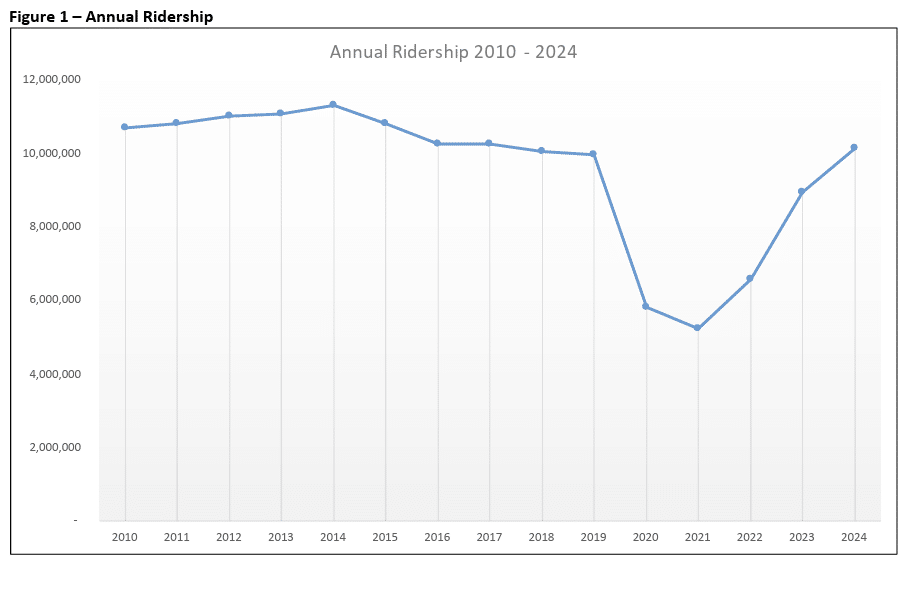
“It baffles me when they say that ridership is up when you see at peak hours, these buses have no one on them,” Savage claimed.
Savage is referencing these statistics, which show Spokane Transit Authority’s (STA) year-over-year ridership has been steadily climbing since the COVID-19 shutdowns, and surpassed 2024 riderships goals by 11%.
Savage also proposed pivoting STA to focus more on selling tickets to fund itself, rather than taxes.
“I don’t really like the free rides,” Savage said. “I mean, yes it’s for kids, but I think that we need to focus more on a revenue-based model.”
He also wants the agency to focus more on gasoline-powered buses and less on electric buses, which are part of STA’s current Zero-Emission plan to have a fully electric fleet by 2045, which is in line with state and federal legislative priorities.
Savage said electric buses are unreliable, and that during a recent winter, “over 40% to 50% of their buses went offline because when it got to that deep freeze all those lithium batteries just went out, because that's what happens with lithium batteries in those extreme elements.” He also cited safety concerns with lithium battery fires.
(Carly Cortright, spokesperson for STA, said that while their electric batteries do run out of power faster in the cold due to the electricity needed to keep passengers warm, they have never had that many buses out at once.)
On the other hand, Savage is a big proponent of better bike lanes.
“There’s a lot of people in my district riding their bikes, especially downtown,” Savage said. “We need to make bike networks that actually work and they actually have the space provided so that you actually feel safe on them.”
He wants the city to be more intentional about funding bike infrastructure and maintenance not just in policies, but in budgeting as well; he cited the 27 by 2027 bike network plan, which received no clear line items in the city’s most recent budget.
Savage also noted a lack of pedestrian infrastructure in District 3 — specifically, sidewalk connections. There are several places in his district, he said, where there are sidewalks with no ramps, or sidewalks that are technically accessible but then do not connect to other sidewalks in a network, instead shooting people into grass, gravel or the street.
“We need to make it easier for them [disabled people] to access their neighborhoods,” Savage said.
One of Savage’s hardest-line transportation positions is his opposition to road diets.
According to the US Dept. of Transportation, road diets can reduce crashes by 19 to 47% and reduce the speed of traffic flow, which brings down the fatality rate of crashes.
But, “they don’t work,” Savage said. “ They seem to actually restrict traffic in the wrong way, and they actually push traffic into the neighborhoods.”
With the Division Road Diet project slated for real progress by 2030 — and accompanying transit-oriented development along the corridor from the city of Spokane — candidates’ stances on road diets could play a large role in governance.
One of Savage’s hopes if he is elected is to get appointed to one of the coveted seats on the Spokane Transit Authority board. But it wouldn’t be to weigh in on road diets:
“I would hopefully give my seat up to District 1 and maybe trade with them,” Savage said. “Then I would take one of their committees. … Not that I don’t have my own views on STA, but I want to make sure there’s more voices serving from a district that has a lot more ridership.”
While District 1 had been left off major transportation boards in the past, that changed this year with each District 1 council member getting appointed to one transportation board. It’s also unclear if Savage would be able to give up a seat specifically to a certain representative, because all board seats are appointed by a vote of the council majority.
Affordability
Another key issue for Savage is affordability, specifically looking at housing affordability for constituents and rethinking the city budget to rely less on taxes.
His website states that the cost of housing, as well as other necessities like groceries, “has skyrocketed in Spokane … due to the inflationary policies that the progressive City Council and Councilman Zack Zappone have supported.”
Still, Savage and Zappone are aligned on one thing when it comes to solving housing affordability: they both want to increase housing inventory.
While the policies Zappone has championed focus on increasing density and removing zoning restrictions, Savage wants more sprawl.
Spokane is hemmed in by the Growth Management Act and the city’s Comprehensive Plan, he said, putting “an artificial ring around Spokane where we can’t build.”
Savage says he’s identified 10 areas around Spokane that the city could annex with the county’s permission. Some of the areas are already fully developed, but others aren’t.
By expanding urban sprawl and focusing on single family home builds, “we’ll be able to bring the price down naturally,” Savage said.
“We need more single family homes in Spokane because that is the American dream,” Savage said at a recent candidate forum. “It may be dead for a lot of people, but that’s what people want when they want to start growing a family. They don’t want more apartments; they want actual housing.”
When it comes to the city budget, Savage is against new taxes, even if it’s to fill potential holes created by state or federal funding cuts.
If the city faces losses from federal funding, those programs or positions should probably just be cut, he said.
Savage also has his sights set on cutting the city council budget by eliminating anything he thinks the council doesn’t “really need,” including two full-time positions: Lisa Gardner’s city council spokesperson job and Chris Wright’s policy advisor job.
Collaboration and competition
One conflict that’s come up over and over again at Spokane City Council is the conflict between the ideas of majority rule and minority rights. With a current 5-2 liberal supermajority and the two conservative votes both coming from Council District 1, public commenters frequently accuse the majority of steamrolling the conservatives, shutting them out of legislation and refusing to compromise.
On the other hand, members of the supermajority have pointed to a mandate from voters to represent progressive policies and not bow to the opinions of one district’s representatives.
Savage said that if he’s elected, he wants to be a politician of compromise and collaboration. “I want to let people know that I can disagree with you, but I’ll talk to you face-to-face,” he said. “ That's how I think we come to common ground.”
If there was an issue where he personally felt strongly one way, but the majority of constituent feedback he was getting was in the other direction, Savage said he’d vote for the majority of his constituents.
“If they say no, I’m going to vote no. I’m not going to say ‘Hey, I know better than you,’ like Zack Zappone,” Savage said. “I’m not going to gaslight you to say that you don’t know what you’re talking about. I’m going to listen to you.”
Despite his promise to collaborate, though, Savage’s tune has sounded a little different in other settings, especially at a local candidate forum held at Calvary Church.
“ You all deserve a representative that is going to keep the will of the people and not a personal agenda that they're going up there with,” Savage said. “[Zappone] goes up there with his own personal agenda, trying to help out with the LGBTQ and all these small groups that really don't have a huge population here in Spokane and wasting your tax dollars on stupid stuff like transgender bathrooms.”
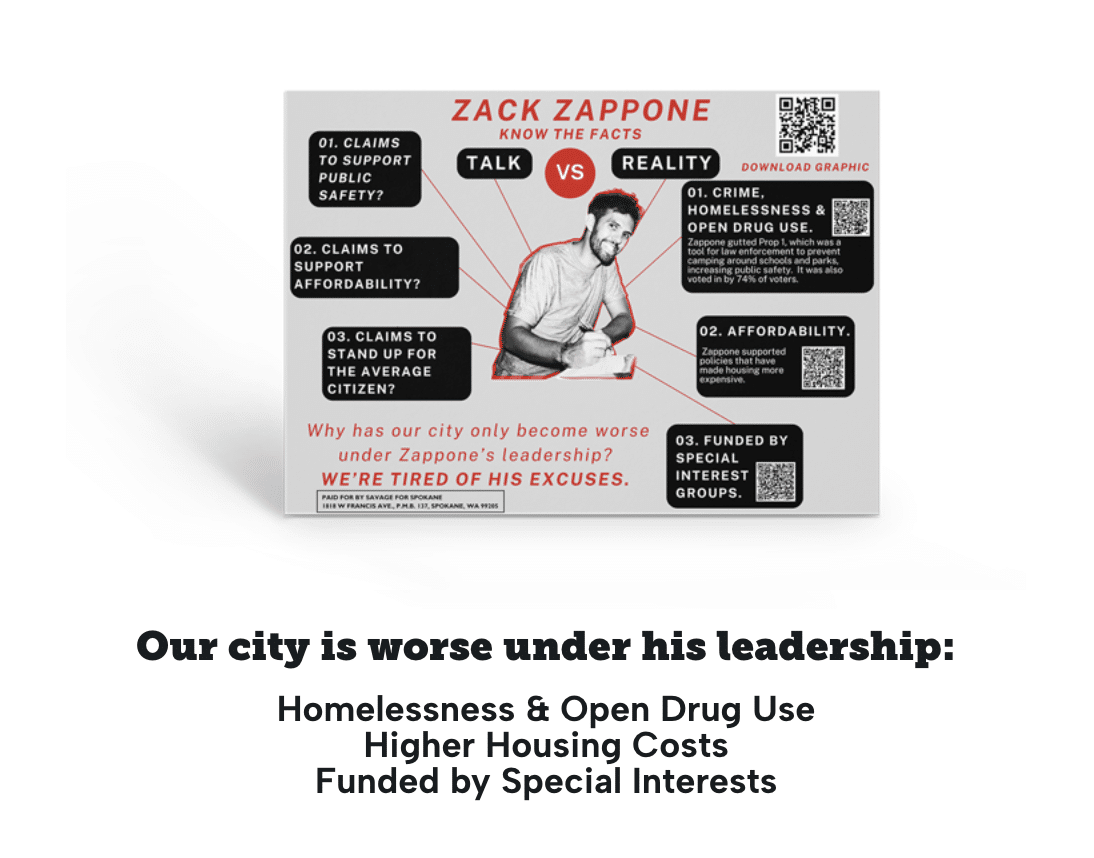
Savage has also put out negative campaign material about Zappone, including a mailer claiming the city has “only become worse under Zappone’s leadership.”
When it comes to Cody Arguelles — the other conservative in the race who is likely Savage’s closest opponent in primaries — Savage thinks his experience and history makes him the stronger candidate.
“I’ve been here for 31 years, and not only that, but I’ve been going to city council meetings for four years now,” Savage said. “I know the issues. I’m an expert at city council.”
He pointed to the council meeting write-ups he’s posted on his social media to inform others about municipal decision-making.
“That’s what makes me different. It’s not about me, it’s about my community. It’s about trying to get a citizen council member up there to represent the will of the people and not the will of my own,” Savage said. “I will sacrifice a lot of my evening hours to focus on the city, which Cody hasn't done much in his campaign right now.”
More on Savage can be found on his campaign website.
Cody Arguelles
NOTE: While Arguelles’ campaign team did send over answers to our 20 questions and a headshot for him, they didn’t respond to emails to set up an interview. He also didn’t attend either of the candidate forums we’ve seen, so his positions are a little bit less clear. We’ve compiled what we can about him here.
31-year-old Arguelles is a retired Air Force Survival, Evasion, Resistance and Escape (SERE) instructor. More recently though, he founded and co-owns the Late Arrival Club, a members-only private cigar lounge in downtown Spokane. He’s also the president of the Veterans Committee at Washington State University, where he is pursuing a degree in architecture.
Arguelles leads the race in campaign contributions, raising $45,600 as of publication. $21,325 of those contributions were made by local businesses, including Backyard Public House, Harley Douglass Rental, NAI Black Realty and Pyrotek. There are also big name conservative donors on his list: former mayor Nadine Woodward, RenCorp Realty’s Chris Batten and local Republican megadonor Larry Stone. In an interesting bit of campaign finance digging, we also found that a May 27 campaign report showed County Commissioner Al French and his wife Rosalie had both donated $125 each to Arguelles, but a subsequent report filed on June 20 amended the donation to be $250 solely under Rosalie’s name.
According to Arguelles’ website, his core campaign issues include public safety, homelessness, economic development, affordability and infrastructure.
Homelessness and public safety
When it comes to homelessness and public safety, Arguelles says he wants to invest funds into a few areas:
- More beds and long-term resources for mental health and addiction treatment
- Job training and life skills programs
- Hiring more police officers
- Contracting with the nonprofit C.O.P.S
- Building a new fire station in Five Mile
- Getting in on the county’s Real Time Crime Center, which uses things like Flock cameras and other technology to solve crimes
Arguelles also wants to “fix the City’s scattered shelter site model.” Instead of spreading shelters through the city to reduce the impacts any one neighborhood might feel, Arguelles wants to put shelters near service providers. If shelters were to be sited in neighborhoods, Arguelles’ website reads, there would need to be “robust community input,” and a prioritization of neighborhood safety.
Arguelles also wants the city to mend fences and fully join the Spokane Regional Emergency Communications (SREC), instead of building their own network after negotiations fell apart and SREC voted to boot the city from the regional collaboration.
Economic development
Though his own business is somewhat nontraditional, with neither employees nor alcohol/tobacco products for sale, Arguellles’ campaign places a large emphasis on economic growth and small business.
“As a downtown small business owner, I know firsthand the barriers to entry and the cost of doing business,” Arguelles wrote. “City Government should be a partner — not a roadblock – for those trying to build and grow in Spokane.”
He wants to streamline the permitting and license process to “cut red tape,” give local entrepreneurs access to resources and capital, “reform regulations that hinder economic growth and job creation,” and partner with the trade schools and unions to train workers for economic success and opportunity.
Other issues
Other issues Arguelles highlights on his campaign website include:
- The city budget, where he plans to oppose raises for council members and redirect a portion of homelessness spending to build sidewalks and improve road conditions.
- Increasing affordability for residents by opposing “unnecessary tax and fee hikes — especially property tax increases.”
- Supporting the parks, but not by passing the upcoming park levy. “I support our parks but before building new ones, we need to focus on keeping our existing parks clean, safe, and family-friendly,” Arguelles wrote. “Let’s make smart improvements that encourage more families to enjoy the green spaces we already have.”
You learn more about Arguelles from his website here.
Further Reading
- The Inlander: Three candidates vying for a Spokane City Council seat will be narrowed to two in Aug. 5 primary election
- The Spokesman: Ubiquitous city council attendee Christopher Savage announces bid for dais
- The Spokesman: Retired Air Force SERE instructor, cigar lounge owner Cody Arguelles running for Spokane City Council
- The Spokesman: Northwest Spokane features only City Council race on August primary ballots
- Spokane Public Radio: Council candidate Christopher Savage hopes fourth time is the charm
- Spokane Public Radio: Former Fairchild survival instructor seeks Spokane council seat


