

Dozens of horses newly housed at the Spokane County Fair & Expo Center pawed at the ground Saturday night. They whinnied and called “to each other,” according to a volunteer. They were trying to understand the situation their caretakers — who work as horse trainers for the Pleasant Valley Stables, a prominent stable northeast of Spokane — had dragged them into.
They seemed to sense the danger and to not know what would be next.
Flames had engulfed some of the facilities they'd called home. Their nickers, snorts and neighs echoed across Broadway just outside the fairgrounds’ stables and barns, where people with animals of every sort — from livestock to household pets — asked volunteers with a local animal respite provider where they could hole up.
Some felt safe enough to return home Saturday evening, but dozens remained in limbo. The folks who stuck around slept in the barn area; others sought solace in the gravel parking lot outside the gates. People filled out lengthy animal intake forms and caught naps behind their wheels as their dogs and cats paced nervously in the backseat. Others took turns walking the horses in the stables.
Lu Hill was one of them. She’d never planned to be in this situation, but the sister of Spokane state Representative Natasha Hill evacuated her property just before 2 am. She loaded her horses, Bubbles and Lola, as the flames moved closer. She managed to grab hay and feed on the way out, something many owners didn't have time to do.
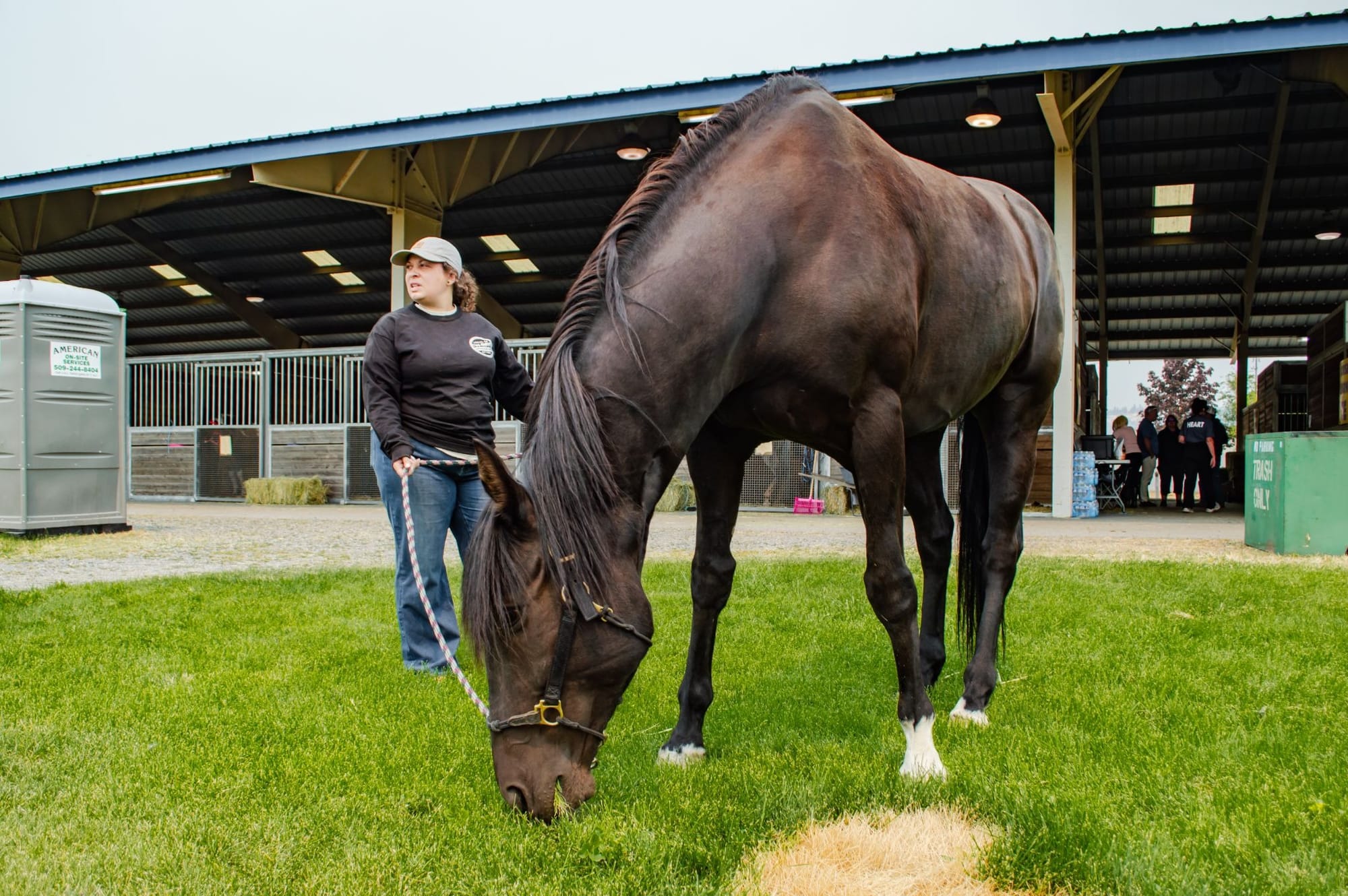
Outside the barns, Hill led Bubbles by a rope, letting him graze and stretch after spending the night confined in an unfamiliar stall.
Hill’s phone number was written in Sharpie on Bubbles’s hoof “in case we have to let them go,” Hill said.
Allison Zimmerman, an incident commander with the Humane Evacuation Animal Rescue Team, a nonprofit that works with the county to extract animals from dangerous situations, said the animals could stay at the fairgrounds until the fires were no longer a threat. After that, HEART would start trying to find homes for the creatures that had lost them.
Climate scientists and community planners have long warned drier conditions and more building in rural areas increased the risk of wildfire harming people and their pets in Spokane.
This fire — encroaching even into well-established residential areas and burning down homes — seemed to show those scientists' worries apply to more urban areas, too; the natural disaster is actively affecting people who live well within the city limits.
‘I bolted my way through everybody to get home’
Not everyone at the fairgrounds Saturday night or Sunday were able to get their pets to safety. Some still didn’t know where their beloved animal companions were.
Sharon Livengood’s experience started Saturday afternoon when, as the flames took hold of the brush and jumped the Spokane River into the city, a police officer took her arm and told her they both had to run for their lives.
She couldn’t see much up her long driveway, other than flames, given how bad the smoke was.
She certainly couldn’t see her pets in her home of 54 years. And she still doesn't know if they made it out.
On Sunday, as Livengood drove to the fairgrounds hoping to find news about her two pet dogs and cat, along with a barn full of feral cats she had cared for.
“God only knows where they are,” she said.
Jill Carding, a spokesperson with HEART, said the fairground had handled around 100 horses as of noon on Sunday, along with 50 dogs and chickens, sheep and goats. At least one pig was among the fleeing animals.
But Livengood’s animals were not with her.
Livengood had woken up on Saturday morning planning to celebrate her 79th birthday with friends at The Chalet Restaurant on the South Hill. The power went out during lunch. She drove home to Rifle Club Road immediately, intent on getting to her dogs, Sonny and Nicky, and cat, Jellicle.
“I bolted my way through everybody to get home,” she said.
After the police officer ordered her to leave, she had to abandon her car and get in an ambulance out of the evacuation area. Livengood is now staying with family in Spokane. On Sunday morning, a friend stopped by her place and sent her a photo of the property.
“There’s nothing left,” Livengood told RANGE.
That same day, her brother John Richards didn’t know if his sister was still in her house — not realizing she’d already left by ambulance. He called 911 and dispatchers sent a second officer to the area to check on her and broke into her house through the front door.
The next day, an officer called Livengood to tell her that when he had broken in, he had not heard the dogs bark. The fire had singed the officer’s car and vest, Richards said.
“He said he worried about her all night,” Richards said of the officer.
Livengood still does not know where her dogs are, although her brother told RANGE he feared the worst.
Sonny is a black tricolor Sheltie, and Nicky is an apricot-colored miniature poodle, she said, while Jellicle is black and white, Livengood said.
“I don’t know if they got loose out of the house or they died in there. I’m just devastated,” Livengood said.
‘It’s all gone’
At one point, a man walked into the barn, looking at the phone in his hand. The three volunteers talking over a donut break went silent. "It's all gone," the man said.
No one asked what he meant, but the volunteers said he was part of the man’s “horse family” — the tight-knit communities made up of people who own horses. They didn’t have time to mourn; they just got back to work but not before weeping, embracing one another and quietly returning to cleaning out stalls.
The man walked to his horse, Ella, reaching through the stall bars to stroke her face.
Twice, as if trying to convince himself it was true, he repeated:
"You're my only source of income now, Ella."
The barn fell silent except for the shifting of horses against the straw.
‘They could tell the stress’
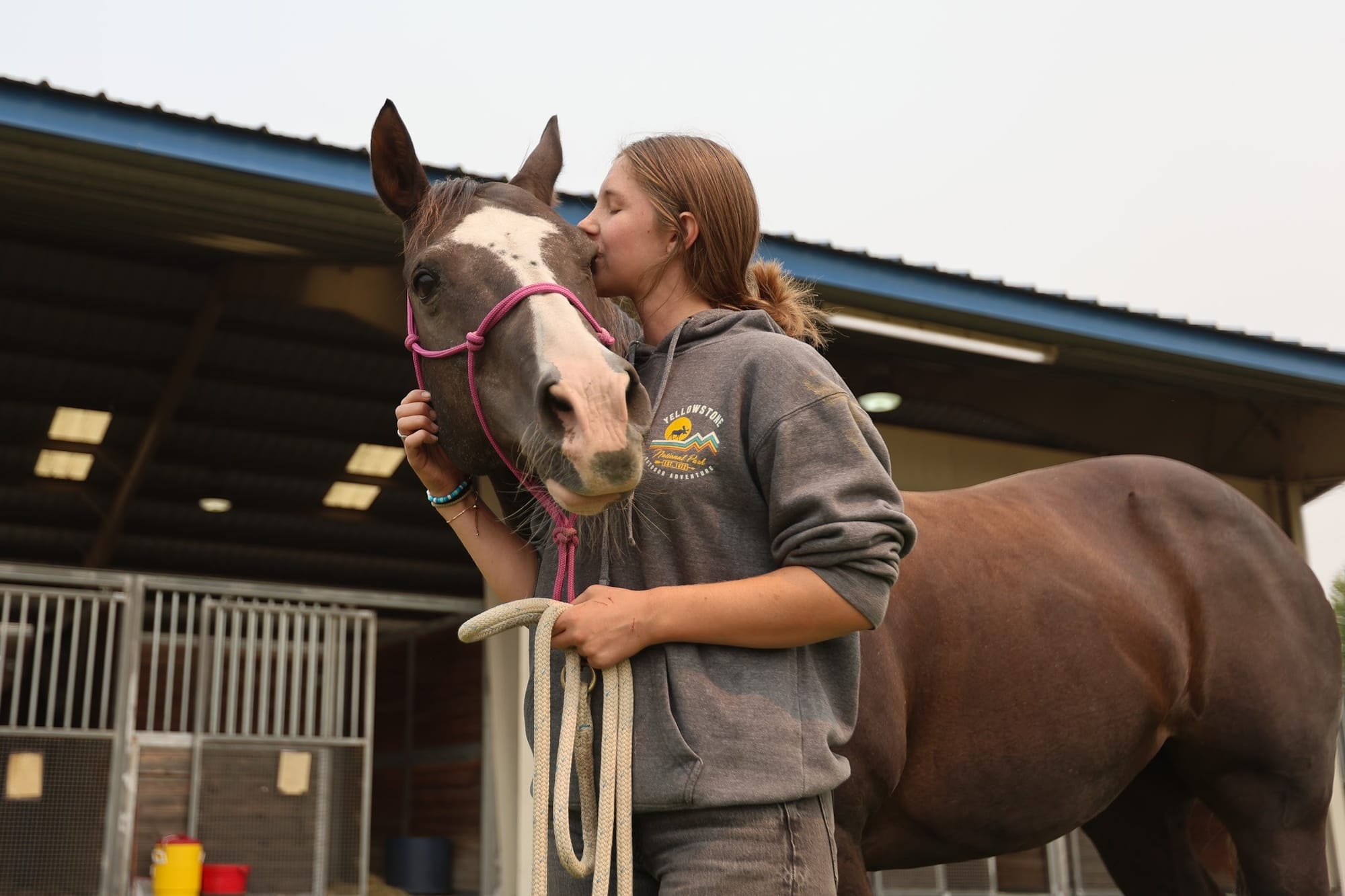
Chloe Hynek lives and works at LOA Youth Ranch, an equine boarding facility and nonprofit Christian youth ministry in Colbert.
When the ranch started evacuating Saturday night, Hynek said, they could see smoke and “a red ominous glow over the hill.” They have 21 horses. Six are their own — Hynek shows one every year at the Spokane County Fair — and the rest are hosted there for a fee.
Hynek said getting all of them out was “a struggle” as some of the horses were afraid of the trailer.
“A lot of them could tell the pressure, they could tell the stress, they could tell the anxiety,” Hynek said. “A lot of them still feel it now,” she said.
They managed to get to the fairgrounds at around 1 or 2 am Sunday, Hynek said.
The Hynek family evacuated this morning, as soon as they learned their area had become a Level 3 evacuation zone. They left behind the chickens, but were able to get all their horses, dogs, cats, goats and pigs out. Now, Hynek said she frets about where her family and the animals will end up after this.
Carding said HEART is more in need of financial donations than supplies, so the organization is able to buy what they need, instead of receiving things they can’t use.
She emphasized that people who bring their animals in should also try to bring the animals' food, if possible.
Not just cats and dogs
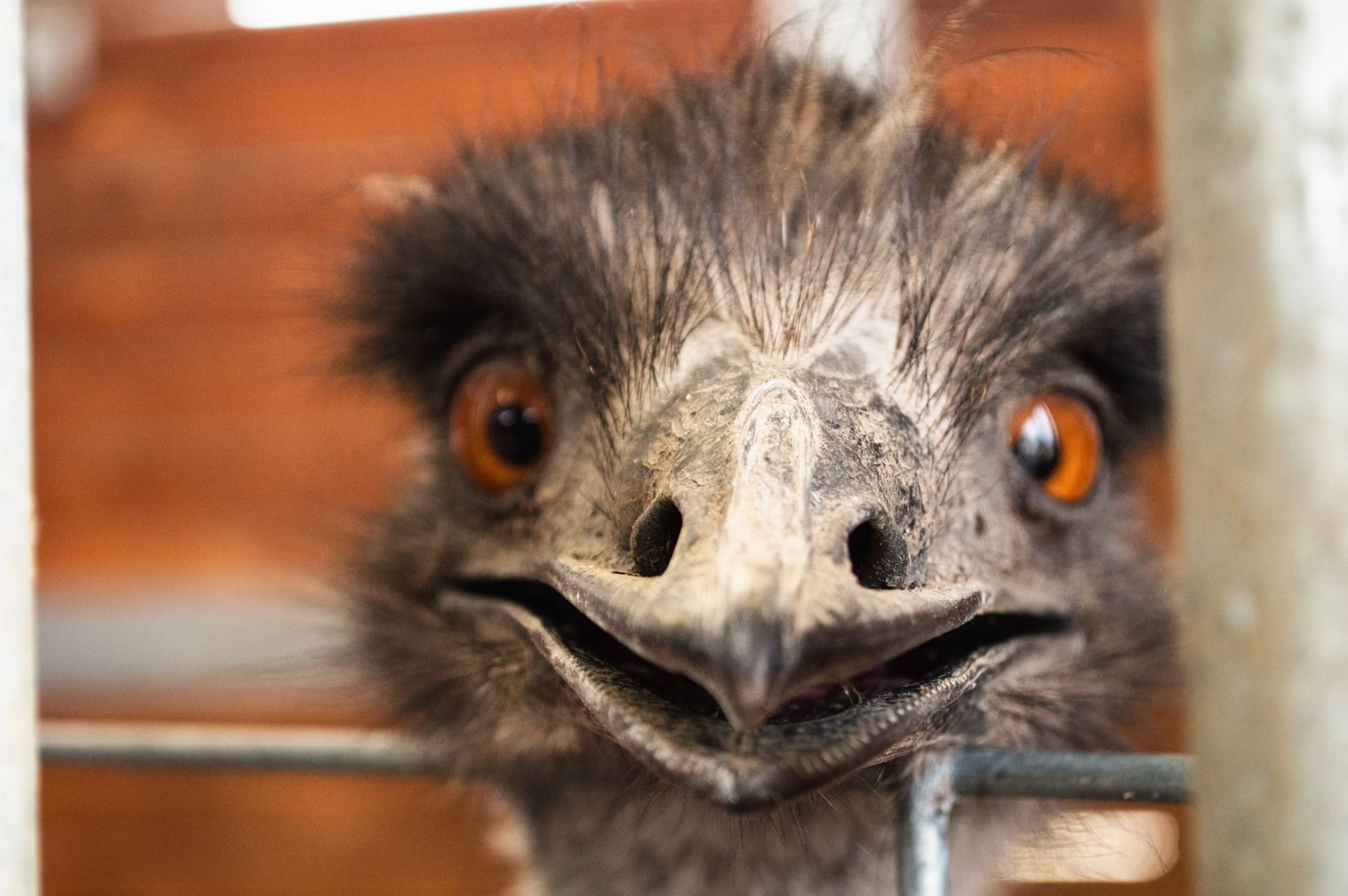
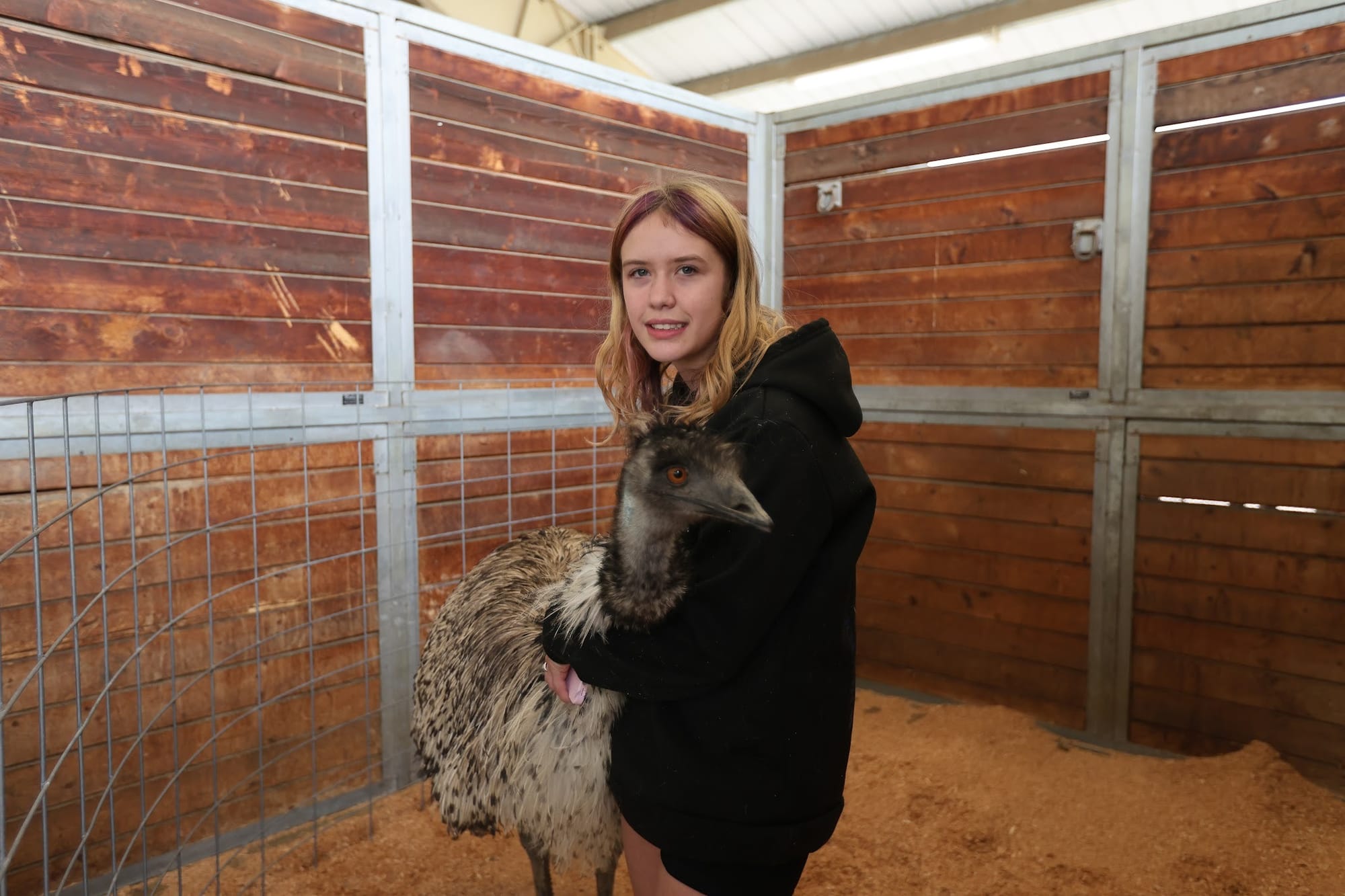
Andria McAdams and her daughter Joy initially brought only the basics to the fairgrounds for their 8-year-old emu, Wasabi, but they’re trying to make another trip back home to make sure he has enough all-flock, a more appropriate food for him.
They decided to bring Wasabi over before they'd even gathered their belongings from their home, which sits just a street away from where a Level 3 evacuation zone was issued a “Go Now” order. They did so because they feared a situation where they’d have to just open the fence and let Wasabi go.
“For us, it’s much easier to be safe than sorry because it’s a big thing moving everybody out,” Andria McAdams said.
Once they situated the bird, they’d evacuate their home, which they share with Andria’s disabled brother and three dogs, and stay with family and friends. Andria McAdams said she learned about the sanctuary at the fairgrounds from Facebook posts.
Carding said she’s seen plenty of community members offering to assist, but the organization has had to turn volunteer help down — not because they don’t want it but because HEART itself is contracted by Spokane County’s Department of Emergency Management, Carding explained.
Because of this, it has to vet and train its volunteers to handle the different animals — so people looking to help are better off giving money and donating food than offering labor.
HEART also has volunteers helping to evacuate animals throughout the city, Carding said. That task, however, is more difficult today.
“It’s taking a lot longer because of the road closures and traffic issues,” Carding said. “That’s our big worry — that if people really need us to help, it might take us a while to get there.”


