

This story was written in partnership between RANGE and FāVS News, a nonprofit newsroom covering faith and values in the Inland Northwest. Learn more about FāVS’s work here.
To hear the national media tell it, the rise of Christian nationalism has an epicenter in sweet, sleepy Moscow, Idaho. The loudest descriptions of the town come from dominionist pastor Doug Wilson, who suggests that his theocratic philosophy is a given among the citizens there. As if they are his citizens.
As if Moscow’s innocent backwater character renders it a perfectly naive testing ground for the building of a Christian America. As if Wilson’s Christ Church — and its overtly queerphobic rhetoric — had only needed to plop down in the Palouse in the 1990s to infect, virus-like, all those salt-of-the-earth Idaho farmers with its irresistible reformed evangelical Calvinism. The idea is that Wilson and his church, home to an estimated 1,300 congregants, own the town of Moscow — and the insinuation is that the rest of the country can’t be far behind.
Touch down for more than a moment in Moscow, though, and you’ll hear a different story.
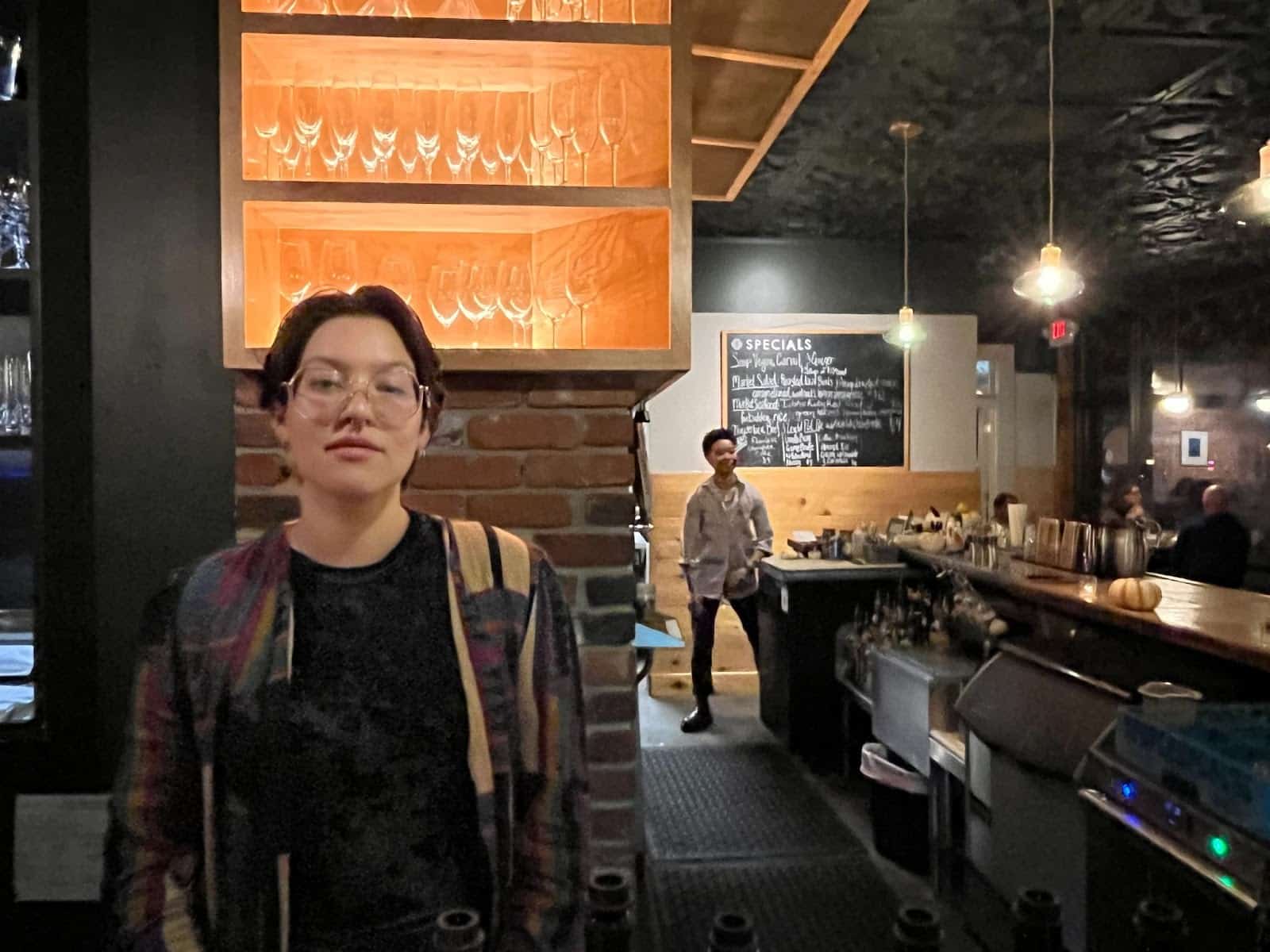
“ That could not be further from the truth,” said Skyler Ting, the general manager of Nectar, a hip downtown Moscow restaurant and wine bar.
Ting, who grew up in Moscow, was referring to a high-profile interview Wilson did with Politico Magazine in which he said, “This is all one fabric,” which may give a casual reader the impression that everyone in town is on board with his efforts to Christianize the public square.
“I think there's a pretty tight-knit community that is very hardcore anti-Christ Church,” they said, citing a locally famous Facebook page that lists downtown businesses owned by people affiliated with Christ Church and urges visitors not to spend their money in them.
RANGE encountered Ting’s sentiment repeatedly when we visited Moscow twice last week to better understand recent city elections in which Moscow voters resoundingly rejected Christ Church-affiliated candidates. Time and again, locals told us the elections reflect an accepting, progressive community within Idaho’s sea of political red, rather than a doomed place that exemplifies the conquests in Wilson’s battle for the soul of America.
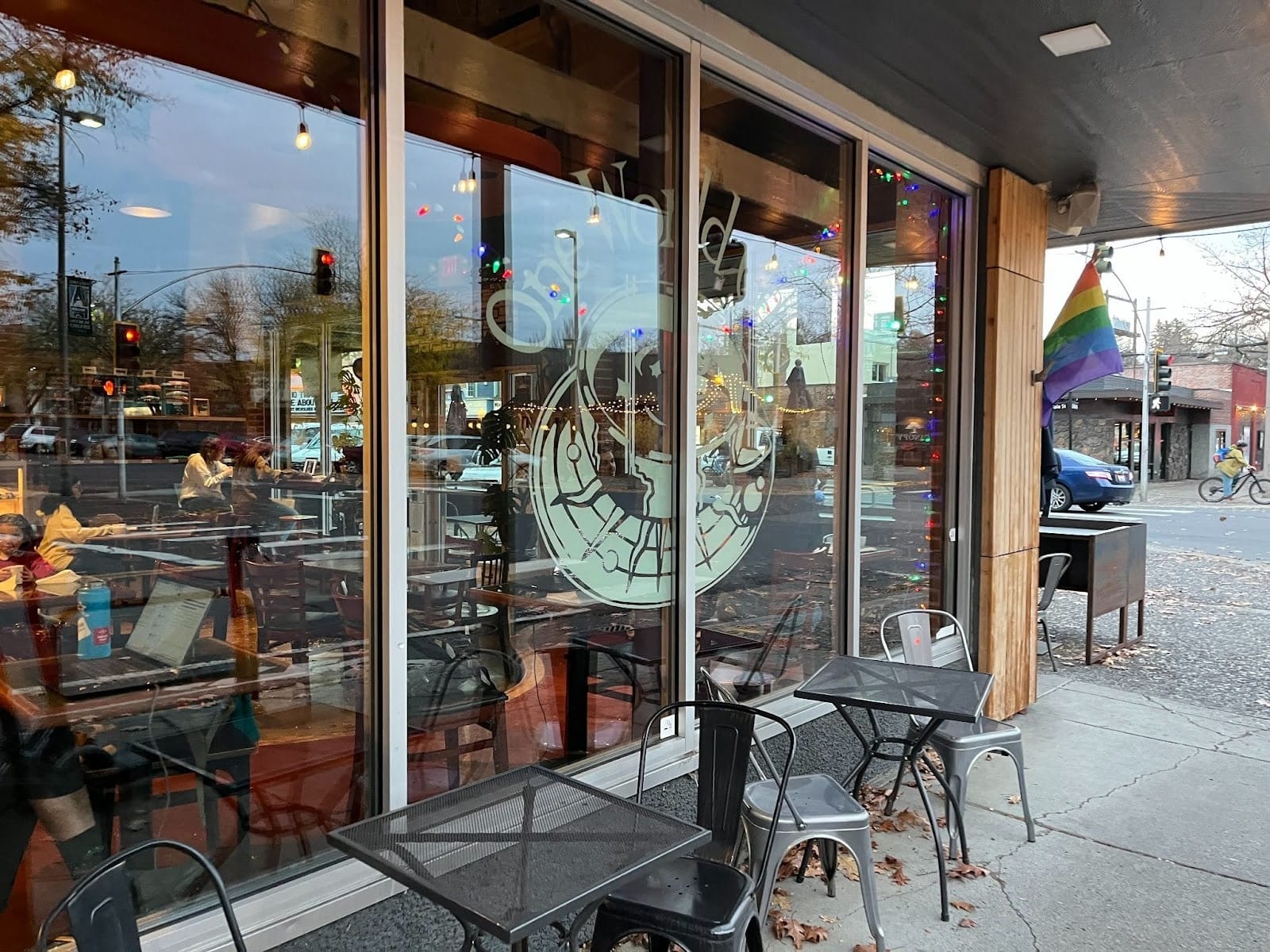
“Moscow is one of the outliers in the state despite [Wilson] being there,” said Brandy Sullivan, who owns One World Coffee, a downtown cafe with a Pride flag flying from the door and a Black Lives Matter sign in the window frequented by University of Idaho students. “It’s almost like he’s working remotely.”
Elections show Christ Church is not in charge
On November 19, Wilson released a video saying Christians are justified in owning people as slaves as long as they’re following the rules laid out in the Bible governing slavery. He does not believe women should be able to vote. He has written that “our love must be uneven,” meaning Christians should love certain people more than other people. Ultimately, he believes Christians deserve more from society than anyone else.
But a Moscow that belonged to this ideology would have been shocked by the results of the November 4 elections. In the real Moscow, as across the country, progressive candidates for public office won remarkable victories.
In Spokane, the more liberal candidate won each city election, including one upset by a vocally leftist reproductive rights organizer. Throughout the US, Democrats swept important races in an election, understood to at least partly be a rebuke of the Trump administration’s alignment with Christian nationalist policies.
But if national Democrats were surprised by the election outcomes, Moscow voters were not. Moscow elections since 2019 have consistently rejected candidates who supported Christ Church-aligned values or were supported by Christ Church-aligned businesses.
Elections in Latah County are “at-large” contests, meaning candidates don’t run against each other for seats dedicated to certain districts or wards. Voters list up to three preferred candidates, and each of the candidates with the most votes wins an open seat.
Case(s) in point: the last two Moscow elections.
First, in May, came the race for the Latah County Library Board of Trustees, in which five people vied for three positions. Republican-endorsed Jeanne Moore and Bradley Baas — who had been a student at Christ Church’s Christian college, New Saint Andrews College (NSA) (and who was arrested for DUI the night before the election) — were trounced.
Baas and Moore campaigned similarly on a slate of issues like supporting “parents’ rights” and “protecting minors from harmful materials” — language that has been used to try to ban queer literature from public libraries. (We did not find a direct connection between Moore and Christ Church or its college.)
Next came the mayoral and city council election on November 4. Voters rejected the three candidates backed by a Christ Church-affiliated political action committee (PAC) called Liberty PAC. Mayoral candidate Alex Simon and city council candidates John Slagboom and Gary Schoolland each lost by wide margins.
This may partly be because Wilson doesn’t directly involve himself that much in local politics — instead focusing on spreading his message in the national media and establishing new operations in places like Washington, D.C., and Portland, Oregon.
“Frankly, I've never seen Doug Wilson out there publicly endorsing candidates, nor have I seen him financially contribute to any local campaigns,” said Sage McCetich, who also won a city council seat on November 4.
A Christ Church-linked PAC
The largest single expenditure in favor of Simon, Slagboom and Schoolland was made by the Liberty PAC, which paid at least $7,200 for a mailer promoting the candidates. The mailer, which emphasized budgetary and economic issues, read, in part, “Even though you can cast up to three votes for City Council, voting for just Schoolland and Slagboom and leaving your third vote blank increases their chances to win [underline sic].”
Liberty PAC’s primary funding source is 3100 Capital LLC, a company founded by Christ Church parish elder Andrew Crapuchettes, according to Idaho election disclosures. Another prominent funder of the PAC is Jeff Mau, who owns a Moscow-based manufacturer of concealed gun holsters called Tenicor. Mau, a former Seattle police officer and King County sheriff deputy, recently recommended one of Wilson’s many books on the podcast “Biblical Leadership @ Work.”
PACs can spend unlimited amounts of money in the US as independent expenditures — such as Liberty PAC’s mailer — as long as they don’t coordinate with a specific campaign on that spending. By contrast, individual donations on specific campaigns are bound by campaign contribution limitations.
Slagboom and Schooland both described themselves in interviews as conservative. (Slagboom, a former progressive, also said he identifies as independent and has registered in primaries with both parties to advance candidates he preferred.) But they distanced themselves — and their churches — from Liberty PAC and Wilson.
“I had nothing to do with that,” Schoolland said of the flyer. “Even though my picture is on the flyer, that’s totally independent from anything that has to do with me. Trinity Reform Church has absolutely nothing to do with Christ Church” other than Wilson having preached there once during the four years Schoolland said he had been attending.
RANGE found that another prominent contributor to Liberty PAC is Timothy van den Broek, a teaching elder at Trinity.
Slagboom has publicly taken offense at suggestions he is tied to Christ Church.
“What Liberty PAC did was totally out of my control,” Slagboom said. “They could have said terrible things about me.”
In an interview, he emphasized that the church he attends, All Souls Christian Church, is nondenominational and unaffiliated with Christ Church.
But Simon, who said he also attended All Souls, said Wilson’s church was very supportive of the three candidates’ campaigns.
“The Christ Church community I think really rallied behind us,” Simon, the mayoral candidate said. “I was appreciative of it. I know a number of folks that do go there, and they're delightful folks.”
Pushing back against Christian nationalism
If there are indeed two Moscows — a dominionist one and a secular one — one is a lot bigger than the other. In a city of about 25,000 residents, fewer than 2,000 voted for measures and candidates affiliated with Christ Church’s political goals. That number is nearly doubled by folks who voted for more progressive candidates, a calculus that essentially ensures the public square is not overtaken by Christian nationalist values.
“Moscow provides an example of very different dynamics than Doug Wilson claims that it does,” said Kate Bitz, a senior organizer at the Western States Center, a think tank that trains people who want to resist right-wing extremism in the American West. “What we're seeing with both the county-wide library board elections this spring in Latah County and especially with the municipal elections in Moscow is that when people start to experience [Christ Church’s] kind of takeover, they do not take it. They don't acquiesce.”
Evan Holmes, who won one of the city council seats on November 4, said this is partly because residents are not interested in national media attention that characterizes them in a particular way.
“If we say that 70% of the population doesn't feel that way, they still don't want the focus of 60 Minutes and The Atlantic to come here to say, ‘Let's go to the national center of this,’” council-member-elect Holmes said. “That’s just bothersome.”
But it’s also because many in Moscow have been alarmed by the most visible organizing by Christ Church, such as when church members gathered in the parking lot of City Hall during the pandemic with no masks to protest an emergency health order. Locals saw this as disrespectful of people who wanted to limit the spread of COVID-19.
“It really kind of made them stand out saying, ‘We kind of have our own rules,’” said One World Coffee owner Brandy Sullivan, who was a member of the city council at the time of that protest. “Some people started to see them in a different light.”
According to Council Member-elect Sage McCetich, a real estate agent by profession, Christ Church’s power lies largely in the ability of members — many of whom moved to Moscow fleeing progressive COVID policies during the pandemic — to purchase property downtown.
For example, NSA College, which until 2023 was unaccredited and was founded by Christ Church in 1994, moved into a building on the downtown corner of Friendship Square and Main Street — valuable real estate in a city with relatively few property tax sources.
Because NSA is a nonprofit, it is exempt from property taxes, meaning its arrival placed a heavier burden on other businesses and residential property owners to pay for city services.
Since then, Christ Church has bought more and more property on Main Street and downtown, which means that burden has gotten heavier and heavier.
So if the city as an institution worries about Christ Church, that worry resolves exclusively around how the church affects the local economy.
“We're not talking about any group, especially not a religious group or anything like that,” Sullivan said. “It is not something that's on the city's agenda ever. Things like the water supply, transportation, aging infrastructure, sewer, water, roads — those are the main things that the city is dealing with.”
The Moscow citizens RANGE talked to repeatedly and vociferously confirmed their identities as distant from Christian nationalist ideas — and from Wilson’s racist, misogynistic, anti-queer, patriarchal and, above all, inflammatory rhetoric.
“Doug says, ‘This is Christian Idaho,’” said Kayla Alexander, a self-identified Pagan woman who works in Moscow as an environmental scientist. Sipping a drink in the Garden, a downtown bar, she wore earrings shaped like full-sized cigarettes and said that she doesn’t feel comfortable wearing her pentagram necklace into certain Main Street establishments connected to Christ Church. Still, she said, it’s not a Christian city. “A lot of us are pagan, agnostic, atheist, Muslim, Catholic — all of these other religions that exist.”
The town seems to agree with Alexander, given the number of progressive or social-justice organizations supported by its sweet — but maybe not so sleepy — citizenry.
From the Inland Oasis, which offers support for LGBTQ+ folks, to Moscow Contemporary, a community center that recently hosted a Drag Drawing class, to the hundreds who turned out for a No Kings Protest in October, the real Moscow story is a concrete counter to what the national news reports.


