US Rep. Michael Baumgartner, very clearly, is not a member of the anti-Trump resistance. Just ask President Donald Trump.
"Michael has my complete and total endorsement," Trump said in a video endorsement last month. "He's a spectacular person."
Trump endorsed Baumgartner as "a tremendous guy" and “a “pivotal vote” for Trump’s tax cuts.
“Michael will not let you down,” the president said. “He’s a true fighter for Eastern Washington, and a great guy.”
And yet: folks who pay laser-focused attention to politics can identify multiple examples of moments where he has objected to parts of the Trump agenda. Maybe that pushback is a political calculation, or maybe it comes out of his conservative beliefs, his conscience or his Catholic faith. But whatever the case, Baumgartner’s objections to Trump have been diplomatic: soft enough to avoid raising Trump’s ire.
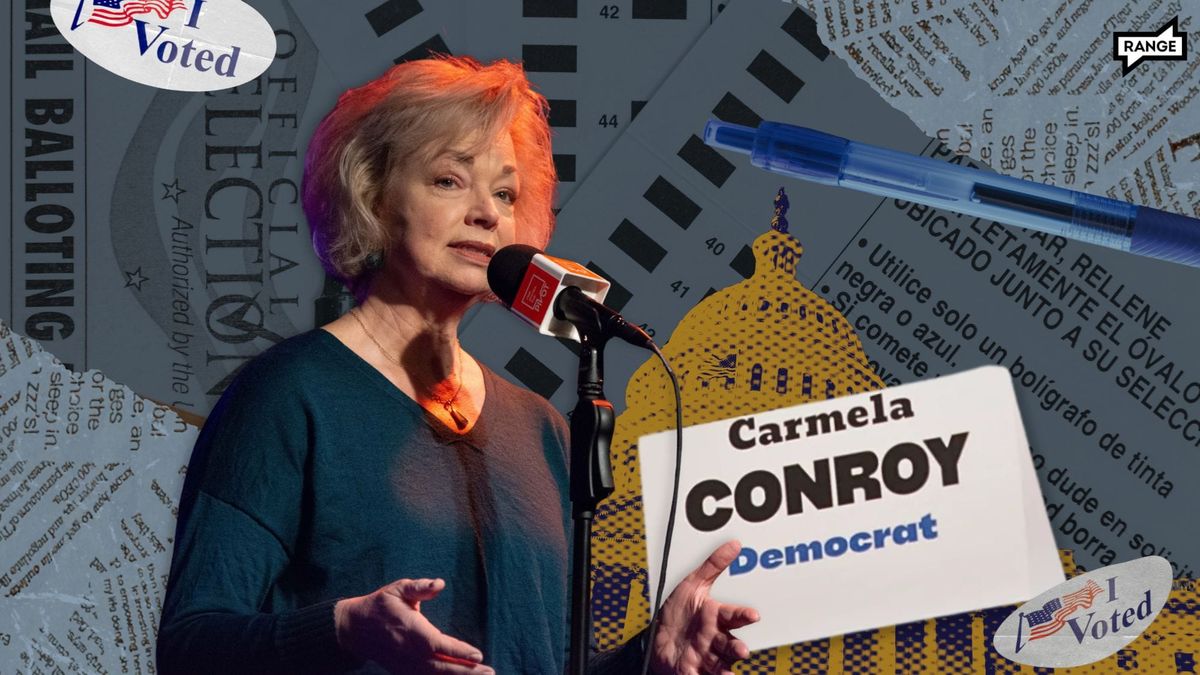
Like his opponent, Carmela Conroy, Baumgartner has a background in the diplomatic world, having worked with the State Department in both Iraq and Afghanistan — though Conroy likes to point out that Baumgartner "never went through diplomatic orientation."
But Conroy argues that Baumgartner’s treatment of Trump has, if anything, been too diplomatic: soft enough to avoid raising Trump’s ire and empty enough to make little difference.
“You can’t go by letters to the editor or op-eds” when judging Baumgartner’s record, Conroy argued at a Spokesman-Review debate last month. “If you have someone in Congress, you have to go by how they vote.”
The 5th Congressional District is very Republican — but it’s significantly less supportive of Trump than it is for the GOP. In 2024, Baumgartner beat Conroy by over 20 percentage points, while Trump won the same district by just 11 points.
That gap, of ticket-splitters voting for the Republican congressman but not for the Republican presidential candidate, was among the largest in the nation.
As inflation has continued and gas prices have soared, Trump’s approval rating has since plunged nationally, from nearly 50% on inauguration day to just 31%. Some Democrats see a flicker of hope in Baumgartner’s lackluster primary performance — the first time in more than three decades when a Republican failed to break 50% of the vote in the primary.
If Democrats have even the slimmest chance of an upset, in other words, it will likely require convincing many of the tens of thousands of those Trump-skeptical Republican voters to decline to re-elect the Trump-endorsed Baumgartner.
For those voters, the question is whether Baumgartner’s expressions of mild misgivings matter. He has voiced unease at times on Trump’s trade and immigration policies. And yet, in stark contrast to the Catholic church he’s a part of, he’s fervently defended Trump’s war in Iran.
Spokane Valley Council Member Al Merkel, a Baumgartner supporter, told me that he thinks Baumgartner’s pushback did make a difference on issues like tariffs and government jobs.
“I don’t think he did it by picking up a figurative rifle and marching into the office,” Merkel said. “It wasn’t a big show.”
But to Washington state Sen. Marcus Riccelli, a Democrat who once teamed up with Baumgartner to change state law to allow for a Washington State University medical school, Baumgartner’s occasional policy quibble with Trump is hardly enough to count as genuine courage.
“I think there's fundamental concerns with how our democracy moves forward after just all the norms being blown away and all the safeguards being completely removed,” Riccelli said.
“I don't see him pushing back or fighting against any of that stuff, which is honestly a bit surprising and extremely disappointing.”
 Aaron Hedge
Welcome to the ‘clown show’
Once upon a time, Baumgartner’s criticism of Trump was unrestrained. During the 2016 primary, Baumgartner called Trump “a narcissistic clown show,” “laughably vapid on policy” and joked that he must have been a plant for Hillary Clinton.
By the time the general election rolled around, however, he had warmed to the man, particularly praising Trump’s pick for Secretary of Defense, Gen. James Mattis.
In the years since, Mattis has decried Trump as a divisive threat who makes “a mockery of our Constitution.” Baumgartner has not.
Baumgartner accused former special prosecutor Jack Smith of having politically-influenced timing when the prosecutor concluded Trump had “engaged in serious crimes against our nation.”
But Baumgartner also said things many Republicans are wary to admit in public: that Joe Biden won the 2020 election and the actions by Trump supporters of the US Capitol building on January 6, 2021, represented a “terrible riot” and an "abhorrent day.”
In Congress, talk isn’t always cheap. Talk can be costly. The whole reason why Democrats have a shot to win a Texas Senate race is because Trump backed the Texas Attorney General Ken Paxton as a primary challenger to Sen. John Cornyn. Sure, Paxton was so corrupt that he’d been impeached by the Republican-dominated Texas House of Representatives, but Cornyn had made the tactical error of saying Trump shouldn’t run for office and that the attack on “the Capitol was horrific and appalling.”
Riccelli says he’s glad to hear that Baumgartner criticized January 6, but Baumgartner isn’t exactly a hero for stepping over such a low bar.
“That's my problem,” Riccelli said. “I would push back on a write-up of 'thanks for doing these two or three small things.’”
Conroy argues that the President didn’t even notice.
"That's not going to be picked up by the mainstream media,” Conroy said. “It's not going to be seen by the president.”
Republicans didn’t seem to mind either. Unlike most of the races of his predecessor Rep. Cathy McMorris Rodgers, Baumgartner didn’t attract a Republican challenger during this year’s primary.
“That's a strong indicator that Mike is somebody that has at least appeal across the different shades of Republicanism,” Republican County Commissioner Josh Kerns said to me.
Baumgartner’s political career began during the Tea Party wave, when conservative rhetoric was all about small government and free trade — a long way from the Trump Republicans today.
Three months into Baumgartner’s first term in Congress, he co-wrote an opinion piece that “Eastern Washington will suffer from” Trump’s tariffs, which he noted are “taxes paid by American businesses,” and “are often passed down to consumers in the form of higher prices.”
While the column, notably, did not use the word “Trump,” it argued that the tariffs “are a gift to foreign competitors” that “will hit trade-dependent states like Washington especially hard.”
Yet Baumgartner was handed an opportunity to vote against the Trump tariffs on the record in an official February vote, but didn’t take it.
“That's another example where it might have cost him politically in his own caucus had he voted against it,” Conroy told me. “But it would have been a vote in favor of us.”
After the vote, Baumgartner told The Spokesman-Review that tariffs are an important national security tool, and the Republican Speaker of the House convinced him to vote no to restricting Trump’s use of them.
Often, public statements have been part of Baumgartner’s strategy. When Trump shut down the National Institute for Occupational Safety and Health Laboratory in Spokane as part of billionaire Elon Musk’s “Department of Government Efficiency” cuts, Baumgartner wrote multiple letters to Health secretary Robert F. Kennedy Jr. in 2025 to try to get the cuts reversed.
After nine months of waiting, last January the Trump administration reversed the cuts without explanation. That month, Baumgartner, along with the vast majority of both houses, voted for a Sen. Patty Murray-authored appropriations bill to protect those positions in the future.
Merkel told me Baumgartner’s tactics weren’t crazy.
“Can I know how much Mr. Baumgartner's conversations or letters to Mr. Trump have made any motion in any direction? I can't,” Merkel said. “But what I can know is that when I've seen him draw a distinction with some of the president's policies, I've seen those policies turn.”
But they can just as easily turn back. According to the conservative Tax Foundation think tank, federal tariff policy has changed more than 50 times since Trump’s second term started. In the weeks since the KSPS debate, whole new categories of Canadian products have been slapped with tariffs — or outright banned.
And the effects of Baumgartner’s letters are limited. In May of last year, Baumgartner joined a bipartisan group signing a letter to call for 20,000 additional Special Immigrant Visas for Afghans who helped the US during its occupation of Afghanistan.
The additional visas were never granted, the visa program for Afghans was frozen, and hundreds of Afghan visa holders have received letters warning them of paperwork problems and that the basis for their visas had been revoked.
Baumgartner also wrote a letter urging Trump to prevent the deportations for the thousands of Ukrainians who had been granted temporary protected status after the 2022 Russian invasion.
“Revoking their protections and sending them back to a war-torn country before peace is secured would be devastating for both them and their families,” Baumgartner wrote about Ukraine refugees here temporarily on "humanitarian parole” status. So far, deportation protections for Ukrainians have been preserved, even as they have been removed for other several ethnic groups.
But in the meantime, Trump’s “Big Beautiful Bill,” which Trump praised Baumgartner for supporting, kicked many of the Afghan and Ukrainian immigrants off Medicaid.
"Had Michael Baumgartner crossed the aisle with seven other Republicans ... that bill would not have passed in that form,” Conroy emphasized.
Unholy wars

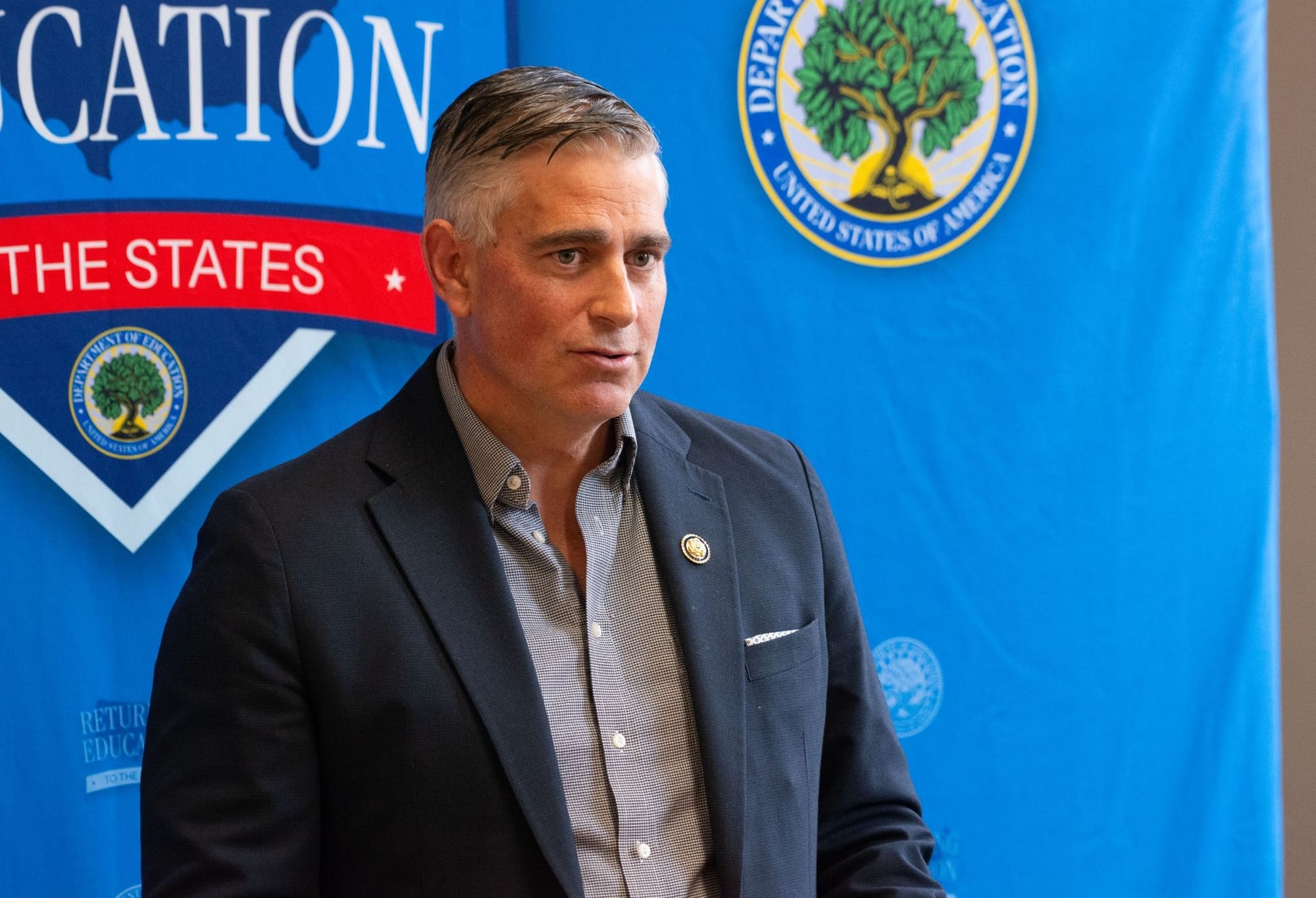
Monday afternoon, Baumgartner stood beside Donald Trump’s education secretary in a classroom at Chesterton Academy of Notre Dame, a Spokane Valley Catholic school, touting the scholarship benefits that the Big Beautiful Bill had for parents of schoolchildren, including those who wanted help with private tuition.
“For families here, that could mean putting a Catholic education at Chesterton within reach,” Secretary of Education Linda McMahon said.
Thomas Daly, the bishop of the Spokane Diocese, watched the press conference unfold from the back, standing below posters with phrases like “Don’t Be A Sophist!” and “Protect your cultural inheritance. Don’t let Western Civilization die.”
For his entire political career, Baumgartner has pointed to his Catholic faith as informing his political positions, particularly on issues like abortion.
Daly, part of the more conservative wing of the Catholic Church, told RANGE that the Church has “a lot more in common with this administration than we have in the past.”
But the larger Catholic Church has been a vocal critic of Trump’s tenure. Archbishop Blase Cupich, Daly’s predecessor in Spokane, has accused the Trump administration of “viciously racist” social media rhetoric, “sickening” and “deeply offensive” propaganda around war, and aggressive immigration tactics as cruel and intolerable violations of human dignity.
Trump has hit back. He hit the Pope as, among other things, “weak on crime” and posted an AI image of himself depicting himself, seemingly, as Jesus Christ. Baumgartner told The Spokesman-Review that he believed “President Trump was wrong to criticize Pope Leo and to post an inappropriate AI image of himself healing the sick.”
After Immigration and Customs Enforcement officers shot anti-ICE protester Alex Pretti repeatedly in the back in Minnesota, killing him, Baumgartner issued a statement that said he was “disturbed” by what he had seen.
When he called for Congress to investigate ICE after the shooting, it was rare enough among House Republicans that Fox News wrote about it.
“I think the Congressman has done a fine job supporting the work of the president, but there's also a few issues he's not afraid to say, ‘I think there's another perspective,’" Daly said.
But the starkest contrast between Baumgartner and his church is on war: After Trump attacked Iran, Pope Leo warned in March that God “does not listen to the prayers of those who wage war, but rejects them, saying: ‘Even though you make many prayers, I will not listen: your hands are full of blood.’”
But despite the Catholic Church’s criticism of war, Baumgartner has remained thoroughly on team Trump when it comes to fighting in Iran.
As the Iran war has driven up gas prices and inflation, roughly two-thirds of Americans say they do not approve of Trump’s handling of the conflict, according to a Pew survey this month. That includes a third of all Republicans.
Baumgartner had run for US Senate in 2012 by slamming Democrats on their votes for wars in the Middle East. He called for a pull-out from Afghanistan a decade before it happened, writing in a column that “many politicians from both parties refuse to speak truthfully about the wars, due either to embarrassment over votes and campaign promises or fear of criticizing their own leadership.”
But today, Baumgartner is a passionate cheerleader of the war in Iran, echoing the kinds of arguments that Vice President Dick Cheney made about Iraq in 2003: you can’t wait for the smoking gun to be a mushroom cloud.
“The further Iran gets from nuclear weapons the better,” he said at the KSPS debate this year.
“I think you're saying that [Secretary of Defense] Pete Hegseth lied last year when he said that we had destroyed all of Iran's nuclear capacities,” Conroy countered.
In National Review, a conservative publication that, like Baumgartner, was once against Trump, Baumgartner had written that the Iran war was “a test of endurance, and Iran’s strategy is to raise costs and fracture will.”
By contrast, when asked by a TV reporter in March about Trump’s repeated claims that the war would last four to five weeks, Hegseth dismissed it as a "typical NBC gotcha-type question.”
That was seven months ago.
‘No one who will even think about casting a vote for me’
This is supposed to be the part where Baumgartner himself weighs in, where he explains how he weighs the politics, morality and the practicality of each choice he makes — how he balances the competing duties of his constituents, his conservatism, his conscience and his commander-in-chief. It’s intended to be the section where I might point out an irony or a contradiction, while Baumgartner gets to toss off a jab or two about the media, or snark about his opponent.
When answering a questionnaire before the primary for RANGE, Baumgartner ventured that he cared for constituents who disagree with him.
“Whether you agree with me or not, I represent you; I work for you, and want to hear your points of view,” Baumgartner wrote.
But Baumgartner declined my request to interview him for this story about how he’s navigated the tensions between his conservatism, his faith and his president.
“I have too much going on in the final stretch of the campaign to sit for a piece like that in a left-wing publication with an agenda that no one who will even think about casting a vote for me will read,” Baumgartner said in a text message. “Let’s touch base in January.”
I countered by arguing that conservatives read a lot more broadly than he might assume — (Kerns and Merkel, for instance, not only read RANGE, they regularly listen to the RANGE podcast) — and pointed to examples of RANGE holding liberal institutions accountable.
Baumgartner knows I can be fair. I’ve been interviewing him, off and on, for nearly a decade and a half. When Baumgartner’s former coworker was trapped in Afghanistan as the country fell to the Taliban, I was the reporter he trusted to write the story.
But what had I done for him lately?
“There’s a lot of things you could have covered in a fair way about my work in Congress over the last two years to establish better credibility for RANGE,” Baumgartner said. “I politely decline your request.”
Baumgartner later called to invite me to the press conference at Chesterton — though couldn’t resist throwing in a jab calling RANGE a “quasi-legitimate” left-wing extremist publication.
Before declining my interview request, Baumgartner was eager to suggest to RANGE a tough angle to press his opponent on when she granted us an interview. He texted over a clip he’s been hammering Conroy on, where she said she wants to “dismantle and behead” the Department of Homeland Security.
Conroy’s campaign clarifies that she, obviously, was speaking metaphorically about firing Homeland Security leadership, not anything bloodier. (“I don’t even think she owns a machete,” a Conroy campaign spokesperson emphasized to me.)But Baumgartner, who accused Conroy of an “undercurrent of bloodlust,” implied such language could have consequences in the wake of the devastating fires in Spokane.
“The Sec of Homeland Security (the guy who oversees FEMA that I’ve been working with to get us help on the fires) is not a fan of this language,” Baumgartner wrote.
Eastern Washington voters know that Trump — no stranger to overheated rhetoric — takes into account politics when it comes to doling out federal aid.
In the wake of the devastating 2020 fires in the small town of Malden, Baumgartner’s predecessor, McMorris Rodgers, wrote multiple letters to Trump to ask him to unblock aid for individual survivors of the Malden fires. Trump was upset at Washington’s Democratic governor and Malden had to wait until Trump was out of office for aid to be granted.
Ultimately, McMorris Rodgers introduced the “MALDEN Act” — legislation intended to depoliticize the federal disaster aid process, but the legislation never passed. Trump is once again in power, and Baumgartner urged me to ask Conroy about how she would ask DHS for fire relief, considering what she said.
It suggests an addendum to an old axiom: If journalism is about speaking truth to power, perhaps politics, to some, is about being nice to power, so power doesn’t get mad.
Aaron Hedge contributed to this story.
 RANGE