

The Spokane Transit Authority in recent years launched its first Bus Rapid Transit service, built three new transit centers, grew services by over 35% and brought more than $130 million in state and federal funding to the region — expansion funded in large part by a two-tenths of 1% sales tax approved by voters a decade ago.
In the Aug. 4 primary election, voters who live within the STA’s public transportation benefit area, which includes all of Spokane City, but also includes unincorporated parts of the county and other, more conservative towns and cities like Spokane Valley and Liberty Lake, will decide whether to renew that tax to continue service expansion in the region.
Voters approved the initial tax in 2016 by 55.4%, with the transit authority promising to deliver 27 key projects over the next decade to expand services, improve service frequency and maintain the bus fleet. The tax was set to expire “no later than December 31, 2028 unless renewed by voters.” The transit authority board voted in April 2026 to send the renewal to voters on this August ballot, earlier than the 2028 deadline, hoping to secure over $80 million in federal grant funds and avoid competition with a potential future public safety tax.
If renewed, voters would not see an increase to their taxes, as the ballot measure continues an existing sales tax of 2 cents for every $10 spent (excluding groceries and prescription drugs), with an expiration date at the end of 2048. STA spokesperson Carly Cortright said the agency estimates this would cost the average household $50 per year, based on current household median income.
Because the transit authority has already completed 26 of the 27 projects promised when voters initially approved the tax, the renewal would pay for the continuation of the services that grew under the initial tax — a 35% overall growth, and 62% growth in weekend service hours. If renewed, the tax would also contribute to the costs of improvements planned under its newest 10-year plan. Some of the projects approved in the Connect 2035 10-year-plan include a reduced fare pilot program for low-income riders, a Mobility-on-Demand pilot program tailored for older adults and people with disabilities and the creation of a second bus rapid transit line in Spokane stretching up Division Street, following the success of the City Line running east to west.
If the tax is not approved, more than $12 million per year in annual state grant funding would be lost and STA board members have said the agency would struggle to guarantee matching funding for $82 million in federal grants for adding bus rapid transit to Division Street.
A simple majority of more than half of votes cast is required to approve the tax renewal.
‘Yes for Buses!’
Proponents of renewing the tax — officially named Yes for Buses, the same name the campaign carried in 2016 — argue that supporting the measure will not add to voters’ tax burden, while allowing the transit authority to continue enhanced service and build upon increasing ridership numbers.
Erik Lowe, co-executive director of local transit advocacy group Spokane Reimagined, and former state Sen. Andy Billig, who is also a co-owner of the Spokane Indians minor league baseball team, wrote in favor of the renewal in the official Washington Voters’ Guide.
“Renewal of this vital funding will allow STA to continue its strong track record of delivering major projects on time and under budget,” Billig and Lowe wrote. “In this period of highly volatile gas prices, STA offers affordable access to schools, jobs, healthcare, and recreation. A ‘Yes’ vote is a vote for a strong local economy, vibrant cities and towns, and the future of our region.”
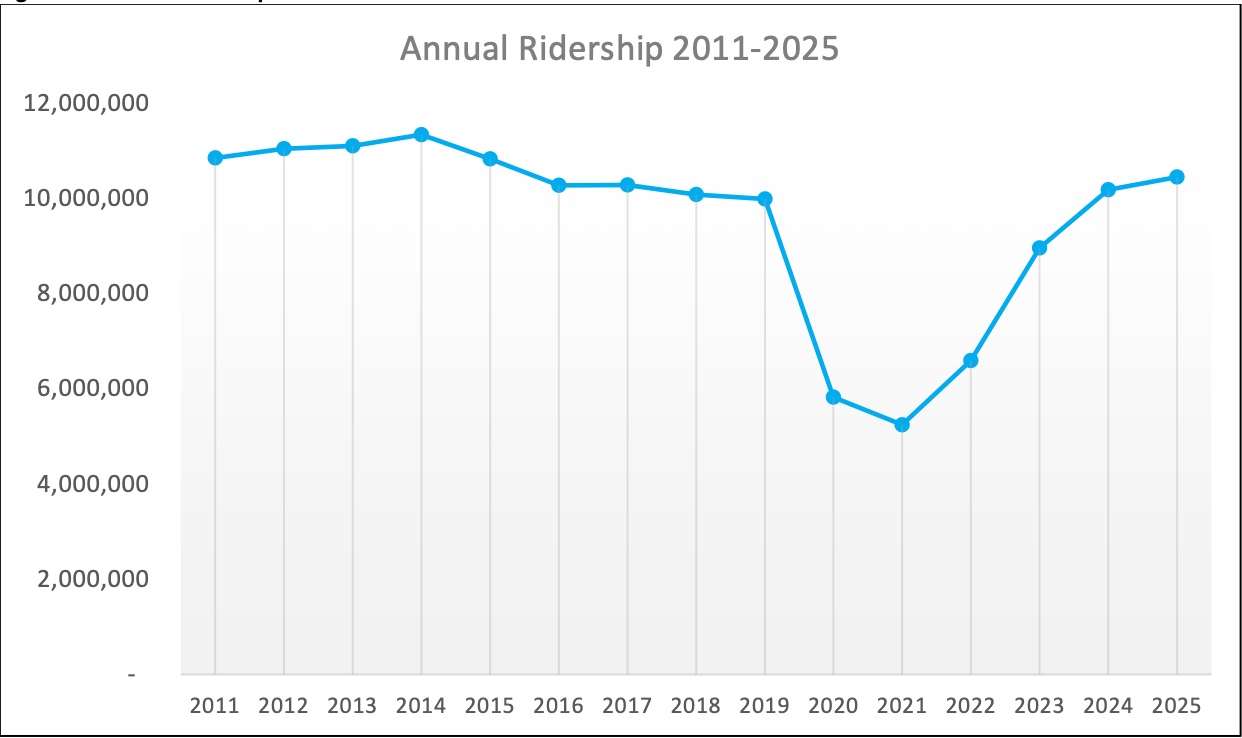
They pointed to statistics showing 80 million total rides since 2016, and an average of 34,000 trips every weekday in 2025 — the agency’s highest ridership in over a decade.
Statistics from the transit authority show a marked annual increase in ridership every year since 2021, as the agency continues to recover from extremely low bus usage during the COVID-19 pandemic. In 2025, over 10 million rides were logged across the bus network, a 2.6% increase from 2024.
The transit authority has also been a crucial accessibility network for people with disabilities in Spokane, providing more than 1,000 Paratransit trips per day for those unable to use fixed-route buses, and for youth, who ride for free.
The Yes for Buses campaign has been endorsed by organizations like CHAS Health, Disability Rights Washington, Spokane Low Income Housing Consortium and the Spokane Regional Labor Council, and by prominent local politicians including Spokane City Council Member (and STA board member) Sarah Dixit, Medical Lake City Council Member (and STA board chair) Lance Speirs and three Cheney City Council Members. Political candidates Kevin Fagan, who is running for the 5th Congressional District, and Luc Jasmin III, who is running for the 3rd Legislative District, also signed on.
Yes for Buses has raised about $60,000, with half coming from businesses and the rest from individuals, unions and other organizations, according to data from the Washington Public Disclosure Commission (PDC). They have spent about $30,000 of their total war chest on mailers, and another significant chunk on staff time, leaving them with $10,000 in the bank to spend as the election approaches.
Broken promises?
Opponents of the tax renewal argue that voting no is actually more “pro-transit,” than continuing the funding for the transit authority. Former Spokane City Council Member Mike Allen wrote in the Voters’ Guide that the transit authority’s $270 million in reserves shows that public transportation does not need additional funding.
“STA already has steady tax revenue and substantial reserves. The case for more taxes has not been made,” Allen wrote. “Sunset provisions exist for a reason. They give voters a built-in checkpoint, a chance to review results, reassess priorities, and decide if a tax is still needed before it continues.”
A vocal contingent of Spokane’s wealthiest business owners have also advocated against the tax renewal. A political action committee formed in early June has raised more than $140,000 to oppose the tax renewal — enough to pay for more than 70,000 $2-a-ride STA bus passes. It has already spent over $50,000 paying canvassers to campaign against the tax renewal.
The PAC, called the Citizens for Responsible Transit committee, received the lion’s share of its donations from construction company owner Bill Bouten ($10,000), Washington Trust Bank ($25,000), developer and downtown business owner Gerry Dicker’s Dicker Family Trust ($50,000) and conservative megadonor Larry Stone ($50,000).
Stone has donated more than half a million dollars to conservative political candidates and PACs since 2022, according to records from the PDC, and funded the Curing Spokane video campaign, which called on leaders to sell the STA Plaza and move the bus station underground. He has also strongly advocated against “road-dieting” on Division Street by adding a dedicated bus lane — a project that would be on the chopping block should the tax renewal fail.
Gavin Cooley, the chief financial officer for Spokane under conservative mayor David Condon, has been using his position as leader of Stone’s Spokane Business Association — which lists Bouten’s construction company, Dicker’s Ruby Hospitality and Washington Trust Bank as members — to oppose the tax.
Using an AI-generated image that also included the phrase “gonorn their pont buttte,” Cooley claimed the transit authority had broken promises to Spokane.
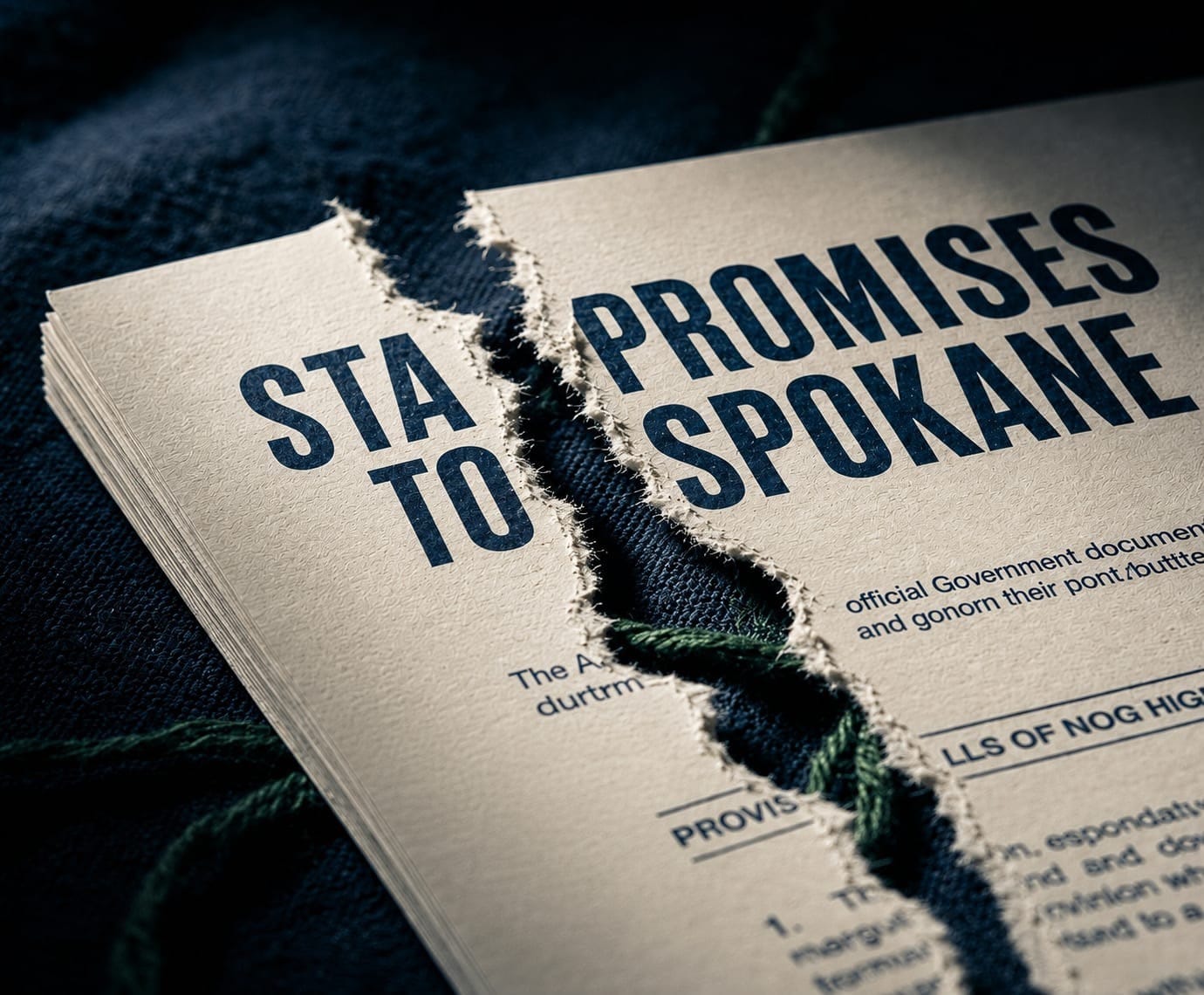
“In 2016, STA promised its $300 million tax was temporary. This August, it’s back — as a NEW $1 billion tax running to 2048,” Cooley wrote. “STA’s own filings show excessive financial resources, including $274 million in reserves and a continuing permanent tax worth $3 billion over those same years.”
According to STA meeting minutes from 2016 and an article published by The Spokesman Review on April 22, 2016, though, the tax was never marketed or promised as temporary. Instead, the 10-year expiration on the tax was included as an accountability measure.
Supporters of the tax renewal argue that the reserves Cooley sees as “excessive” are actually a display of “careful stewardship of public funds” — because the transit authority is committed to operating with zero debt, $170 million of the reserves is already earmarked for specific capital improvement projects outlined in the 10-year strategic plan.
How this will appear on your ballot
The Spokane Transit Authority Board of Directors passed Resolution No. 856-26 concerning reauthorizing sales and use tax funding for public transportation services.
This proposition reauthorizes a voter-approved sales tax of up to 2/10th of 1% (0.2%) to provide public transportation, effective January 1, 2029 and expiring no later than December 31, 2048. Proceeds would be used to maintain and enhance the existing transit system, improve and expand public transportation through new modes and programs, and provide for essential transit support facilities. This tax, approved in 2016, is set to expire on December 31, 2028, unless renewed.
Should this proposition be approved?
Yes or No?

