

Something strange happened last week as we prepared to cover the final days of Camp Hope. We won a first-place award from the Society of Professional Journalists for our coverage of one of its earliest crises: last year’s heat wave. Awards aren’t everything, but here we were competing against every small news outlet in the northwest, Montana and Alaska. Our region, and the west in general, has been enormously impacted by a housing crisis that has greatly exacerbated people becoming chronically unhoused, and there has been a lot of great journalism written here on the subject, so it’s a tremendous honor for SPJ to recognize our work as among the best.
What follows won’t be our final story on the legacy of Camp Hope, but it is indicative of how we have tried to cover this crisis from the very beginning: through the eyes of the people who are living it — in this case Tracy and Justice Andino and their dog Buddy.
The end of Camp Hope is not the end of the housing crisis in Spokane. In some ways it’s just the beginning of a new, even more uncertain chapter. And no matter what comes next, RANGE is going to be there covering it. — Luke Baumgarten
“Busy, busy … a fun-filled day of moving,” said Tracy Andino with a touch of sarcasm on Thursday afternoon. She was packing plastic totes with her belongings before transferring them into a blue van. Tracy, her husband Justice Andino, and their Chihuahua, Buddy, were the last remaining residents of Camp Hope. Later that afternoon they too would be leaving the camp.
Three days earlier, though, packing hadn’t yet begun, and Justice was in a reflective mood standing outside his tent and leaning against a propped up piece of plywood. “I get emotional when I think about this place,” Justice said with a generator chugging along behind him. “We did our best to help when we could. We tried to help people. It was hard, but it was safer [at Camp Hope] than other places.”
Justice said a lot of his fellow camp members took steps forward with their lives. “There’s a lot this camp has done for people,” he said. “For some people it was a stepping stone. A lot of people went forward. But, you know, even one person is enough. That makes a difference.”
This morning, at 9 a.m., the state and service providers announced the camp is closed.
Closing a challenging chapter
Tracy and Justice will be staying in a motel for a few days before they move into an apartment with the assistance of a Section 8 housing voucher. Tracy said the first two things she’s going to do when she gets to the motel is put in a load of laundry, then take a shower. “I can’t wait,” she said.
The Andinos are married and have been together for 29 years. Their experience of homelessness started when Tracy lost her job as an in-home caregiver, right before COVID restrictions shut down large segments of the economy in Spokane and around the world. When she got her last paycheck from that job, Tracy said they were faced with the decision to either pay rent or buy a van. They opted for the van.
Earl Anderson, a former camp resident who now has housing and is continuing to work for Jewels Helping Hands, echoed the challenges of the pandemic. “COVID did a lot of damage,” Anderson said. “It caused a lot of working people to be homeless. I survived by keeping my nose to the grindstone.” Anderson has a passion for gardening. He told RANGE he’s already endearing himself to his new landlord with the work he’s done to beautify the yard at his rental.
Tracy said the entire experience of being homeless has been frustrating and challenging. “Once you’ve been homeless, you have a way different outlook on what it’s like,” she said. “You don’t know what it’s like until you’ve been there.”
The Andinos prefer to stay together and have spent much of the last three years living in their van and parking at various places, including a friend’s driveway. At one point, they went two and a half months without a shower until they finally got one from the Jewels Helping Hands shower trailer.
When they were first homeless, the couple tried to get housing through the rapid rehousing program, which Catholic Charities runs for couples, but according to Tracy they didn’t have an option that would keep them together. And, the idea of living apart didn’t work for the them.
At times in their first two years of homelessness, though, they had to choose shelter over companionship. When they absolutely needed a place to stay in the winter, Tracy said they went to the gender segregated services offered by Union Gospel Mission.
In December 2021, they moved to Camp Hope along with the first batch of people who started the encampment as a protest at City Hall. That protest was aimed at the lack of low-barrier shelter beds in Spokane after the city failed to replace the 100+ beds that the local shelter system lost when the Way Out Shelter closed earlier that year.
The Andinos helped set up the first tents on the snowy Washington State Department of Transportation (WSDOT) lot off of I-90 in East Central Spokane. Over the last 18 months, they’ve seen the camp grow to over 600 people, then shrink again, until it was just them: Tracy, Justice and Buddy.
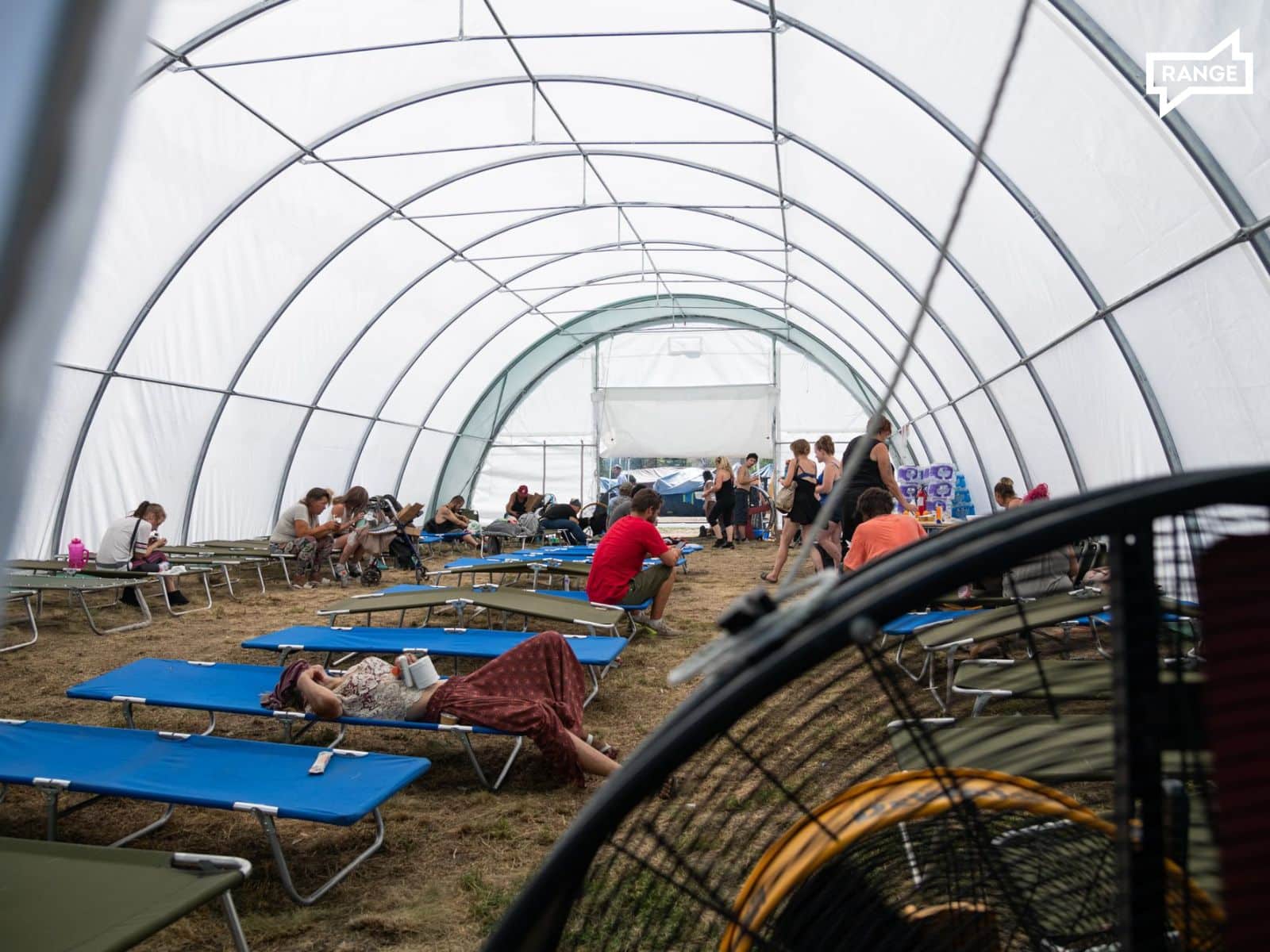
Community and challenges
From the start, Tracy and Justice tried to make a positive impact and watch out for the other people at Camp Hope, including volunteering as part of the makeshift security team. “We tried to build community,” during those first winter months, Tracy said.
There was a lot of optimism and positive energy when the camp first started. “We had a cabinet and structure,” she said. “Then the blues [fentanyl pills] wrecked it that first spring.”
Tracy said that when some of the original leaders fell into addiction and any semblance of structure deteriorated, Julie Garcia and her organization Jewels Helping Hands stepped in to play a more hands-on role in supporting the camp.
But even that extra support wasn’t enough to keep the camp in control as the population exploded. “In summer, it was a bit overwhelming,” Tracy said.
“We had to Narcan a lot of people,” Tracy said, referring to the drug used to bring people back from opiate overdose. To this day, she said people come up to the camp fence looking for drugs.
Justice said that there have definitely been problems at the camp, but “the public perception painted the camp worse than it was. It wasn’t that at all. People see what they want to see and that’s it.”
He expressed sadness with the way people have treated the camp and stereotyped those living there. “All people wanted was a chance to live life,” he said. “It’s a hard world and we were trying to figure it out, then you have people hating on you,” Justice said. “People would stop and scream and yell out of their windows at us. Cowards bother me the most, stereotyping us, calling us names and shit. I’m not ashamed. I work for everything.”
After starting as a volunteer on the security team, Justice got a job working security at the camp for Jewels Helping Hands. With the camp closing, he’ll be joining the Jewels outreach team and working to connect people living on the streets to services.
Lessons learned
“For me, the biggest lesson would probably be that a camp that size is unmanageable,” said Ken Crary, who works for Jewels as the operations manager at Camp Hope. Crary was sitting in the shade of an RV on Monday smoking a cigarette with his co-worker Sharyl Brown.
Crary feels things got more manageable once the camp population got down to around 350. “I think that was about the point where we all started providing full-on services,” he said. “Once we started really diving in and giving them the services, that's when the magic started happening.”
“It really was the funding [from the state Department of Commerce] that brought all the services,” Crary said. “That made it possible for us to start shrinking the camp.”
Commerce dedicated $3.5 million to services at the camp, which included peer and housing navigators as well as the creation of new housing options like group homes. That program has been administered by Empire Health Foundation, which subcontracts with Jewels Helping Hands, Compassionate Addiction Treatment, Revive Counseling and the Spokane Low-Income Housing Consortium.
All told, the state Rights-of-Way Initiative invested more than $25 million on clearing the camp and propping up homeless services in Spokane. The bulk of that money has gone to the Catalyst Project, a transitional living facility in a renovated hotel run by Catholic Charities, which is currently housing 93 former Camp Hope residents.
During the time that Camp Hope grew, the city added 350 additional shelter beds at the Trent Shelter, which regularly hosts over 300 guests. Less than a dozen of the 104 people who moved into a shelter from Camp Hope after the badging process began tracking exits in October went to the Trent Shelter, according to exit data captured by the Spokane Low-Income Housing Consortium. The relative lack of Camp Hope residents at the Trent Shelter underscores the continued growth of homelessness in Spokane and the need for more shelter options and way more affordable housing.
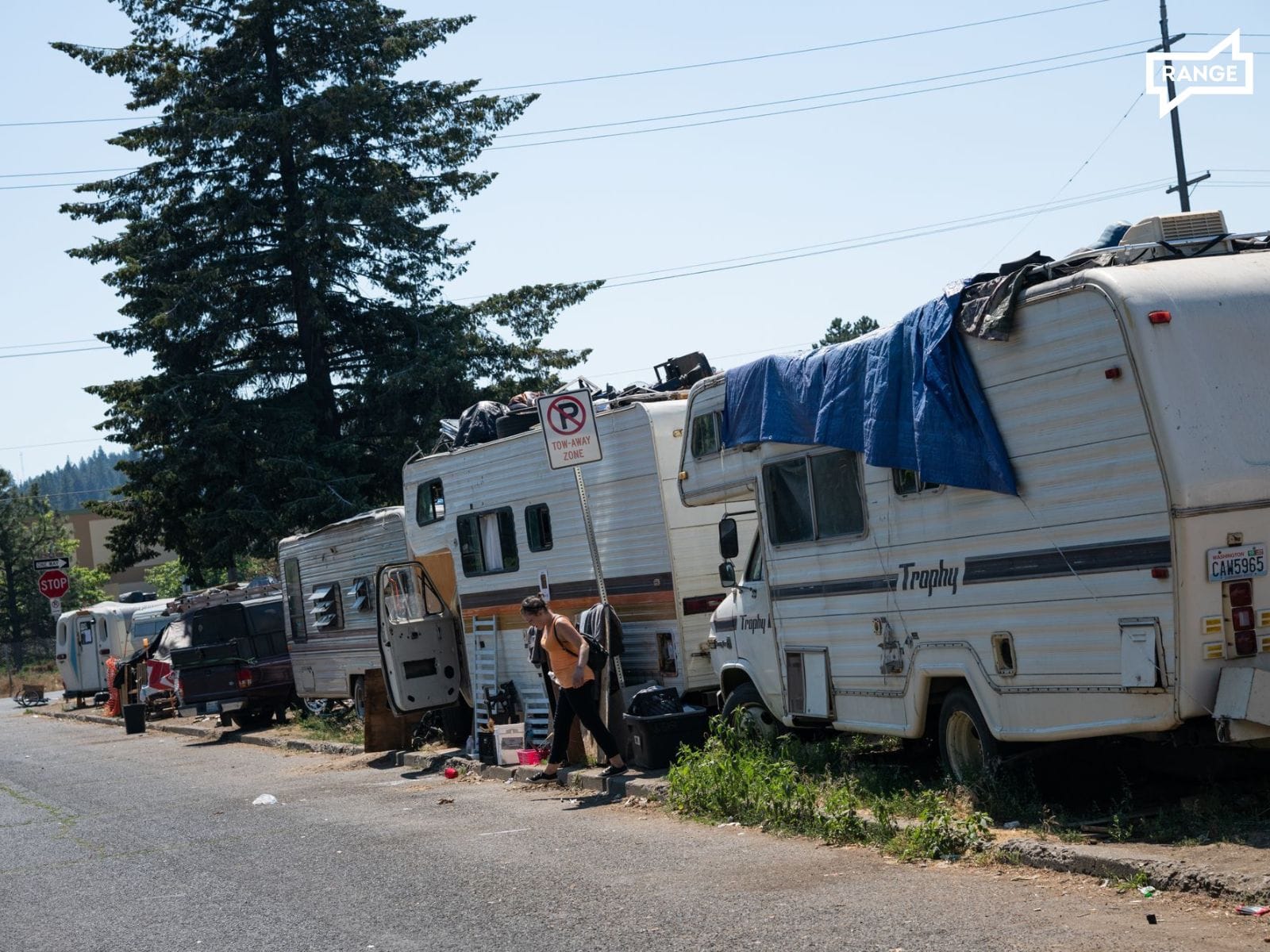
Reaching out
Sharyl Brown, the peer support lead for Jewels, started working at the camp as state funding brought more services and made additional housing options available in other parts of the community. On Monday, she became emotional reflecting on the changes that’ve happened in the last nine months.
“Seeing people that don't even have a social security number, never had housing since they were a 13-year-old run away…. get housed and get taken care of, that's insane,” Brown said. “Social workers that have known him for years, were like, ‘don't even try that, that'll never work.’”
Her response has been a resolute belief in people’s capacity to change. “I’m like: Really? Watch me,” she said. “I’ve got God-sized faith. You wouldn't believe what will happen when you’ve got God on your side.”
Brown kept returning to the refrain, “it’s crazy,” showing a sense of awe at what had been accomplished at the camp, where more than 200 formerly unhoused people have been connected with housing options, ranging from transitional housing and shelters to reconnection with family and their own apartments, in the last 9 months. That’s about 30% of the camp’s peak population.
In 2022, the Spokane shelter system exited just over 500 of its 3,700 unique guests to permanent housing options — less than 14% — according to data shared with RANGE by city staff.
“Just the relationships and the bond created here, it's insane when you think about it,” Brown said. “Watching people get their lives back, there's nothing better than that. Watching people overcome all their barriers. People that didn't have any hope — didn't even see a reason to make any changes in their life — now they're successful, like fully successful.”
“I had somebody come by and say hi earlier today. When I first met him, his girlfriend was pregnant and they didn't want to get clean,” she said. “Now he's clean, he's getting his own apartment, he's getting custody … You don't see stuff like that every day.”
Chris Senn, a military veteran and life-long Spokane resident, was one of the people whose life changed for the better because of the camp. He said that when he first came to the encampment, he was struggling with addiction. On Thursday, he said with pride that he’s been sober for 116 days.
“When I came here I had given up on life,” Senn said. Now, he’s a peer navigator for Jewels, living at the Catalyst, and helping other people walk their own uncertain path towards recovery and housing.
“It’s been a big positive for me to say the least,” Senn said. “I feel like I’ve spent a lot of my life taking. It feels good to give back.”
“The greatest thing is to see the smile on someone’s face when they get keys to a place of their own,” he said. Just days before, Senn said he’d spent time just sitting and crying tears of joy with another former Camp Hope resident. “It was his first room in six years.”
Despite the many success stories, more than half of the people that left Camp Hope after badging didn’t move into services provided by the state and service providers. Many are still trapped in cycles of homelessness and addiction.
“A lot of people didn’t go to housing because they didn’t want to stop doing drugs,” Tracy said. “A lot don’t want help. They’re out for whatever they can get for themselves and then they move on.”
Brown said she’s looking forward to trying to connect with people who left the camp without getting into housing or treatment. Because of her role at the camp, she said, “I didn't have the capacity to be out there providing services to the people that left without getting housing.” Now that Camp Hope is closed, but her job with JHH is still around, she said, “we get to go help them, and I get to follow up with all of the people that we do have in housing.”
“Outreach will be interesting. I think it's just about consistency,” Brown said. “Visiting the same campsites, consistently seeing the same people, just being a consistent part of their lives so they know that they can count on you and have that trust factor.”
In one case from last week, Brown said she had built “crazy rapport” with a person living on the lot, but was having a hard time getting him into his new housing option. But, because Ken Crary and Jewels Camp Manager and filmmaker, Maurice Smith, had known him for years, they were able to help him move.
“It's just that consistency of showing up with somebody and the consistency of building that trust and relationship. I thought I had great rapport with him, but at the end of the day, I was not the one,” Brown said.
“No, God was,” Crary said.
Moving on
As the camp’s population dwindled, residents have spent a lot of time reflecting on what the camp meant to them. “It’s kind of bittersweet, in a positive way,” Senn said. “All the good, the bad, the ugly,” he said. “It wasn’t perfect, but we sure tried.”
On Monday evening, Justice said, “I’m thankful I’ve had a chance to move on from here.”
It’s clear that, despite all the challenges they’ve faced in the year and a half at the camp — including Justice recently getting burned when their RV caught on fire — the community that existed there was meaningful to each of them.
And, while it might seem strange to have such a connection to a bare patch of land, the meaning of the camp has always been community. “I wonder how many people will come back to look and remember,” Tracy said. “There’s a lot of history here.”
Late Monday afternoon, shadows grew long from the few trees that shade the almost empty lot. Rush-hour traffic droned just a couple hundred feet from the camp where hundreds of people once formed a bustling, imperfect tent city. Tracy finished cooking dinner while Justice picked at a guitar in his tent.


