
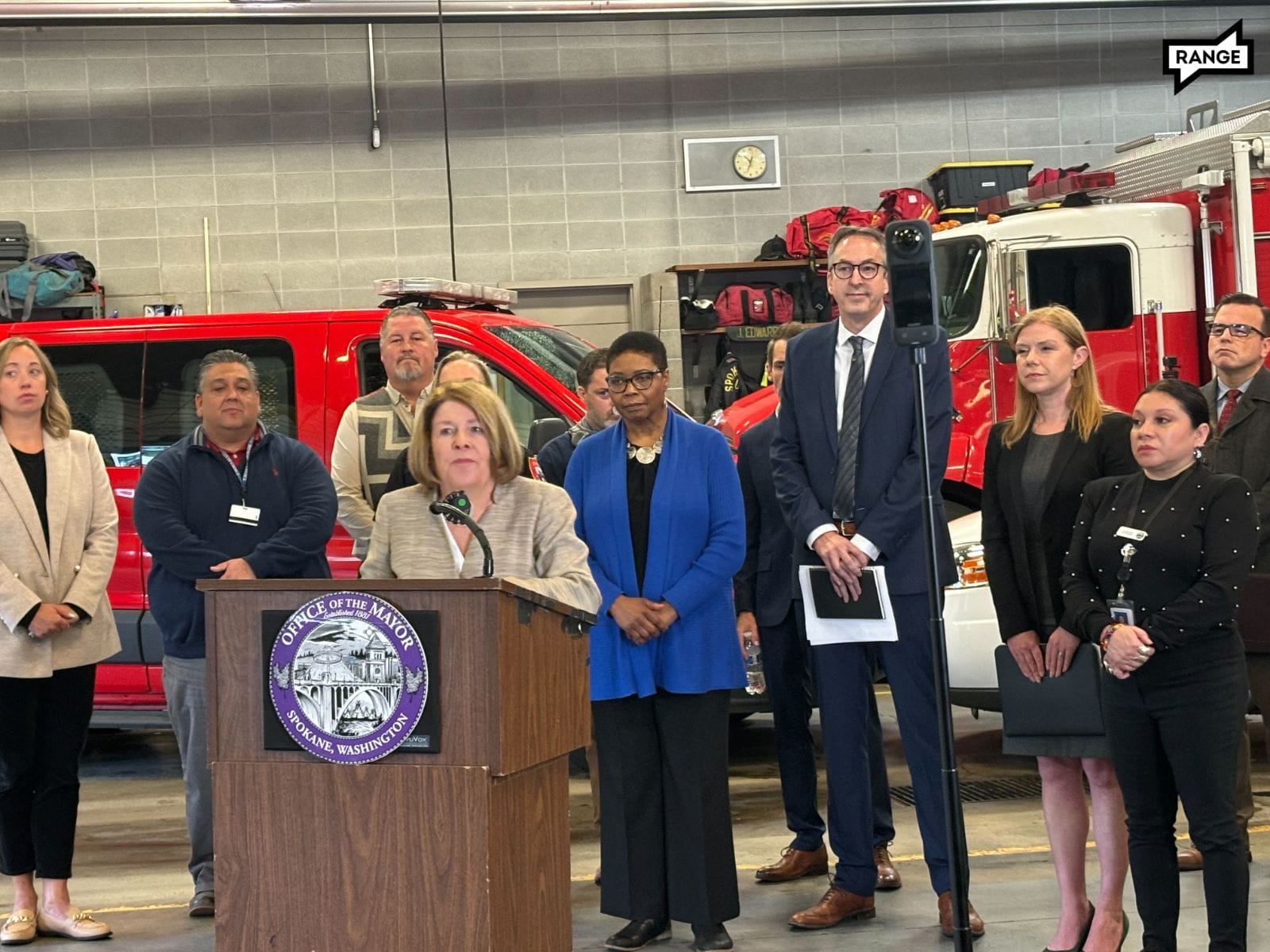
Mayor Lisa Brown declared a state of emergency in Spokane to address the ongoing fentanyl overdose crisis in a press conference Tuesday morning.
As she began to speak into the microphone, she was interrupted by the sirens of an engine leaving a downtown fire station. It was headed to an overdose call in Brownes’ Addition, she said.
For the past few months, service providers and emergency responders have sounded alarms about the rising number of overdoses and overdose deaths in 2024. Official data on the crisis was thin, leaving officials with little information to inform decisions about how to handle the crisis. But in early March, after RANGE compiled and published overdose data and former Regional Medical Officer Dr. Bob Lutz gave a presentation to the council on the region’s rising overdose rate, the Spokane City Council passed a resolution asking Gov. Jay Inslee to declare a state of emergency.
Inslee declined. But Brown’s move to declare a citywide emergency gives the city more freedom in how it can use funding and allows the mayor to sign contracts with service providers on her own, bypassing lengthy proposal processes that normally need city council approval.
“We all know that the crisis has been growing, and the statistics clearly point that out,” Brown said. “But the purpose of an emergency declaration is really to streamline and deploy resources quickly, and without that, the public processes can take weeks or even months. With this declaration, we can sign contracts today.”
Brown said the declaration was urgent due to a combination of two factors. First, the Spokane Regional Health District (SRHD) has now provided key data that gave her administration a clearer decision-making perspective. Second, the city council recently accepted the first allocation of millions of opioid settlement dollars that will fund the steps Brown is proposing to mitigate the crisis. According to Spokane Fire Chief Julie O’Berg, overdoses in Spokane are up 30% from this time in 2023. Many of those overdoses happened in the infamous 2nd and Division corridor.
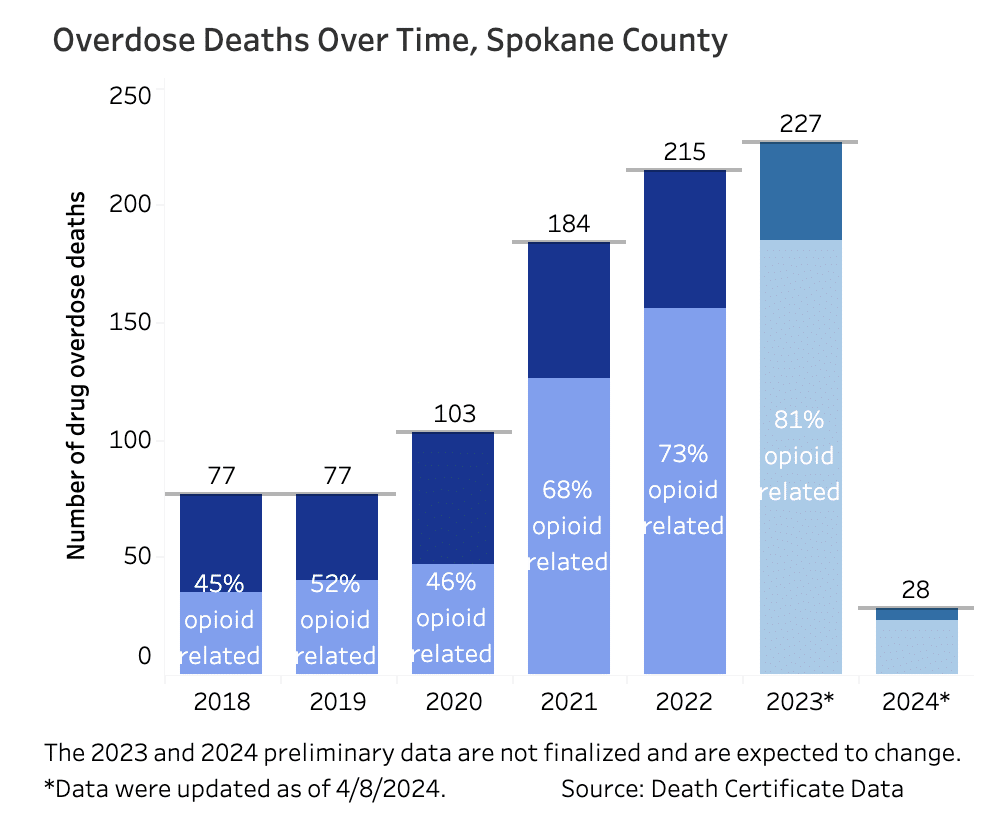
Statistics from SRHD’s opioid overdose dashboard. Data from 2023 and 2024 is preliminary.
“That data made it clear … that this has risen to the level of an emergency,” Brown said. “Also, it’s important not just to say there’s an emergency but to be able to do something, and these resources that are now available can be deployed.”
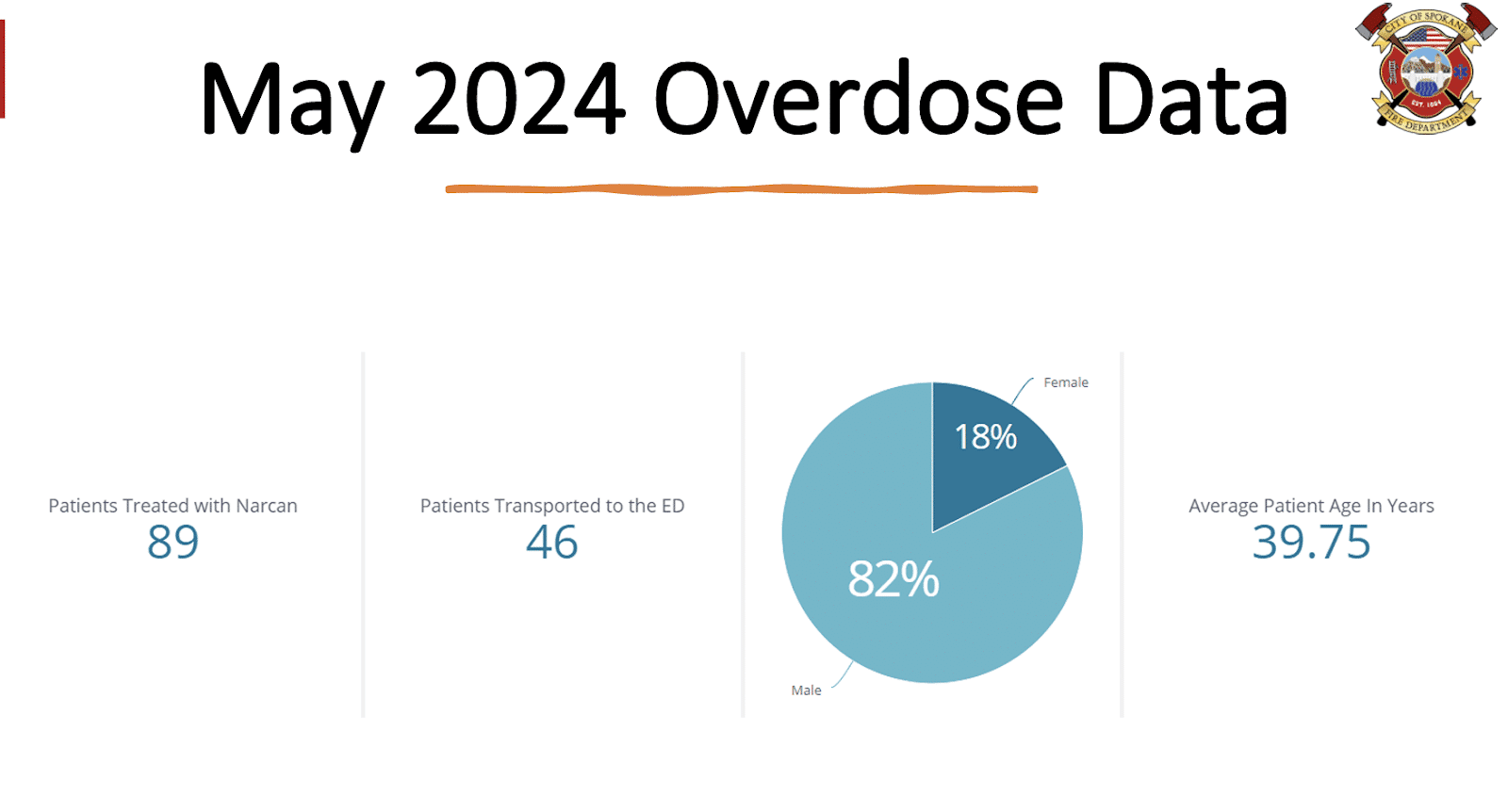
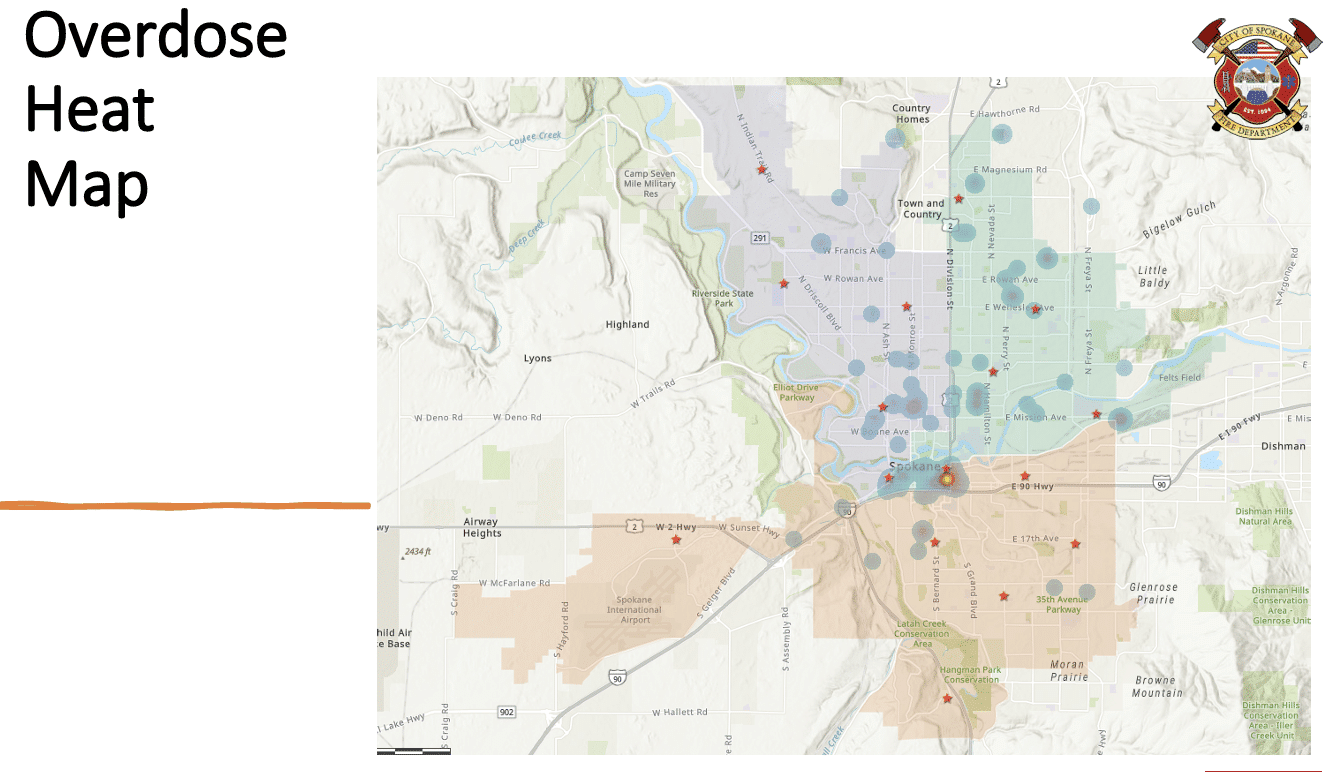
Up-to-date data on overdose responses from Spokane Fire Department presented at the most recent Public Safety & Community Health Committee
What the emergency will do & where the money will come from
In the press conference, Brown described a few concrete next steps that will be taken as a result of the declaration:
- Cannon Street Shelter will reopen as a temporary transition facility in the next week or two to help unhoused people living downtown connect to services and transitional housing solutions. The shelter will serve roughly 20 to 30 people and be operated by the Empire Health Foundation under a temporary two-month contract. This move is part of Washington’s Right-of-Way Encampment Resolution program and will be paid for with state dollars previously allocated to this project. That program is run by the Washington State Department of Transportation and Washington State Department of Commerce.
- The city is partnering with Consistent Care on what they’re calling the “High Utilizer Initiative,” which identifies unhoused people who frequently cycle between hospital beds and jail and connects them with case managers and services. These services will be financed by the city’s opioid settlement dollars, which it received in April as part of a lawsuit with opioid manufacturers.
- SFD will provide overdose patients with withdrawal management medications like methadone and suboxone, which can increase the likelihood that people struggling with addiction start treatment. SFD also recently received funding from the opioid settlement dollars to increase staffing of their Community Assistance Response, which allows the department to send social workers and case managers on overdose calls alongside firefighters to help connect people with immediate resources.
- The city requested the state send additional doses of naloxone, commonly referred to by the brand name Narcan, which is used to treat overdoses. It also asked for more fentanyl test strips, which detect fentanyl in other drugs. The funding for this would come from state dollars, and potentially from Washington state’s own pool of money that came from opioid manufacturer settlements.
- The city is also partnering with Spokane Treatment and Recovery Services (STARS). Under this partnership, STARS would focus their CAR50 program, which provides safe transport to people under the influence of substances to a treatment or medical facilities, to the downtown corridor, driving through the area at least six times a day on top of responding to calls from first responders requesting their presence. Erin Hut, spokesperson for the city, said this will not cost the city any additional money.
- To “disrupt the drug market” in the downtown corridor, Spokane Police Department will ramp up patrols in the area, a move also attempted by Brown’s predecessor Nadine Woodward last fall. Like Woodward, Brown did not say how these additional patrols would be funded.
Brown said that moving quickly on this plan is crucial to addressing the ongoing fentanyl crisis and decreasing stress on the city’s systems. “We want to free up resources in our health care systems for additional places for people to go that are appropriate places for them to get care,” she said.
Though he wasn’t at the press conference, Spokane City Council Member Paul Dillon — who penned the council’s resolution requesting the declaration of an emergency — thinks it’s a step in the right direction.
“It's definitely a victory,” said Dillon. “I think it's important to really look at these issues, particularly Second and Division as a public health crisis and this action helps achieve that.”


